Primordial black holes cannot hide in the solar system outer halo
Ancient comets drifting on the fringes of the sun offer a historical record that excludes heavy primordial black holes as dark matter.
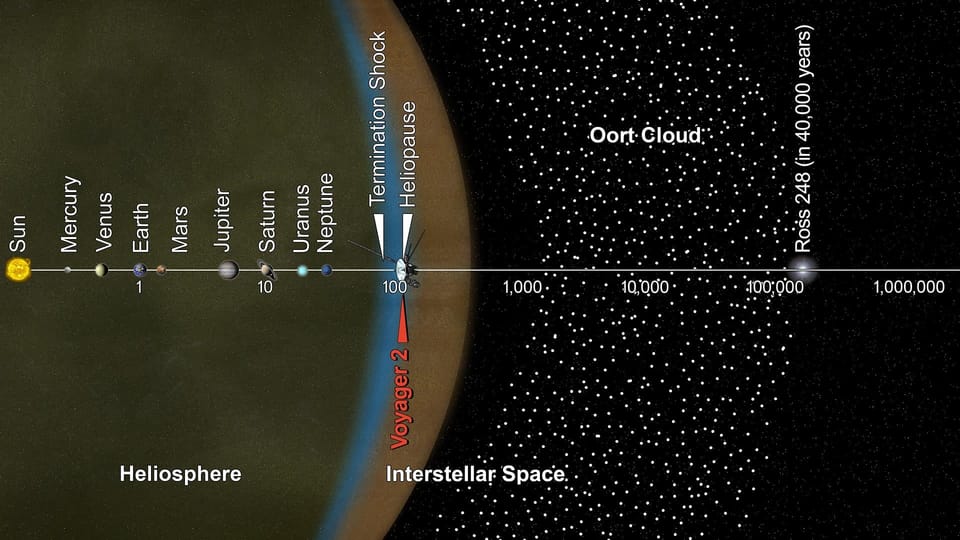
At the outer frontier of the solar system lies a cold, delicate halo of millions of frozen rocks known as the Oort cloud.1 These icy planetesimals, left over from the formation of the sun and planets more than four billion years ago, drift in enormous, looping paths thousands of times farther out than Earth.13 Because they sit so far from the sun, the gravitational pull holding them to our solar system is faint.1 Even a gentle gravitational tug from a passing star or the general mass of the Milky Way can loosen their grip.1 Some of these icy bodies get kicked out into interstellar space forever, while others are deflected inward, falling toward the sun as bright long-period comets.4
For decades, cosmologists have searched for the unseen mass that holds galaxies together, commonly known as dark matter. One long-standing hypothesis suggests this invisible mass consists not of undiscovered elementary particles, but of primordial black holes formed during the dense initial moments of the universe.1 If wandering black holes populate the Milky Way, they must regularly pass through the vast outskirts of planetary systems.14 The sheer fragility of the Oort cloud turns it into an involuntary, long-term cosmic detector. Because these icy bodies take millions of years to complete an orbit, any massive intruder traversing the outer cloud leaves an indelible dynamical footprint behind.1
A study posted to the arXiv preprint server by Sohrab Rahvar, a physicist at the Sharif University of Technology in Iran, evaluates how these hypothetical compact objects would perturb the distant icy reservoir.1 The research models the gravitational encounters between passing primordial black holes and Oort cloud planetesimals to measure how often these encounters destabilize orbits.15 By matching these theoretical disturbance rates against historical crater records and the current arrivals of long-period comets, Rahvar establishes strict bounds on how much dark matter can exist in the form of compact gravitational bodies.15
How can passing masses disturb distant comets?
A distant icy object remains bound to the sun through a delicate balance of orbital energy and speed. For an object to change its trajectory, a passing mass must transfer momentum during a brief gravitational encounter. When an intruder races past at high velocity, its gravitational pull acts as a sudden tug, deflecting the comet slightly and altering its total kinetic energy.1 If the tug adds enough kinetic energy, the comet breaks free from the gravitational pull of the sun and escapes into interstellar space.1 If the encounter instead removes angular momentum by opposing the comet's forward orbital motion, the frozen body drops inward, plunging on a steep trajectory toward the inner planetary system.1
The physical outcome of each flyby depends directly on the geometry of the approach. When a fast-moving object passes through the cloud, the duration of the encounter is only a few years, which is vastly shorter than the million-year orbital period of an Oort cloud body.1 Because the flyby happens so quickly, astronomers treat the encounter as an instantaneous velocity kick while the comet's position remains essentially unchanged.1 A kick aligned with the comet's existing velocity increases its specific orbital energy, whereas a kick directed against its motion drains energy and slows the body down.1
Injecting a comet into an Earth-crossing orbit requires an exceptionally precise encounter geometry. To plunge from ten thousand astronomical units down to within one astronomical unit of the sun, the comet must lose more than 98 percent of its initial transverse angular momentum.1 This cancellation requires the gravitational impulse vector to align almost exactly opposite to the comet's orbital motion. Rahvar calculates that only about one percent of encounters with sufficient energy transfer possess the narrow alignment needed to send an icy body on an inner-system collision course.1
What do ancient impacts reveal about dark matter?
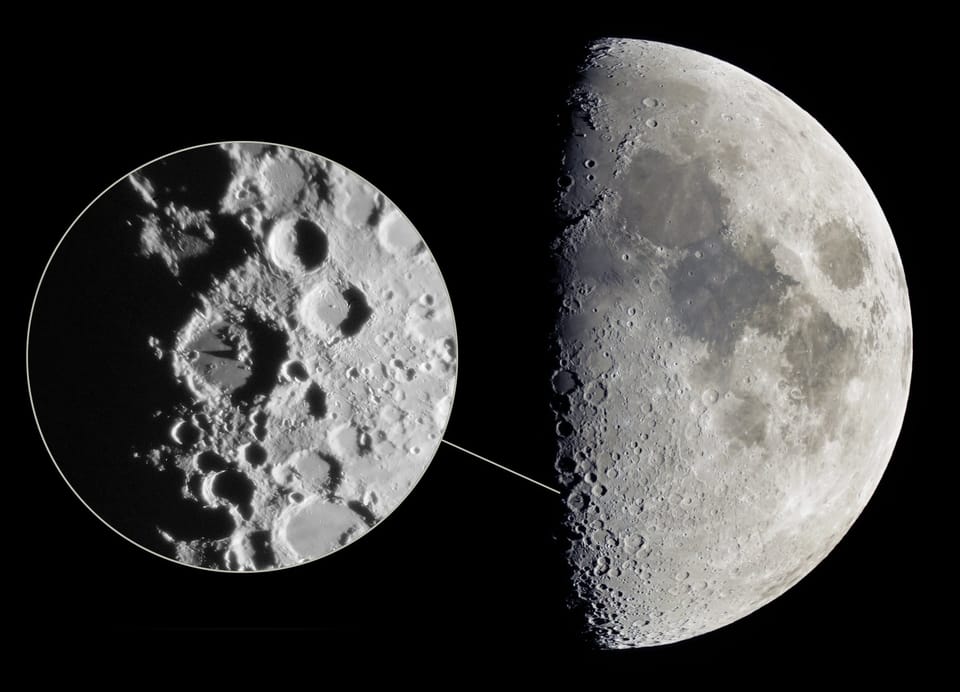
Past collisions recorded on planetary surfaces place an unyielding ceiling on how frequently external perturbers have disturbed the cloud. If primordial black holes with masses hundreds of times greater than the sun had comprised the galaxy's missing mass, their cumulative gravitational kicks would have unleashed violent cometary bombardments throughout geological history.1 The terrestrial impact record and ancient lunar craters show steady, modest cratering rates rather than catastrophic historical spikes.1 A dark matter halo dominated by intermediate-mass black holes would have generated cometary storms far in excess of what the surfaces of Earth and the moon preserve.
The survival of the cloud itself provides an equally rigorous benchmark. Rahvar demonstrates that if primordial black holes with masses of roughly one thousand solar masses accounted for all dark matter, their repeated passages over 4.5 billion years would have stripped away the entire reservoir of one trillion comets.15 Background stars passing through the solar neighborhood currently eject roughly 6.5 comets per year, whereas black holes heavier than 34 solar masses would completely overtake passing stars as the dominant disruptive force stripping comets away from the sun.1
By synthesizing constraints from Oort cloud survival, long-period comet fluxes, and terrestrial and lunar impact records, Rahvar finds that primordial black holes with masses of hundreds of solar masses cannot form dark halo of Milky Way galaxy. This ceiling firmly rules out primordial black holes as the dominant form of dark matter across the intermediate-to-high mass window between 100 and 100,000 solar masses.15 In response to questions from Primary, Sohrab explained the physical implications of these boundaries, noting that researchers can now be confident the galaxy is not filled with wandering black holes hundreds or thousands of times heavier than our sun.
Sohrab said that if dark matter consisted of such massive compact bodies, their immense gravity would have acted like a bowling ball crashing through pins, scattering the solar system's distant shell of icy comets into deep space or triggering a catastrophic cometary shower onto Earth and the moon. The observational absence of such catastrophic disruptions closes the door on heavy compact objects making up the missing mass of the galaxy. However, lighter primordial black holes around one solar mass escape these historical constraints because their individual gravitational tugs are far gentler.

How can astronomers test the remaining possibilities?
Astronomers must look for directional asymmetries in the trajectories of newly arriving comets to test whether solar-mass black holes exist in the halo. Because the solar system moves through the Milky Way at roughly 220 kilometers per second, it experiences an effective dark matter wind blowing against its direction of travel.1 This orbital motion alters the relative velocities of incoming black holes. Encounters occurring from the apex direction, into which the sun travels, happen at much higher relative speeds, which reduces the time a black hole has to exert its gravitational tug on a comet.1
Conversely, black holes approaching from the anti-apex direction, trailing behind the sun, move with lower relative velocities across the Oort cloud. These slower encounters allow the black hole's gravity to act over a longer duration, transferring significantly more momentum to nearby icy bodies. Rahvar's kinematics indicate that this velocity asymmetry produces a distinct 2.7 to 1 hemispherical imbalance in the delivery of long-period comets, alongside a 40 to 1 contrast between the polar directions.16 Background stellar encounters, by contrast, remain largely isotropic, scattering comets evenly across the sky.1
Sohrab told Primary that identifying this spatial pattern represents the definitive test for lighter candidates. He noted that if upcoming telescopes map thousands of newly detected comets and observe them arriving predominantly from this single direction, it would provide direct evidence confirming the presence of solar-mass primordial black holes in the galactic halo. The upcoming Legacy Survey of Space and Time at the Vera C. Rubin Observatory in Chile is expected to detect hundreds of new long-period comets, providing the statistical sample needed to verify or rule out this directional signature.16
These analytical findings carry clear physical limits. The model assumes a spherical, uniform distribution of one trillion comets and treats each flyby using an impulsive two-body approximation. In reality, the true population and radial architecture of the inner Oort cloud remain unobserved directly, as modern telescopes can detect these bodies only when orbital perturbations bring them near the sun.13 Furthermore, the calculations do not place constraints on the asteroid-mass window between 10 to the 17th grams and 10 to the 23rd grams, where individual gravitational kicks are too weak to dislodge comets over cosmic time.15 Resolving whether dark matter consists of solar-mass black holes or lighter particles will ultimately depend on whether future sky surveys observe this predicted cometary wind.
This piece was prepared from the arXiv preprint and public records together with answers from Sohrab to one question from the Primary news team, completed September 2026.
The record
36 sentences trace to 5 sources and 1 contributor.
-
1
SR
 Sohrab Rahvar
Paper
· arxiv.org · 9 Sep 2026
Gravitational Scattering of Oort Cloud Objects by Dark Matter: Constraints on the Primordial Black Hole Fraction
Preprint · may not have been peer reviewed
See the source
- 2 Contribution — Sohrab Rahvar 7 statements added to this article
-
3
A
arxiv.org
Paper
· arxiv.org
A planet or primordial black hole in the outer region of the Solar system and the dust flow near Earth’s orbit
Preprint · may not have been peer reviewed
See the source
-
4
A
 arXiv
Third-party reporting
· alphaxiv.org · 4 Feb 2026
Oort Cloud Bombardment by Dark Matter
See the source
- 5 A Nuvem de Oort como Detector Gravitacional de Buracos Negros Primordiais | Cosmos Week See the source
-
6
A
arxiv.org
Paper
· arxiv.org
Gravitational Scattering of Oort Cloud Objects by Dark Matter: Constraints on the Primordial Black Hole Fraction
Preprint · may not have been peer reviewed
See the source
Other consulted pages1 page
newplanetarium.com1 page
arxiv.org1 page
Article history
-
Published 13 Nov 2026, 14:17Assembled by the Primary desk from 5 sources · 1 contributor · 36 cited sentences
-
Sohrab Rahvar, a physicist at the Sharif University of Technology in Iran
- Go to the sentence: At the outer frontier of the solar system lies a cold, delicate halo of millions of frozen rocks known as the Oort cloud.
- Go to the sentence: In response to questions from Primary, Sohrab explained the physical implications of these boundaries, noting that researchers can now be confident the galaxy is not filled with wandering black holes hundreds or thousands of times heavier than our sun.
- Go to the sentence: Sohrab said that if dark matter consisted of such massive compact bodies, their immense gravity would have acted like a bowling ball crashing through pins, scattering the solar system's distant shell of icy comets into deep space or triggering a catastrophic cometary shower onto Earth and the moon.
- Go to the sentence: However, lighter primordial black holes around one solar mass escape these historical constraints because their individual gravitational tugs are far gentler.
- Go to the sentence: Background stellar encounters, by contrast, remain largely isotropic, scattering comets evenly across the sky.
- Go to the sentence: Sohrab told Primary that identifying this spatial pattern represents the definitive test for lighter candidates.
- Go to the sentence: He noted that if upcoming telescopes map thousands of newly detected comets and observe them arriving predominantly from this single direction, it would provide direct evidence confirming the presence of solar-mass primordial black holes in the galactic halo.