Global fire activity dropped when pandemic lockdowns kept people home
A study of mobility restrictions reveals that human presence drives forest fires far more than suppression can check them, though park closures sparked blazes elsewhere.
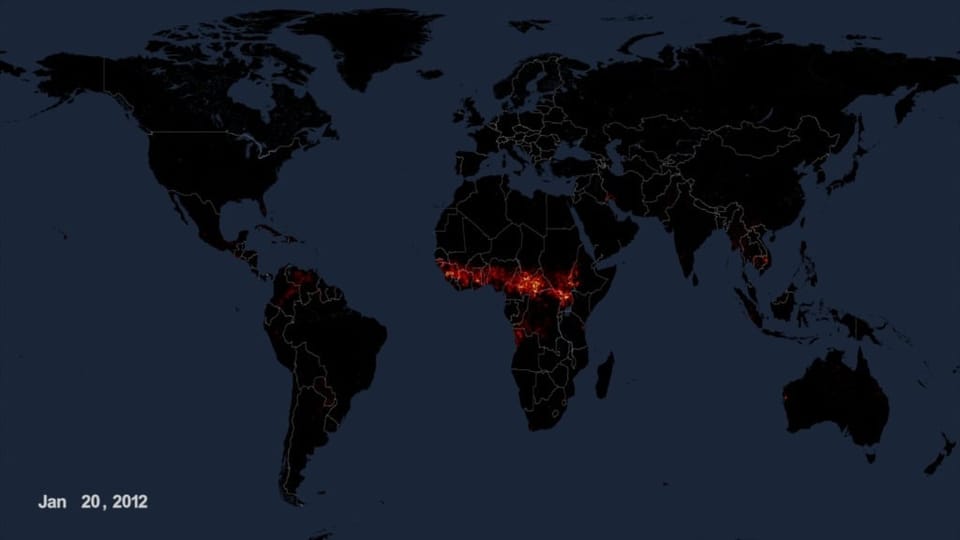
Flames require three basic ingredients to exist: oxygen, combustible material, and an ignition spark. Across the natural world, vegetation supplies the fuel while seasonal weather dictates how dry and combustible that material becomes. Rain encourages grasses and trees to grow, producing biomass that can later burn.1 When dry weather sets in and persists, moisture levels inside living tissue and dead wood steadily plunge.1 If a spark lands during hot, windy conditions, flames spread rapidly across the landscape.1 Lightning provides an ignition source in nature, but people also introduce sparks through machinery, dropped matches, agricultural burning, and recreation. At the same time, people suppress blazes by dispatching firefighters, digging containment trenches, and clearing combustible material before fires can spread.12
Because human actions both start and stop fires while weather conditions change simultaneously, researchers have struggled to measure how much humanity truly alters global fire activity. Disentangling the human fingerprint from seasonal weather requires an extraordinary circumstance where human movement changes abruptly across entire continents while the climate continues on its ordinary course. That exact scenario emerged in early 2020, when governments across the globe imposed strict mobility restrictions to contain the spread of COVID-19.
A study led by Jianghao Wang, a professor at the Chinese Academy of Sciences, used those sudden lockdowns to measure how global fire dynamics shift when people stay inside.13 Writing in the journal Cell Reports Sustainability, Wang and colleagues examined satellite fire detections across locked-down territories during the first half of 2020.12 Their findings reveal that when human movement halted, active-fire detections dropped by a net 12.3 percent worldwide compared with the average for the same weeks between 2013 and 2019, after removing the confounding influence of weather.13
Why did staying home alter wildfire patterns?
Human mobility acts as a steady source of sparks across natural landscapes, meaning that fewer people outdoors directly reduces accidental ignitions. Daily human routines frequently combine with dry outdoor conditions to trigger unintended blazes. Campfires, discarded smoking materials, vehicle exhaust, and domestic equipment can all ignite tinder-dry plants. During pleasant, dry weather, more people venture into parks and woodlands, which concentrates human ignition risks precisely when plants are most flammable.1 When mobility restrictions forced populations indoors, this continuous stream of outdoor ignitions dried up.
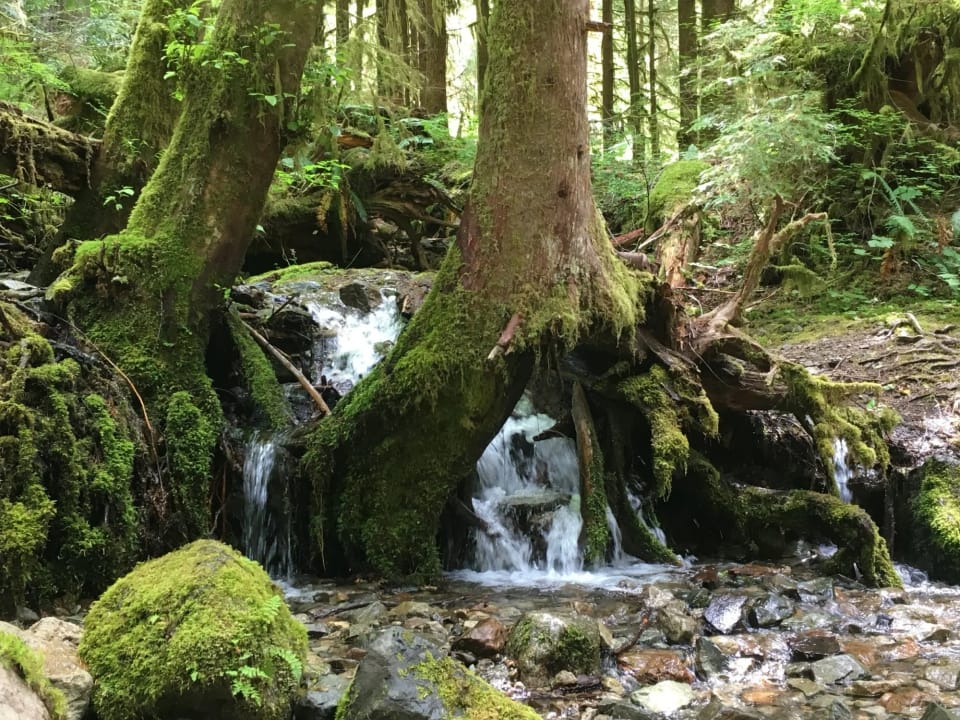
The statistical signal became apparent only after the research group isolated weather variations from human movement patterns. In unadjusted satellite records, active-fire detections in locked-down zones showed a raw decline of 5.8 percent relative to the 2013 to 2019 baseline, a margin small enough to be statistically insignificant.1 Wang and colleagues determined that weather conditions across early 2020 were unusually warm and dry in several monitored areas, which naturally encouraged burning. Once the team applied statistical adjustments to strip away those weather-driven fire conditions, the true decline linked to restricted human movement rose to 12.3 percent.1
This decline in fire activity was concentrated primarily in closed woodlands and grasslands. In forests, active-fire detections fell by 27.7 percent during the lockdown periods compared to the recent historical average.1 Grasslands experienced an 8.4 percent drop relative to past years.1 By contrast, satellite sensors recorded little meaningful difference in fire activity across shrublands, savannas, and croplands.1 The steep drop in woodlands led the authors to conclude that accidental and intentional human sparks serve as the primary trigger for forest fires.1
Why did some countries see more fires instead of fewer?
Wildfires increased in several regions because emergency lockdowns also kept professional rangers, field monitors, and municipal firefighters from patrolling flammable terrain. While human presence causes blazes, organized human presence actively extinguishes them. When authorities restricted travel, land managers could not clear brush, monitor protected borders, or suppress newly ignited blazes before they expanded. In areas where fire management is fragile, the loss of suppression capacity outweighed the benefit of fewer visitors.
Satellite records revealed noticeable spikes in fire activity across South America, southern Africa, and northeast Asia during the early-2020 restrictions.1 Active-fire detections jumped by 31.4 percent in Colombia, 25.4 percent in India, and 70.7 percent in Honduras, measured against historical averages.1 In Madagascar, an earlier study by Johanna Eklund and colleagues in Nature Sustainability documented that suspending on-site management in protected reserves between March and July 2020 produced between 76 percent and 248 percent more fires than predicted by historical weather models.41
The opposing reactions match the dual nature of human influence on wild landscapes. In countries with historically low fire activity, fires declined along a steady, direct path as citizen mobility dropped.1 In nations with high baseline fire rates, blazes climbed slowly as movement fell, leveling off at an average increase of about 27 percent.1 Wang and colleagues inferred that weakened suppression allowed unchecked fires to spread widely in those areas, though Wang cautioned that this explanation represents an inference rather than a direct field observation.1
What do these satellite measurements leave unresolved?
These findings provide a broad observational estimate rather than an exact experimental tally of human fire impacts. The research group identified heat signatures using the Visible Infrared Imaging Radiometer Suite sensor aboard the Suomi NPP satellite, operated jointly by NASA and the National Oceanic and Atmospheric Administration.1 The instrument records thermal anomalies across 375-meter grid cells, but it cannot determine human motivation or distinguish an accidental wildfire from an agricultural burn.1 Furthermore, mobile phone tracking datasets often fail to capture human movement accurately across remote rural districts with sparse telecommunications coverage.1
The study also evaluated fire activity only through the first six months of 2020, leaving out fire seasons that peak during late summer and autumn.1 In regions such as the western United States, where the most severe wildfires ignite later in the calendar year, the full consequence of pandemic mobility shifts remains unrecorded by this analysis. Wang noted that the quasi-experimental design offers strong associational evidence, but it cannot replicate the tight control of a laboratory experiment.1
How can fire management adapt to human behavior?
Uniform national fire rules fail because human interaction with fire differs fundamentally between heavily populated forests and remote conservation reserves. The researchers emphasize that their results cannot evaluate specific legal policies, but they highlight where interventions matter most. In regions where human sparks dominate, public education, seasonal trail closures, and controlled burning can significantly reduce wildfire hazards. In regions where suppression keeps nature intact, governments must maintain active ranger patrols even during social crises.
Planned burns also suffered major disruptions when lockdown orders grounded forestry teams. Examining 12 countries with detailed prescribed fire registries, the authors found that total area treated with prescribed burns fell by about half in 2020 relative to the 2013 to 2019 baseline.1 Because prescribed burns clear out underbrush to prevent catastrophic crown fires, skipping them can leave dense fuel loads behind. When the researchers excluded recorded prescribed burning zones from those 12 nations, the calculated decline in fires shrank from 45.3 percent to 27.8 percent.1
Wang and colleagues concluded that long-term wildfire risk projections must incorporate human sociological behavior alongside rising global temperatures. Climate models routinely calculate how shifting precipitation and heat dry out vegetation, but they rarely capture how swiftly human sparks and firefighting patrols alter the landscape. Understanding both halves of that human equation will decide how well communities manage fire in a warming world.
The record
27 sentences trace to 4 sources.
-
1
YJ
 Yook Ji Hun
Document
· arstechnica.com · 15 Nov 2026
How the world’s fires changed while humanity hit pause
See the source
-
2
E
 eurekalert.org
Third-party reporting
· eurekalert.org
Human activity affects global fire regimes through two opposing pathways
See the source
- 3 How the world’s fires changed while humanity hit pause See the source
-
4
N
 nature.com
Paper
· nature.com
Elevated fires during COVID-19 lockdown and the vulnerability of protected areas - Nature Sustainability
Journal article
See the source