Two million stellar spectra open a full sky view of galactic history
A newly released catalog of southern and northern observations offers astronomers an unbroken look at how the Milky Way formed, grew and absorbed neighboring systems.
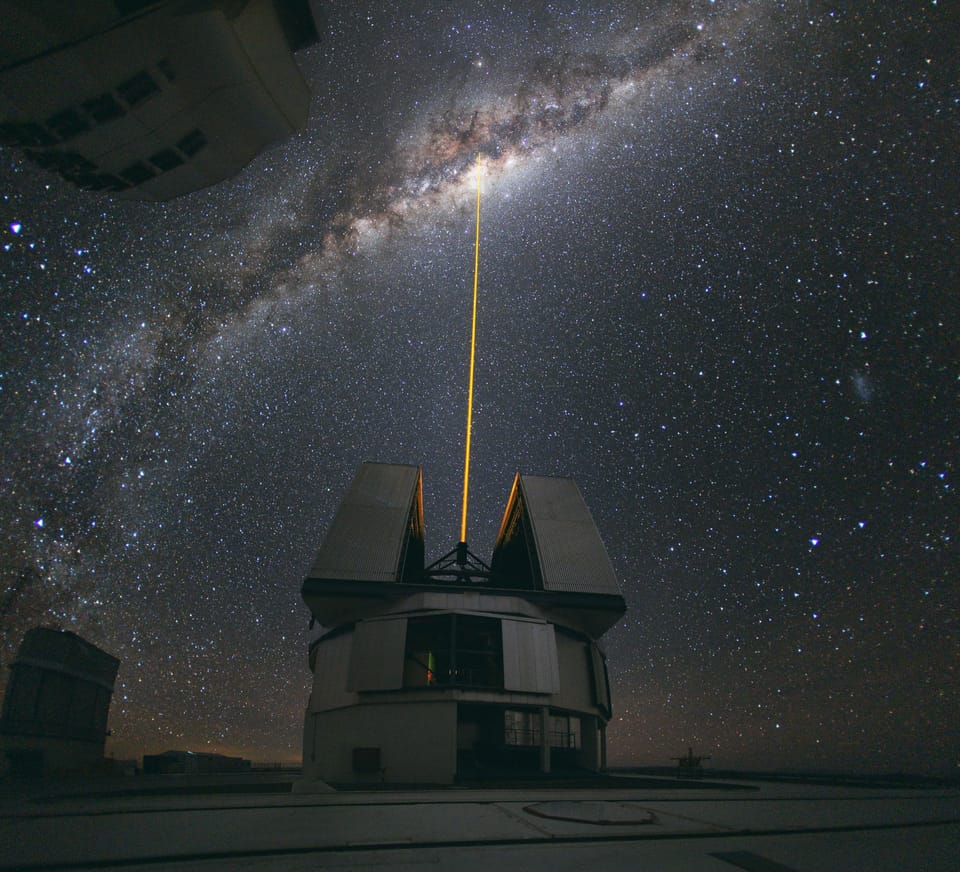
A galaxy does not keep a tidy diary of its youth. Over billions of years, the gravitational swirl of the Milky Way drags clouds of gas into stellar nurseries, scatters clusters of siblings across vast orbits, and tears passing dwarf galaxies into ribbons of drifting debris. By the time human astronomers look up, the stars that formed during the universe's earliest epochs are mixed together with billions of younger, metal-enriched bodies. Unravelling where any single star came from requires teasing apart light that set out across thousands of light-years before reaching a telescope lens.
Starlight contains an elemental fingerprint that survives even when orbits are scrambled. When a star burns, chemical elements in its cooler outer atmosphere absorb very specific wavelengths of light, creating dark vertical absorption lines across the visible rainbow.1 If astronomers disperse that light through a prism or diffraction grating to make a spectrum, the resulting pattern reveals the star's surface temperature, chemical mixture, radial speed toward or away from Earth, and approximate age.1 Stars formed directly from pristine gas left behind after the Big Bang contain almost entirely hydrogen and helium, whereas subsequent generations inherit heavier elements, which astronomers classify collectively as metals, forged inside earlier stellar explosions. Reading these chemical fingerprints across millions of targets allows researchers to reconstruct the timeline of cosmic chemical enrichment and piece together which stars were born locally and which were captured from destroyed satellite galaxies.
Understanding this galactic history requires sampling stars across every quarter of the sky, yet astronomical surveys have historically suffered from a geographic blind spot. Because Earth blocks the view of southern constellations from northern observatories, extensive facilities in North America and Europe could map only the northern half of the Milky Way. In August, the Sloan Digital Sky Survey released its twentieth public data release, known as DR20, adding more than two million stellar spectra collected under its fifth operational phase, SDSS-V.1 The catalog represents the first major release from the project's Milky Way Mapper program to incorporate observations taken from the Southern Hemisphere, turning what had been a partial northern map into an all-sky spectroscopic record.
How does observing both hemispheres change our view of the galaxy?
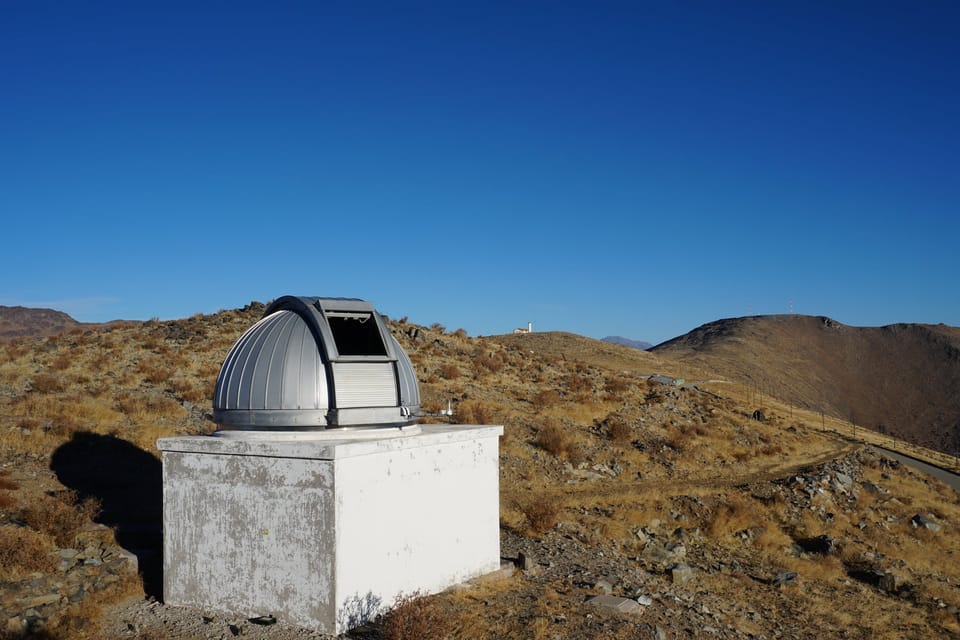
Observing from both hemispheres allows astronomers to track continuous structures that wrap entirely around the Milky Way, including the vast stellar halo and neighboring satellite systems that never rise above northern horizons. To achieve identical coverage across both skies, SDSS-V deployed twin optical spectrographs at two mountain sites: Apache Point Observatory in New Mexico for the northern sky and Las Campanas Observatory in Chile for the southern sky.1 According to the collaboration's public announcement, this southern vantage point provided the survey's first southern optical spectra, bringing the Magellanic Clouds and the far reaches of the outer galactic disk into the same systematic catalog as the northern sky.1
Marina Kounkel, an assistant professor of physics and astronomy at the University of North Florida and the SDSS-V survey coordinator, stated in the survey announcement that placing a public dataset of this size and quality into the hands of outside researchers opens doors that collaboration scientists have only begun to explore.1 The survey catalog does not simply log static targets; because many of the stars were visited multiple times across different observing runs, the data track how radial velocities shift and how magnetic flare activity flickers over months and years.1
The expanded view immediately altered astronomers' understanding of the galactic halo, the diffuse, spherical envelope of ancient stars surrounding the Milky Way's central disk.1 The release provides spectra for about 250,000 halo stars, representing the largest systematically selected spectroscopic sample of the outer halo gathered to date.1 This halo census combines three targeted surveys: an all-sky hunt for giant stars extending to distances greater than 65,000 light-years from Earth, an analysis of fast-moving stars within 3,000 light-years of the Sun, and an explicit search for chemically primitive stellar relics whose iron abundance is less than 1 percent of the iron measured in the Sun.1
Vedant Chandra, a graduate student at Harvard University who led a study mapping the distant halo using SDSS-V observations, argued in the announcement that piecing together the galaxy's structural past is impossible without seeing the entire celestial sphere at once.1 Chandra explained that full-sky spectroscopic coverage allows researchers to calculate distances, chemistry and three-dimensional motions for halo stars across all directions, bringing to light ancient tidal streams and identifying the dynamical forces that dismantled earlier satellite systems.1
What can primitive stars reveal about the earliest cosmic structures?
Chemically primitive stars preserve the initial conditions of the universe because their atmospheres carry almost none of the heavy elements generated by successive generations of supernovae. Within the new halo sample, undergraduate students at the University of Chicago identified an ancient star designated SDSS J0715-7334, which originated within the neighboring Large Magellanic Cloud.12 Research briefings published in Nature Astronomy report that SDSS J0715-7334 has an elemental metallicity measuring just 0.005 percent of the solar metallicity value, making it one of the most chemically pristine stars ever documented.23
Astronomers studying SDSS J0715-7334 reported in Nature Astronomy that its composition offers observational proof that dust cooling helped drive the formation of the first low-mass stars in early dwarf galaxies.23 Alexander Ji, an astronomer at the University of Chicago and the deputy project scientist for the SDSS-V halo program, said in the survey release that team members enjoyed analyzing the dataset and remain eager to see what conclusions other research groups draw from the public archive.1
A related investigation led by astronomer Maddie Lucey examined stars lying beyond our own galaxy's borders, identifying the first five carbon-enhanced metal-poor stars confirmed inside the Large Magellanic Cloud.1 Prior searches across the Magellanic system had failed to find any such objects, leaving astronomers to wonder whether the earliest epochs of star formation in the satellite galaxy operated under entirely different chemical rules than those observed in the Milky Way.1 Lucey stated in the announcement that the discovery was made possible by the enormous volume of targets observed by SDSS-V, adding that the presence of these carbon-rich relics demonstrates that the ancient environments of both galaxies were far more similar than researchers had presumed.1
What happens to planetary systems when host stars run out of fuel?
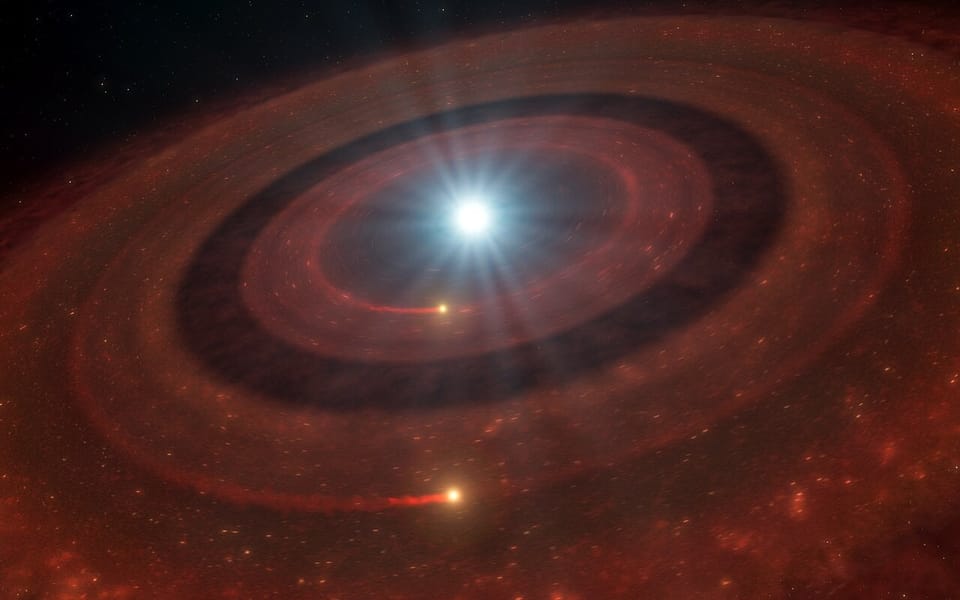
When stars similar in mass to the Sun exhaust their nuclear core fuel, they shed their outer envelopes and contract into dense, Earth-sized stellar remnants known as white dwarfs, often disrupting any orbiting worlds in the process.1 The DR20 catalog supplies 49,000 spectra of white dwarfs, more than doubling the total number of white dwarf spectra published across the twenty-year history of the Sloan Digital Sky Survey.1 More than 80 percent of those 49,000 targets had never been observed by SDSS spectrographs in earlier phases, and more than 40 percent lie in the newly mapped southern sky.1
JJ Hermes, an astronomer at Boston University and a Milky Way Mapper survey scientist, said in the announcement that many of the new white dwarf spectra display atmospheric contamination from heavy elements, which serves as a telltale sign of shattered planetary systems whose rocky fragments rained down onto the compact stars.1 Hermes noted that assembling a collection of 49,000 white dwarf spectra through traditional individual telescope pointings would have required several decades of dedicated observing time.1
Closer to Earth, the release documents the local stellar environment through a Solar Neighborhood Census covering 280,000 stars located within 250 parsecs, or approximately 815 light-years, from the Sun.1 The local census focuses on low-mass red dwarf M stars and substellar brown dwarfs, dim objects that make up roughly three out of every four stars in the Milky Way.1 By cross-referencing these spectra with distance measurements from the European Space Agency's Gaia space observatory, astronomers can benchmark how age, chemical composition and mass distribute across nearby systems.1
The data release also quadrupled the survey's coverage of stellar nurseries, logging spectra for more than 200,000 young stars.1 These include infant Sun-like stars still surrounded by protoplanetary debris disks alongside massive, short-lived OB stars that trace the Milky Way's spiral structure.1 In addition, the team matched nearly 48,000 optical spectra with energetic X-ray coordinates detected by the orbiting eROSITA space telescope, establishing what the collaboration identifies as the largest combined catalog of optical and X-ray stellar observations compiled so far.1
What questions remain beyond the reach of the current catalog?
Spectroscopic surveys provide powerful statistical samples, but ground-based observations remain subject to fundamental physical constraints. While optical spectrographs capture pristine detail in clear atmospheric windows, dense clouds of interstellar dust in the Milky Way's central midplane absorb optical light, obscuring many stars residing directly within the galactic center. The current catalog provides spectral parameters and line measurements, but transforming those numbers into absolute stellar ages requires theoretical models of stellar interior physics that carry their own inherent uncertainties.
The dataset represents a public observational foundation rather than an exhaustive census of every star in the galaxy. Andrew Tkachenko, an astrophysicist at KU Leuven who leads the Milky Way Mapper program, observed in the release that every stellar spectrum tells an individual story, describing DR20 as a significant milestone toward building a comprehensive, permanent spectroscopic ledger of our galaxy.1 With funding from the Alfred P. Sloan Foundation, the Heising-Simons Foundation, the National Science Foundation, and participating research universities, the open catalog leaves subsequent discoveries to the wider astronomical community as researchers test new models against millions of newly accessible stellar records.1
The record
32 sentences trace to 3 sources.
-
1
S
 scientificinquirer
Document
· scientificinquirer.com · 15 Nov 2026
SDSS-V’s Latest Data Release Charts the Milky Way With Two Million New Spectra
See the source
-
2
N
 nature.com
Paper
· nature.com
An ultra-metal-poor star from the Large Magellanic Cloud illuminates early star formation - Nature Astronomy
Journal article
See the source
-
3
N
nature.com
Paper
· nature.com
Nature Astronomy - Archaeological twins
Journal article
See the source