Voyager 1 reaches the distance of a single light-day
A radio transmission sent from Earth now requires two full days to travel out to humanity's farthest probe and return, marking an unprecedented milestone in deep-space exploration.
When an observer looks out into deep space, distance cannot easily be separated from time. Every view of the cosmos is an encounter with the past, because even electromagnetic radiation, which moves at the fundamental physical limit of the universe, takes time to travel from one point to another. Under everyday conditions, this delay passes unnoticed. Across astronomical expanses, however, the gap between an event taking place and its signal arriving becomes a physical gulf that defines whether communication is practical or even possible.
For any two objects separated by space, that gulf is governed by a strict sequence. A physical pulse or radio message must be emitted from a transmitter. It must propagate outward across the intervening void at the finite speed of light. If an instrument receives it and broadcasts an answer, that response must then retrace the entire distance at the same constant speed before anyone on Earth can register that it arrived. As separation increases, this round trip stretches from seconds, to minutes, to hours, and eventually to multiple days.
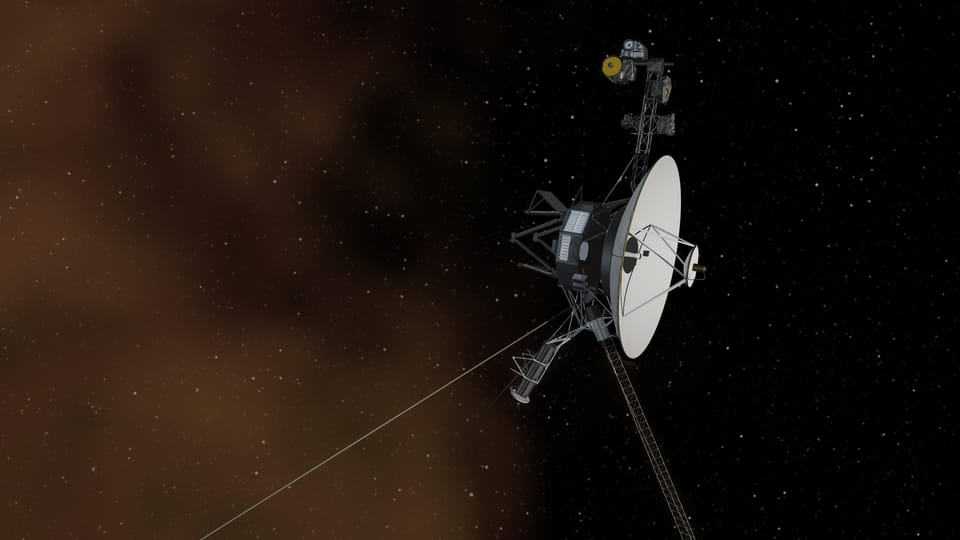
NASA reported that on Nov. 18, 2026, the Voyager 1 spacecraft crossed that threshold, reaching a separation of one light-day from Earth.12 Launched on Sept. 5, 1977, the robotic probe has journeyed for 49 years, two months and 11 days to become the first human-made object ever to attain that distance, which equals about 16 billion miles, or roughly 26 billion kilometers, from its home planet.231
How does distance change communication across interstellar space?
Communication with a spacecraft separated by one light-day operates on an unavoidable 48-hour schedule. Because radio transmissions travel at the speed of light, a command beamed upward by the dishes of NASA's Deep Space Network requires 24 hours of flight time across the void to reach the probe's receiver, and any confirmation beamed back requires another 24 hours to return.24 Suzanne Dodd, the Voyager project manager at the Jet Propulsion Laboratory, described the operational reality by noting, "If you want to say 'hello' to Voyager, you send your message and then you go home and you wait two days before you finally get a response."25
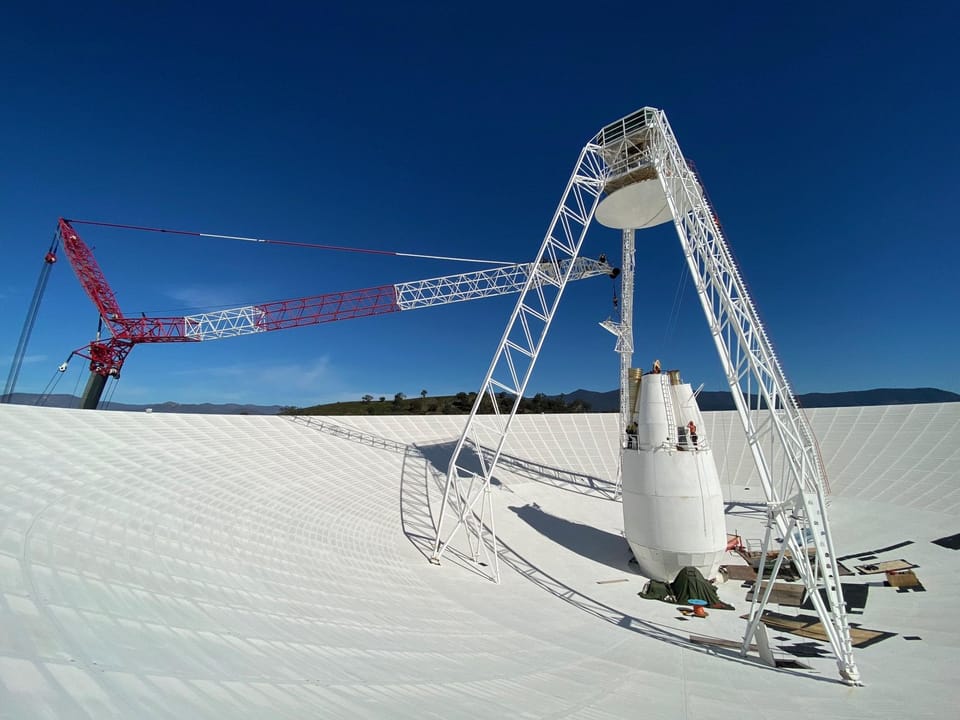
This lag places extreme demands on both ground teams and onboard hardware. Controllers cannot fly the spacecraft in real time or react quickly to unexpected emergencies. When an issue occurs, the vehicle must rely on programmed autonomous routines to protect its systems while engineers on Earth spend days waiting to determine whether an uplinked recovery command took effect. As the probe continues to cruise outward at a speed of nearly 38,000 miles per hour, or roughly 61,000 kilometers per hour, that communication delay will lengthen steadily each year.21
What has the aging spacecraft revealed about the solar system?
Voyager 1 was originally designed for a four-year flyby mission through the outer solar system, taking advantage of a rare planetary alignment that occurs only once every 176 years.62 By using gravitational assists from Jupiter and Saturn, the probe slingshot itself across interplanetary space. Together with its twin, Voyager 2, which followed a distinct path to encounter Uranus and Neptune, the mission discovered 23 moons across the outer planets and captured the first detailed atmospheric surveys of the gas giants.21
The probe transformed worlds once seen only as fuzzy blurs through ground telescopes into dynamic, complex geological environments. During its encounter with Jupiter in early 1979, Voyager 1 discovered a faint ring circling the planet along with two previously unknown moons named Thebe and Metis.32 The spacecraft also discovered active volcanism on the Jovian moon Io, marking the first time active volcanoes had been observed on any world other than Earth.2 Pascal Lee, a planetary scientist at the SETI Institute who worked on the Voyager 2 Neptune flyby in 1989, observed that before these flybys, researchers had no clear view of what these bodies looked like, adding, "And all of a sudden they became places we could map, imagine ourselves exploring, landing on... they became places."2
Beyond Jupiter, the spacecraft revealed five new moons and an outer ring designated the G-ring at Saturn, while detecting that the atmosphere of Saturn's largest moon, Titan, is composed of 90 percent nitrogen. After executing its final close look at Titan, Voyager 1 climbed out of the plane of the planets, later capturing the famous portrait showing Earth as a speck of dust suspended in a beam of sunlight from a distance of about 3.7 billion miles in 1990.73
How long can humanity remain in contact with its farthest probe?
The mission now operates on a dwindling supply of electrical power that will eventually bring its scientific operations to an end. Because sunlight in the outer reaches is too faint to run solar panels, Voyager 1 relies on three radioisotope thermoelectric generators that produce electricity by converting the heat generated from the natural radioactive decay of plutonium.32 That thermal output diminishes steadily each year, compelling engineers at the Jet Propulsion Laboratory to turn off systems systematically over the past several decades to keep the core spacecraft alive.
Engineers turned off the imaging cameras in 1990 shortly after capturing the solar system family portrait, and they have selectively switched off other instruments in subsequent years.25 Out of the 10 scientific instruments Voyager 1 carried at its launch in 1977, only two remained operational by late 2026: the triaxial fluxgate magnetometer and the plasma waves subsystem.2 Kelly Perry, a data systems engineer on the Voyager program at the Jet Propulsion Laboratory, reported that an engineering effort nicknamed the "Big Bang" shut off certain higher-power electrical subsystems while activating lower-power alternatives, an intervention that "bought us almost two more years during which we will not need to turn any instrument off."2
These operational lifetime projections carry clear limitations. They represent modeled engineering estimates based on hardware degradation rates rather than fixed guarantees, and an unexpected hardware component failure could silence the vehicle at any moment. The projections also cannot predict the exact physical space environment the spacecraft will encounter as it travels deeper into the interstellar medium. NASA estimates that both Voyager probes may continue transmitting basic engineering updates about their internal system health until around 2036, at which point available electrical power will drop below the threshold required to operate any transmitter.2
Where will Voyager 1 wander after its power runs out?
Silence from its radio antenna will not mark the physical end of Voyager 1's journey. Scientifically, reaching one light-day from Earth does not mean the probe has departed our solar system. Although Voyager 1 crossed the heliopause in August 2012 to enter the interstellar medium, it remains bound to the gravitational pull of the sun.23 That gravitational grip extends outward to the Oort Cloud, an immense spherical shell of comets and icy debris. NASA calculations indicate that the probe will require roughly 300 years merely to reach the inner edge of the Oort Cloud, and potentially 30,000 years to drift entirely past its outer boundary.2
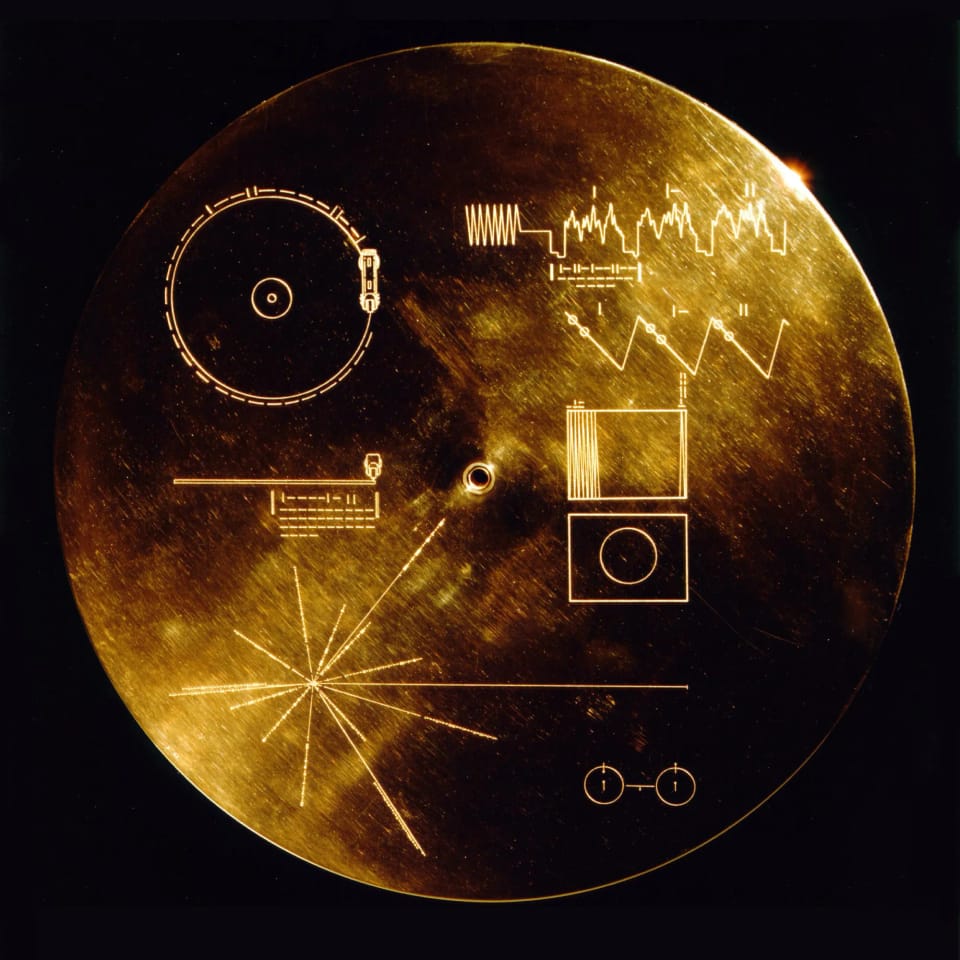
As it drifts silently across the galaxy, the spacecraft carries a message from its creators. Bolted to its exterior is a 12-inch gold-plated copper phonograph record containing 115 images, spoken greetings in 55 human languages, and an array of natural sounds from Earth.4 The disc is protected by an aluminum cover electroplated with an ultra-pure sample of uranium-238, an isotope possessing a radioactive half-life of 4.468 billion years that could theoretically serve as an atomic clock for any civilization that retrieves it.4 Even so, the likelihood of extraterrestrial retrieval remains remote because interstellar space is extraordinarily vast. In about 40,000 years, Voyager 1 is projected to pass within 1.7 light-years of an obscure star designated Gliese 445 in the constellation Ursa Minor, coasting as an intact physical artifact of humanity through deep space long after its last radio signals have faded from Earth's receivers.12
The record
22 sentences trace to 7 sources.
-
1
NS
 NASA Science
Official record
· science.nasa.gov · 20 Aug 2026
Voyager 1: What Is a Light-Day - NASA Science
See the source
-
2
SK
 Sharmila Kuthunur
Document
· livescience.com · 15 Nov 2026
'Out there, moving into the unknown': As Voyager 1 reaches one light-day from Earth, scientists reflect on its past — and its future
See the source
-
3
NS
NASA Science
Official record
· science.nasa.gov · 7 Dec 2017
Voyager 1: The Farthest Spacecraft — NASA Science
See the source
-
4
NS
NASA Science
Official record
· science.nasa.gov · 30 Oct 2026
November’s Night Sky Notes: Light-Day Away - NASA Science
See the source
-
5
NS
NASA Science
Official record
· science.nasa.gov · 10 Mar 2024
Where Are Voyager 1 and 2 Now? - NASA Science
See the source
- 6 NASA Invites Media, Public to Join Voyager 1 One-Light Day Activities | NASA Jet Propulsion Laboratory (JPL) See the source
-
7
NS
NASA Science
Official record
· science.nasa.gov · 8 Dec 2023
Voyager - NASA Science
See the source