Vulcan rocket fails during flight and destroys 40 satellites
United Launch Alliance suffered its first total mission loss since 2006, leaving Amazon internet deployment facing indefinite launch delays.
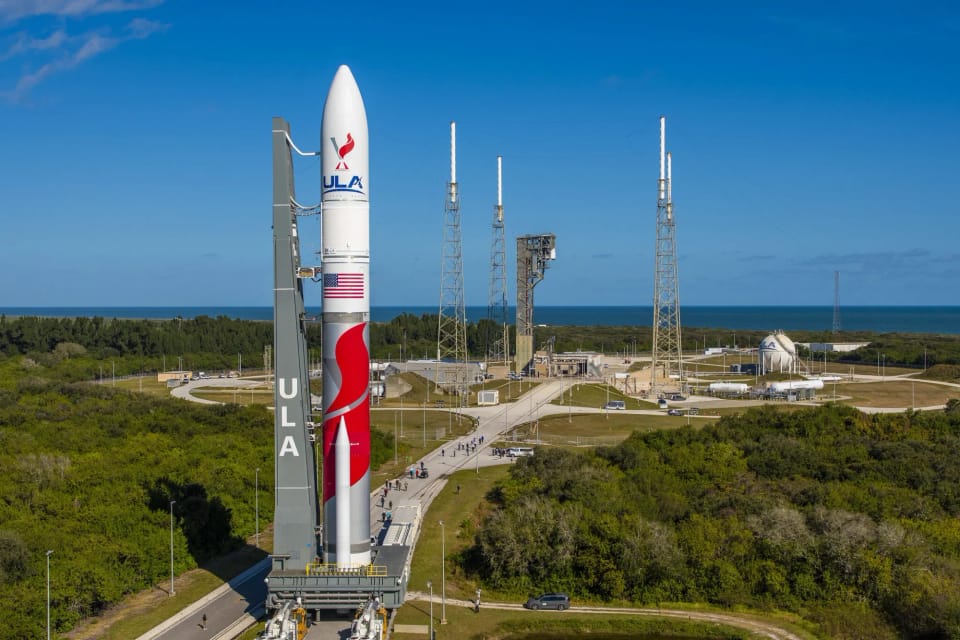
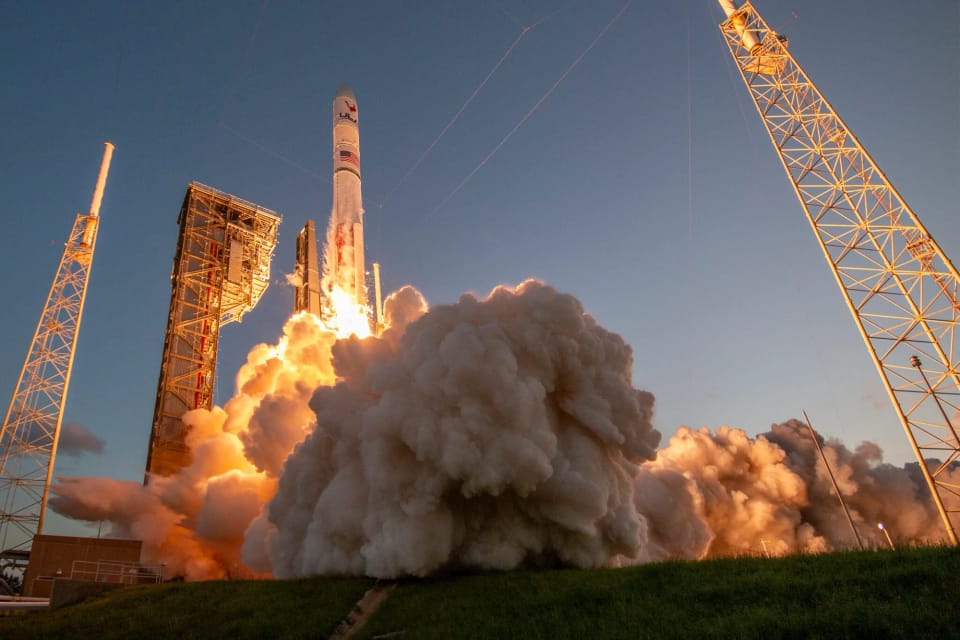
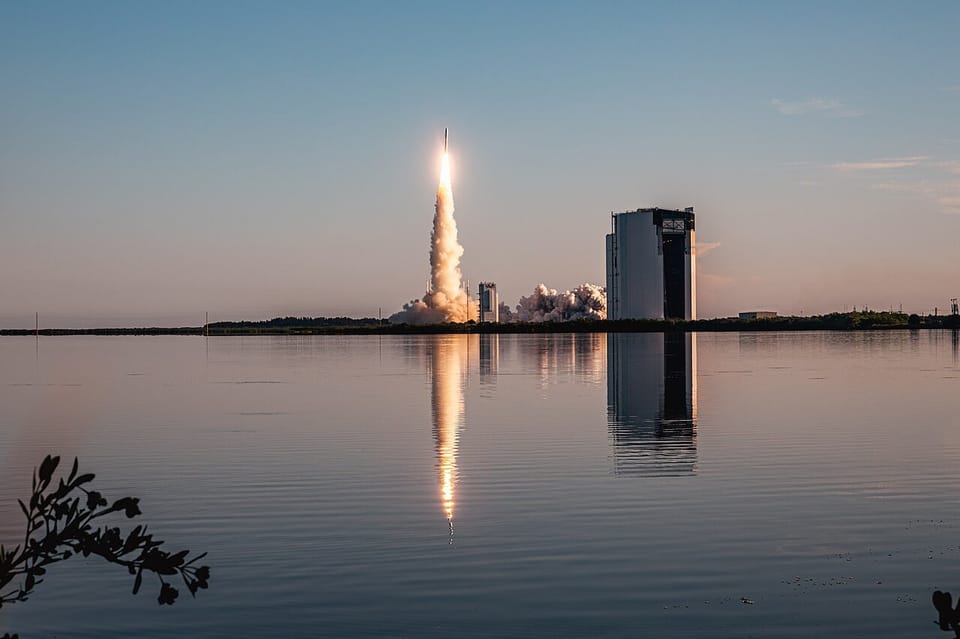
United Launch Alliance lost its Vulcan rocket and 40 Amazon Leo broadband satellites on Sunday afternoon when an anomaly during ascent prevented the vehicle from reaching orbit.12 The launch, designated LV-01, lifted off from Space Launch Complex-41 at Cape Canaveral Space Force Station in Florida at 12:40 p.m. Eastern time.12 Ten minutes after liftoff, the vehicle suffered a flight anomaly that destroyed the booster and its commercial payload over the Atlantic.12
The loss marks the first complete mission failure for United Launch Alliance since the company formed in 2006 through the consolidation of the rocket divisions of Boeing and Lockheed Martin.1 The incident triggers an indefinite grounding of the Vulcan fleet while engineers conduct an investigation into the booster stage.1
In an official statement released after the flight, United Launch Alliance said the rocket suffered an anomaly 10 minutes into the flight and failed to deliver the Amazon mission to orbit.1 The company added that it did not immediately possess specific data to explain what occurred during the flight profile.1
"ULA exists to provide assured access to space for our nation and for the customers who depend on us," the company said in a statement. "That purpose is why we take on some of the hardest missions in spaceflight, and why we hold ourselves to the standard of mission success. Today, we did not meet that standard."1
The company said its investigation team will seek the cause, determine corrective actions, and return the vehicle to flight as quickly as possible.1 United Launch Alliance stated that customers will receive visibility into the investigation process.1
Telemetry points to booster overburn
The flight appeared routine through the early phase of flight. The rocket lifted off using six strap-on solid rocket boosters, which separated as scheduled roughly two minutes into the flight.13 Vulcan then continued climbing on the thrust of its two BE-4 main engines, supplied by Blue Origin and designed to produce more than 500,000 pounds of thrust each while burning liquid methane and liquid oxygen.1
Flight profiles planned for the twin main engines to cut off just prior to the five-minute mark of the mission.1 Telemetry on the launch broadcast indicated the BE-4 engines fired for at least 30 seconds past their planned shutdown target.1 An extended engine burn often reflects a vehicle compensating for lower thrust than models predicted.1
Shortly after the main engines shut down, real-time animation from the launch broadcast showed the booster stage begin to spin.1 The rotation persisted through stage separation, when the Centaur V upper stage decoupled from the booster.1 The upper stage ignited its two RL10 engines and began vectoring thrust to regain attitude control, but the vehicle could not overcome the disturbance.1 United Launch Alliance ended its public broadcast without detailing the anomaly and confirmed the loss in a subsequent statement.1
Although the company referenced an anomaly 10 minutes into the mission, flight telemetry indicated that the primary disturbance originated in the first stage booster rather than the upper stage.1 Investigators are examining whether the problem stemmed directly from the BE-4 engines, the propellant feed infrastructure, or another booster subsystem.1
Disruption for Amazon constellation
The mission was the first of 38 planned Vulcan launches contracted by Amazon to build its Amazon Leo satellite broadband network, originally established as Project Kuiper.32 The program intends to place 3,292 first-generation satellites into low Earth orbit to provide commercial consumer internet services directly competing with SpaceX's Starlink network.13
Prior to Sunday's launch, Amazon had placed 396 satellites in orbit across 14 operational missions, making the fleet the third largest constellation in low Earth orbit.12 Amazon announced that it completed assembly of its 1,000th satellite in September, leaving hundreds of completed spacecraft in storage awaiting flight availability.
Amazon contracted for 40 satellites on the inaugural Vulcan flight, representing the largest single payload batch the program had attempted to deploy.31 The flight also marked the debut of Amazon-funded ground infrastructure at Cape Canaveral, including the VIF-A vertical integration building and a dedicated mobile launch platform designed to permit simultaneous preparation of consecutive Vulcan rockets.3
Amazon acknowledged the failure in a company statement: "There is risk with any launch, and that’s especially true for inaugural missions like LV-01. ULA has been a trusted partner for Amazon, and we believe they’ll learn from this mission and deliver on their long-term plans for Vulcan."12
The company planned to conduct a second Vulcan flight, designated LV-02, within weeks of a successful first mission.3 With the Vulcan vehicle now grounded pending review, Amazon must rely on alternative launch providers to maintain deployment momentum.
Amazon maintains launch contracts across several commercial providers, having purchased 24 flights on Europe's Ariane 6 rocket and booked capacity on Blue Origin's New Glenn rocket.13 The next scheduled Amazon mission, LE-04, is set to carry 36 satellites aboard an Ariane 6 rocket from French Guiana on November 23.21 That flight will bring the total number of Amazon satellites launched by Arianespace to 136.2
Amazon previously contracted with SpaceX for Falcon 9 launches to deploy satellites during earlier delays, and the company retains 10 scheduled Falcon 9 missions.1 Because SpaceX is shifting operational focus toward Starship, additional Falcon 9 launch slots may remain unavailable.1
Reverberations for military and lunar programs
The failure extends beyond Amazon to government space operations. The United States Space Force selected Vulcan to fly roughly half of its National Security Space Launch missions across the next several years.1 Previous delays with Vulcan development previously forced the Space Force to shift six national security payloads onto SpaceX Falcon 9 and Falcon Heavy rockets.1
The grounding leaves the Pentagon increasingly reliant on SpaceX for critical orbital missions at a moment when defense officials seek redundant launch capability. The Space Force added Blue Origin's New Glenn as a third provider in 2025, but that vehicle remains grounded following a ground-test explosion in Florida in May caused by a faulty valve on a BE-4 engine.
The Vulcan anomaly also presents complications for NASA. The space agency selected a modified variant of the Centaur upper stage to replace Boeing hardware on future iterations of the Space Launch System rocket, with plans to fly the upper stage on crewed Artemis flights by 2028.1 Determining that the Centaur V performed nominally will be an essential milestone for agency engineers.
Following the failure, NASA leadership pledged agency support to assist United Launch Alliance during the investigation, emphasizing that national exploration programs depend on restoring the rocket to regular flight service.1
The record
41 sentences trace to 3 sources.
-
1
SC
 Stephen Clark
Document
· arstechnica.com · 15 Nov 2026
Vulcan rocket fails during launch, dealing major blow to SpaceX competitors
See the source
-
2
AA
 About Amazon
Third-party reporting
· aboutamazon.com · 10 Jun 2025
Amazon Leo mission updates: Ariane 6 to launch 36 more Leo satellites on November 23
See the source
-
3
AA
About Amazon
Third-party reporting
· aboutamazon.com · 9 Nov 2026
Amazon Leo to launch 40 satellites on its first Vulcan mission
See the source