Rare genetic mutations blunt weight loss on semaglutide
Patients with impaired glucagon-like peptide-1 receptors shed far less weight on semaglutide, but dual-action medications provide an effective workaround.

When two people begin the same prescription for weight loss, their bodies can respond in radically different ways. One person may shed a fifth of their weight over a year, while another watching their portions and taking the identical weekly dose sees the scale barely budge. In clinical practice, these differences are often chalked up to diet, adherence, or metabolism, yet the biological switches that govern why some patients stall remain difficult to identify.
The medications themselves work by imitating natural gut hormones that regulate appetite. When food enters the digestive tract, cells in the intestine release signalling molecules into the bloodstream. These hormones travel to receptors situated on cells throughout the pancreas and the nervous system. The receptor functions like an intricate biological lock, and the hormone acts as the key. When the key fits, the receptor transmits chemical signals that slow the emptying of the stomach, stimulate insulin release, and signal fullness to the brain.
Weight-loss medications duplicate this communication cascade. Semaglutide, marketed as Wegovy and Ozempic, mimics glucagon-like peptide-1, binding directly to its matching receptor.12 Tirzepatide, sold under the brand names Zepbound and Mounjaro, acts on two distinct locks at the same time: the glucagon-like peptide-1 receptor and a sister receptor that responds to glucose-dependent insulinotropic polypeptide.12 For either drug to work, the receptor protein on the surface of human cells must be shaped correctly to receive the signal.
Now, a study led by Matthew E. Levy, Kelly M. Schiabor Barrett, and Elizabeth T. Cirulli at the genomics company Helix, published in Nature Metabolism, indicates that rare inherited defects in the receptor itself explain why semaglutide fails for some patients.1 By examining genetic sequences alongside medical records, the authors found that people carrying damaged versions of the glucagon-like peptide-1 receptor gene lose only a fraction of the weight typically produced by semaglutide.21 However, because tirzepatide simultaneously engages the secondary hormone pathway, patients with the same genetic flaws respond to it almost normally.23
Why do some patients lose almost no weight on semaglutide?
Patients with rare damaging mutations in the GLP1R gene experience an impaired molecular response when treated with semaglutide.24 In the primary analysis of the study, people carrying these qualifying rare variants lost an average of 2.4 percent of their body weight over six to 12 months on semaglutide.12 In contrast, matched non-carrier patients with normal receptors taking the same drug lost an average of 8.8 percent of their body weight over the identical period.21 The authors observed that 15 out of the 17 semaglutide-treated carriers in the primary group lost less weight than their matched peers.21
The biological cause lies in the structure of the receptor protein encoded by the gene. The researchers identified 33 individuals carrying rare mutations among 13,725 adults treated with either medication across 13 North American health systems in the Helix Research Network.21 Six of those carriers had severe mutations predicted to knock out gene function entirely, while 27 carried single amino acid alterations that computational tools or laboratory experiments flagged as damaging or possibly damaging.12 When the receptor protein is misshapen, semaglutide cannot trigger the cellular signals necessary to quiet appetite and slow digestion.
The impact of these rare defects stands in sharp contrast to common genetic variation. Earlier this year, a study led by Qiaojuan Jane Su and colleagues at 23andMe, published in Nature, examined 27,885 people and linked a common change in the same receptor gene, known as P7L, to modest increases in weight loss, adding approximately 0.76 kilograms of weight reduction per copy of the altered allele.1 The Helix researchers confirmed that common pattern in their own data, but calculated that carrying a rare damaging mutation exerted a negative effect roughly 12 times larger in magnitude for patients taking semaglutide.21
How can a second gut hormone bypass the defect?
Tirzepatide maintains its efficacy in patients with defective glucagon-like peptide-1 receptors by activating the glucose-dependent insulinotropic polypeptide pathway.23 While semaglutide depends entirely on the single glucagon-like peptide-1 receptor, tirzepatide is engineered as a dual agonist that stimulates both targets simultaneously. When the first receptor is structurally impaired by an inherited variant, tirzepatide can still dock with the alternative receptor, delivering the necessary metabolic signals to promote satiety.
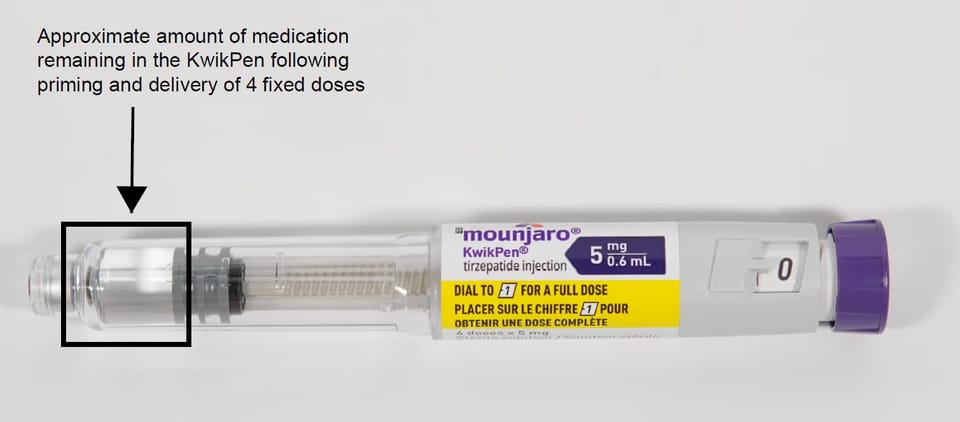
The clinical outcomes documented in the study reflect this dual-target mechanism. Among the 19 patients who carried rare damaging mutations in the GLP1R gene and received tirzepatide, weight loss averaged 13.3 percent over six to 12 months.21 Matched non-carrier patients on tirzepatide lost an average of 15.2 percent of their body weight, a difference that did not reach statistical significance.21 A formal statistical interaction test confirmed that the genetic penalty observed on semaglutide was significantly attenuated when patients received tirzepatide.21
The researchers also investigated whether inherited mutations in the GIPR gene, which produces the second receptor, blunted treatment outcomes.21 In an analysis of 63 carriers of rare variants in that gene, they observed no consistent or drug-specific reduction in weight loss.21 Matched non-carriers lost 12.1 percent of body weight, while carriers lost 10.3 percent, and the small overall difference vanished once the analysis accounted for genetic ancestry.21 The dual-receptor design of tirzepatide appeared resilient to isolated defects in either individual target.
What does the genetic comparison reveal in clinical practice?
The study demonstrates that inherited receptor variation creates a biological divide in how patients respond to single-target versus dual-target therapies.24 To confirm that the pattern was reproducible, the authors evaluated two independent patient cohorts. In the National Institutes of Health All of Us Research Program, eight rare-variant carriers taking semaglutide lost 2.6 percent of body weight compared to 5.7 percent in matched non-carriers, showing the same directional reduction.21 In an additional non-overlapping group of 8,113 patients from the Helix network, seven semaglutide-treated carriers lost 4.1 percent against 7.5 percent in non-carriers, while 11 tirzepatide-treated carriers showed no reduction in response.1
These differences carry long-term consequences for chronic disease management. The authors note that clinical trials evaluating cardiovascular outcomes have linked each kilogram of weight reduction achieved on incretin therapies to an approximate 7 percent decrease in the risk of major atherosclerotic cardiovascular events.21 When a genetic mutation curtails weight loss to a couple of percentage points, the patient misses out on substantial blood vessel and heart benefits that alternative medications might preserve.
The authors suggest that identifying these variants could eventually help steer patients toward medications that use alternative biological routes. In their published paper, the authors state that patients carrying rare damaging mutations in the primary receptor gene may be preferentially suited to tirzepatide or other agents engaging non-GLP-1R pathways.12 If a patient possesses a broken primary receptor, selecting a medication that acts through multiple hormonal channels prevents months of ineffective treatment.
What remains unknown about screening patients before prescribing?
The findings cannot tell doctors whether screening patients before prescribing weight-loss medications would improve overall health or reduce medical spending.1 The research is observational rather than interventional, drawing on real-world treatment records from health systems where physicians chose medications without genetic guidance. The authors acknowledge that residual confounding remains possible, and notes of prescription timing and body weight were collected from routine medical visits rather than controlled trial environments.12
The numbers involved in the analysis are also inherently limited. Because rare damaging variants in the GLP1R gene occurred in only about 0.2 percent of the 13,725 treated adults, the primary drug comparison rested on 17 semaglutide patients and 19 tirzepatide patients. Furthermore, the vast majority of carriers analyzed shared European genetic ancestry, leaving open questions about the exact distribution and effect of these variants in diverse global populations.12
Tirzepatide was also not completely unaffected in every subgroup. Carriers of the most severe gene-disrupting mutations exhibited a trend toward smaller weight reductions on tirzepatide, an observation the authors characterized as hypothesis-generating.12 In addition, many mutations were classified as harmful based on computational prediction models, meaning direct laboratory assays on each individual variant have yet to be completed.12 Future clinical trials that deliberately randomize patients based on receptor genetics will be necessary to establish whether routine genetic profiling prior to obesity treatment delivers tangible clinical benefits.
The record
30 sentences trace to 4 sources.
-
1
SB
 Science Blog Research Desk
Document
· scienceblog.com · 16 Nov 2026
Rare genetic variants in the GLP-1 receptor blunted weight loss with semaglutide but not tirzepatide in a real-world genomic study
See the source
-
2
N
 nature.com
Paper
· nature.com
Rare GLP1R variants attenuate weight loss with semaglutide but not tirzepatide - Nature Metabolism
Journal article
See the source
-
3
N
nature.com
Paper
· nature.com
Rare GLP1R variants diminish the weight loss effect of semaglutide but not of tirzepatide - Nature Metabolism
Journal article
See the source
- 4 Brief Communications | Nature Metabolism Not published online