A giant tortoise reveals how stable molecular switches slow down ageing
Genetic and epigenomic analysis of a 194-year-old Aldabra giant tortoise indicates that durable DNA repair systems and unusually steady chemical switches can shield long-lived animals from molecular decay.
The bodies of complex animals are constantly running against decay. In living tissue, metabolic reactions generate chemical stress, copies of genetic material accumulate small errors during cell division, and cellular repair systems gradually lose their effectiveness. Over time, those unresolved errors alter how genes function, trigger persistent inflammation, and degrade organ systems until the organism breaks down.
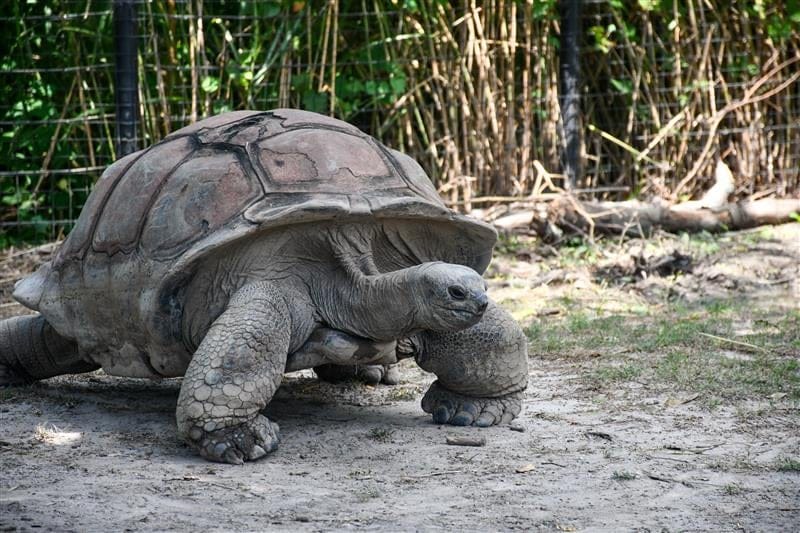
A few creatures manage to resist that progression across extraordinary lifespans. On the remote South Atlantic island of St Helena, an Aldabra giant tortoise named Jonathan has grazed the grounds of the governor's estate since arriving in the nineteenth century.12 Now estimated to have reached 194 years of age and believed to have hatched in 1832, Jonathan is recognized as the oldest living giant tortoise and the oldest known living land animal on Earth.12
Now, a genetic analysis published in the journal Science Advances provides a molecular explanation for how Jonathan has remained functional across such an extreme lifespan.12 The study was conducted by researchers at Kallel, a longevity research non-profit organization based in the United States, in collaboration with Justin Gerlach, a researcher at Peterhouse at the University of Cambridge.12 By sequencing Jonathan's genetic material and examining the chemical switches that control his genes, the authors found that his survival rests on two cellular safeguards: an unusual set of protective gene variants and an extraordinary resistance to molecular wear and tear.12
What keeps a living body from breaking down over centuries?
Animals that survive for centuries must solve a fundamental dilemma created by cell division, because the metabolic reactions that sustain life also generate ongoing damage to cellular structures. In normal biological function, oxygen metabolism produces reactive compounds that damage proteins and nucleic acids, while every cycle of cellular duplication risks copying errors in the genome. If an organism fails to repair those mutations rapidly, the damage compounds over time. Tissues lose their structural integrity, uncontrolled inflammation begins to injure surrounding organs, and damaged cells can transform into life-threatening tumors.
For a creature with a large physical mass, this risk is especially pronounced. A giant tortoise contains billions of cells that must divide and function across decades, creating mathematically higher odds of developing cancerous mutations compared to a short-lived rodent. Survival across nearly two centuries therefore requires cellular defenses that continuously neutralize damage before it spreads. Cells must rapidly mend broken DNA strands, keep inflammatory immune signaling tightly regulated, and monitor metabolic energy production so tissues do not burn out from within.
According to the study, Jonathan possesses specific adaptations across all of these critical systems. In his DNA, the researchers pinpointed 287 distinct gene variants that appear to dampen the typical processes of physical decline.12 These genetic variants touch directly on functions that frequently arise in longevity research, including the repair of damaged DNA, the suppression of cancer, the control of inflammation, and the regulation of insulin signaling.12 Each identified pathway addresses a distinct source of biological wear. Efficient repair reduces the accumulation of somatic mutations, regulated inflammation prevents the gradual degradation of healthy tissues, and dependable tumor suppression shields large long-lived bodies from cellular malignancies.1
How do Jonathan's molecular switches compare to younger tortoises?
The stability of an animal's epigenome, the collection of chemical marks sitting on top of DNA that turn individual genes on or off without altering their underlying code, helps explain why Jonathan's cells continue functioning normally.12 In most animals studied by biologists, this epigenetic pattern drifts substantially as years pass.12 Molecular tags detach, move, or accumulate improperly, causing genes to fire at the wrong times or go silent when needed. This progressive loss of chemical regulation degrades tissue function and acts as a central driver of physiological ageing.12
When the research team examined Jonathan's epigenome, they discovered that this expected chemical drift was largely missing.12 The researchers compared Jonathan's chemical switches to the epigenomes of younger giant tortoises belonging to the same species, Aldabrachelys gigantea.12 In their analysis, the molecular switches governing DNA repair mechanisms and cellular metabolism were remarkably similar between the 194-year-old tortoise and individuals that were decades younger.12 According to the paper, the research represents the first time scientists have investigated the epigenome of a giant tortoise.12

According to Gerlach, who has investigated the ecology and conservation of giant tortoises for several decades, the molecular switches that control energy production and DNA repair have remained remarkably stable in Jonathan across nearly two centuries of life.12 Gerlach noted that studying such an aged individual felt more like collaborating with the animal than merely observing a biological subject.12 Stephen Clark, the founder of Kallel and the senior author of the study, reported that Jonathan's genome demonstrates a natural blueprint for cellular resilience, showing how an organism can preserve its basic genetic controls across multiple human generations.12
Can giant tortoise biology guide medicine for humans?
Translating the molecular protections found in a giant tortoise into practical medical treatments for humans remains a distant and complex challenge. The published research centers on a single exceptional individual living under unique environmental conditions on St Helena.1 Jonathan was already fully grown when he arrived on the island 144 years ago as a gift from the Seychelles to the governor of St Helena, living ever since on the grounds of Plantation House.12 Because nobody recorded his exact hatching date, his stated age of 194 years remains an estimate based on historical records rather than an absolute calendar measurement.1
The investigation also carries significant methodological limitations that temper any immediate clinical expectations. The university announcement did not specify how many younger tortoises were analyzed for comparison, nor did the study demonstrate functionally how the 287 identified gene variants directly lengthen life.1 Identifying that a gene variant is associated with DNA repair or metabolic control is not equivalent to proving that the sequence itself produces extreme longevity.1 Furthermore, reptiles possess distinct physiological mechanisms, meaning genetic and chemical pathways observed in an Aldabra giant tortoise cannot be directly transplanted into human therapies.1
These limitations place the work in perspective, even as the authors express broader ambitions for the field. Clark noted that biological ageing represents the single greatest risk factor for almost every chronic disease that affects humans, expressing an ambition to use evolutionary adaptations to inform affordable therapies funded through philanthropic support.12 The research was supported by funding from the Voland Fund.12 For conservationists like Gerlach, the findings also offer a reminder of the ecological importance of giant tortoises from the Seychelles and Galápagos islands, which survive as the final remnants of species that once dominated island habitats across the world.12 For researchers studying longevity, Jonathan's resilient molecular switches provide a clear demonstration that biological decline is not an inevitable consequence of time.
The record
27 sentences trace to 2 sources.
-
1
S
 scientificinquirer
Document
· scientificinquirer.com · 16 Nov 2026
What a 194-Year-Old Tortoise’s Genome Says About Ageing Slowly
See the source
- 2 Genetic analysis of the world's oldest land animal reveals secret of living 194 years Not published online