OrisDX launches saliva DNA test for oral cancer
The assay reports 94% sensitivity for oral cavity squamous cell carcinoma and connects patients directly with surgical specialists.
OrisDX made its noninvasive saliva DNA test commercially available for adults presenting with indeterminate oral lesions on November 16, 2026, establishing a molecular diagnostic pathway between dental clinics and surgical oncology.12 Regulated as a laboratory developed test under Clinical Laboratory Improvement Amendments certification and College of American Pathologists accreditation, the assay, named Oro Lesion, evaluates salivary samples for somatic mutations associated with oral cavity squamous cell carcinoma.13 The launch addresses a persistent clinical delay in head and neck oncology, where suspicious mouth sores often linger without definitive diagnostic evaluation until tumors advance.13
Head and neck cancer ranks as the sixth most common cancer globally, yet delayed diagnosis leaves patients facing five-year survival rates as low as 25 percent.13 Routine dental visits represent the primary frontline setting where oral abnormalities are first observed, with dentists examining between 1.6 million and 4.9 million adults aged 18 and older each year who present with potentially cancerous oral lesions.13 When malignant tissue is identified and surgically excised at early stages, five-year survival rates rise to 90 percent.13
Patients who discover suspicious tissue changes frequently experience prolonged diagnostic friction while awaiting specialist referrals or surgical tissue biopsies.13 "As a head and neck cancer survivor, I know how hard it can be to wait for answers when you notice a change in your mouth," said Cathy Hapenney, a survivor and patient advocate, in the company's announcement.13 Hapenney noted that prompt clinical evaluation and clear subsequent care pathways provide critical support for patients and their families.13
Molecular assay mechanics and clinical validation
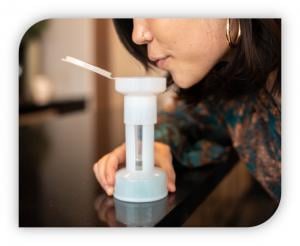
Oro Lesion operates by identifying acquired somatic mutations within cancer-related DNA extracted from intact cells collected during a salivary rinse.13 The patient rinses the mouth with an oral solution, using mechanical agitation to dislodge epithelial cells into the liquid sample.13 Unlike systemic blood draws or invasive surgical tissue punch biopsies, the rinse procedure captures shed cells directly from the oral cavity mucosa where primary lesions develop.
Clinical validation studies submitted for the assay demonstrated 94 percent sensitivity and 98 percent specificity in identifying oral cavity squamous cell carcinoma, alongside a positive predictive value of 96 percent and a negative predictive value of 97 percent.13 The assay operates under CLIA registration number 14D2334476 and CAP accreditation number 7771213.24 The foundational research supporting this approach appeared in the medical journal Cancer in May 2021, detailing ultra-sensitive detection of tumor-specific mutations isolated from saliva in patients diagnosed with oral cavity tumors.2
Once received at the central laboratory, salivary samples undergo processing on an automated testing platform designed to deliver a binary result indicating whether biomarkers associated with oral cavity squamous cell carcinoma are detected or not detected.13 The laboratory turnaround time requires as little as two weeks from specimen arrival.13
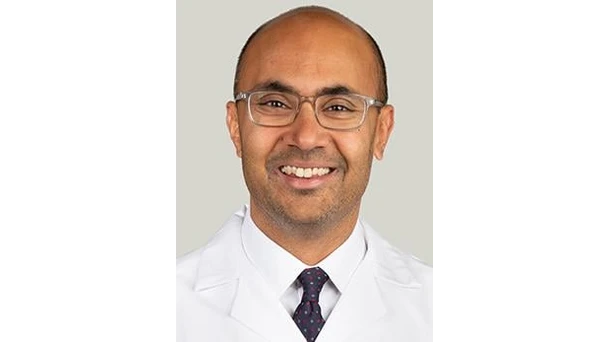
Dr. Nishant Agrawal, chair of the Department of Otolaryngology-Head and Neck Surgery at University of Chicago Medicine and co-inventor of the assay, explained the clinical rationale behind shifting molecular diagnostics to routine dental care.12 "Oral cancer is most treatable when it's caught early, and too many cases aren't," Agrawal said in the company's release.13 Agrawal stated that the development team engineered the test to provide clinicians with a simple, noninvasive tool that combines verified laboratory accuracy with broad clinical accessibility.13
Clinical workflow and patient navigation
The testing process accommodates administration during routine clinical consultations or within a patient's residence.13 Dental and medical providers can order the Oro Lesion Collection Kit for immediate in-office sample collection after identifying an indeterminate lesion during a conventional examination.13 Alternatively, clinicians can request that a collection kit be dispatched directly to a patient's home, where the patient completes the oral rinse protocol without specialized clinical assistance or physical restrictions.
Patients return the completed collection container to the testing facility using a pre-paid mailer provided in the packaging.13 To prevent positive findings from languishing in administrative gaps between independent dental practices and hospital oncology networks, OrisDX deployed an integrated navigation service called Oris Bridge alongside the test launch.13 Oris Bridge delivers laboratory reports simultaneously to the ordering clinician and the patient.13 When a sample tests positive for malignant biomarkers, the navigation service directly coordinates patient referrals to head and neck surgical oncologists.13
Harald Steltzer, chief executive officer of OrisDX, indicated that the service was designed to eliminate the diagnostic fragmentation that often complicates early intervention.13 Steltzer said in the company announcement that patients encountering suspicious oral lesions historically found themselves trapped in an uncertain zone separating routine dental practice from specialized medical oncology.13 "By arming clinicians with definitive, non-invasive molecular clarity at the earliest point of concern, we aren't just advancing diagnostics; we are fundamentally reshaping the patient journey," Steltzer said.13
Academic incubation and corporate financing
OrisDX originated as a university spinout commercializing intellectual property developed within the University of Chicago.12 Agrawal invented the core testing technology, which was formally licensed to OrisDX through the university's Polsky Center for Entrepreneurship and Innovation.13 Under the licensing agreement, both the University of Chicago and Agrawal hold equity stakes in the company and receive ongoing royalties generated from commercial sales.13
The company's commercial trajectory began in June 2022 when the founding venture won the University of Chicago New Venture Challenge.2 In July 2022, the George Shultz Innovation Fund provided co-investment capital to support ongoing technical development.2 The enterprise recruited executive leadership in September 2023, naming Steltzer as chief executive officer, before joining the inaugural cancer cohort of the Creative Destruction Lab accelerator program in October 2023.
Laboratory optimization milestones continued through early 2024 at the University of Chicago Medical Center, leading to the public demonstration of a combined oral cancer and human papillomavirus dual assay at the American Society of Clinical Oncology annual meeting in May 2024. In June 2025, OrisDX closed a $4 million seed financing round to fund the commercialization of its saliva-based diagnostic platform.2 That funding was supplemented in October 2025 when the founding academic research laboratory at the University of Chicago received a $250,000 award to accelerate early detection research.2
Distribution partnerships and pipeline development
To establish provider adoption across community dentistry, OrisDX pursued a sequence of commercial collaborations ahead of commercial launch. In January 2026, the company partnered with Teledentistry.com to integrate remote clinical screening with physical testing distribution.2 In August 2026, the company opened an early access program allowing dental and medical practices across the country to secure test allocation prior to nationwide availability.24
Institutional research alignments expanded in October 2026 when OrisDX announced a strategic partnership with the ADA Forsyth Institute to introduce molecular precision diagnostics into routine dental operatories.24 That initiative was followed on November 5, 2026, by a collaboration with the American Academy of Periodontology Foundation.24 Supported by multi-year philanthropic gifts from Ronald Tarrson and OrisDX, the partnership funds community oral cancer screening initiatives, residency training programs, and educational efforts bridging periodontal disease management with systemic oncology.4
The company is preparing to broaden the diagnostic scope of the saliva assay by adding biomarkers for human papillomavirus, commonly known as HPV.13 While Oro Lesion currently targets squamous cell carcinomas arising in the oral cavity proper, HPV-associated malignancies predominantly originate in the oropharynx, including the base of the tongue and tonsillar regions. Incorporating viral biomarkers will allow the platform to serve as a multicancer screening system spanning anatomically distinct head and neck malignancies.12
The record
42 sentences trace to 4 sources.
-
1
O
 OrisDX
Press release
· einpresswire.com · 16 Nov 2026
OrisDX Launches Oro Lesion and Oris Bridge; First and Only Saliva DNA Test for Oral Cavity Cancer with Patient
See the source
- 2 News See the source
- 3 OrisDX Launches Oro Lesion and Oris Bridge; First and Only Saliva DNA Test for Oral Cavity Cancer with Patient Navigator See the source
- 4 | OrisDX See the source