Ancient cellular polymer dictates whether cells stay anchored or invade tissue
A molecular scaffold made of linked phosphates keeps cellular antennae rigid, and restoring it in cancerous tissue blocks migration.
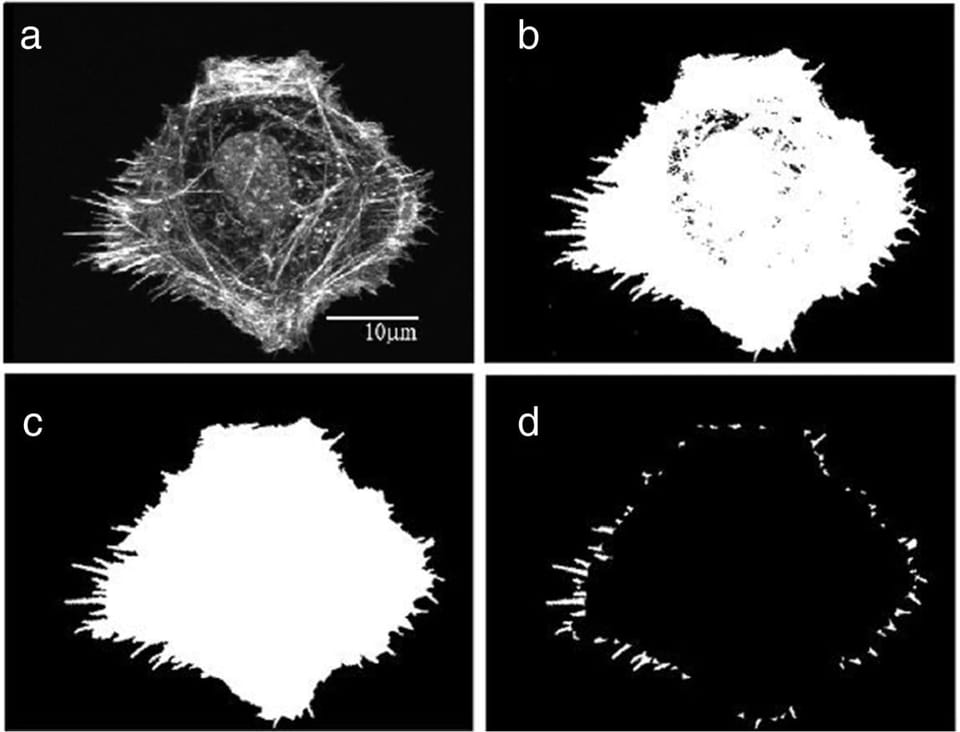
Cells in living tissue face a continuous mechanical choice: remain anchored to their neighbours or detach and crawl into new territory. To sense where they are, cells push out tiny, finger-like extensions from their outer boundary. These slender projections, known as filopodia, act like cellular antennae and grappling hooks, probing the extracellular environment and helping the cell form stable attachments.1 When these structures remain steady and anchored, the cell stays in place. When they break apart rapidly, the cell loses its grip on surrounding tissue and begins to move.
For decades, researchers knew that filopodia rely on bundles of actin filaments to push the cell membrane outward. Yet what sustains these delicate membrane fingers at the biochemical level has remained unclear. Before a cell can anchor itself, specific proteins must bend the outer cell membrane outward to form the slender protrusion, and internal structural supports must keep that protrusion from collapsing back into the cell body. When that support dissolves, the anchoring point gives way, and the cell is liberated to wander.
How does a simple polymer anchor cellular fingers?
In a study posted on the bioRxiv preprint server, an investigative team led by Dr. Ursula Jakob identified inorganic polyphosphate as an essential structural brace within filopodia. Inorganic polyphosphate, commonly called polyP, is an ancient chemical polymer composed of linked phosphate units, conserved across every branch of life from bacteria to humans.1 Inside cells, the molecule carries out compartment-specific tasks in the nucleus, mitochondria, and cytoplasm.1 However, polyP also gathers in large amounts at the outer cell membrane, where its physiological function was previously unexplained.1
The reason this accumulation stayed unnoticed for decades stems from standard laboratory choices. Dr. Ursula Jakob, the corresponding author, explained that most laboratory work relies on tumor-derived immortalized cell lines because they divide indefinitely and survive culture conditions far better than delicate primary cells. In those transformed cells, polyP concentrations are generally low and mostly pool around the cell nucleus. When lead author Akash Rai shifted the inquiry to healthy primary cells, Ursula told Primary, he discovered that polyP levels were substantially higher and prominently enriched along the outer plasma membrane, specifically concentrating inside filopodia.
The researchers discovered that polyP acts as a physical scaffold inside the filopodia.1 The polymer directly recruits and organizes IRSp53, a specialized cellular protein that induces outward curvature in lipid membranes.1 By organizing this curvature-inducing protein, polyP creates a stable framework that keeps the filopodium rigid and prevents its premature collapse. The team observed that elevating cellular polyP increased filopodial stability and enhanced cell adhesion, whereas lowering polyP accelerated filopodial disassembly and prompted cells to migrate.1
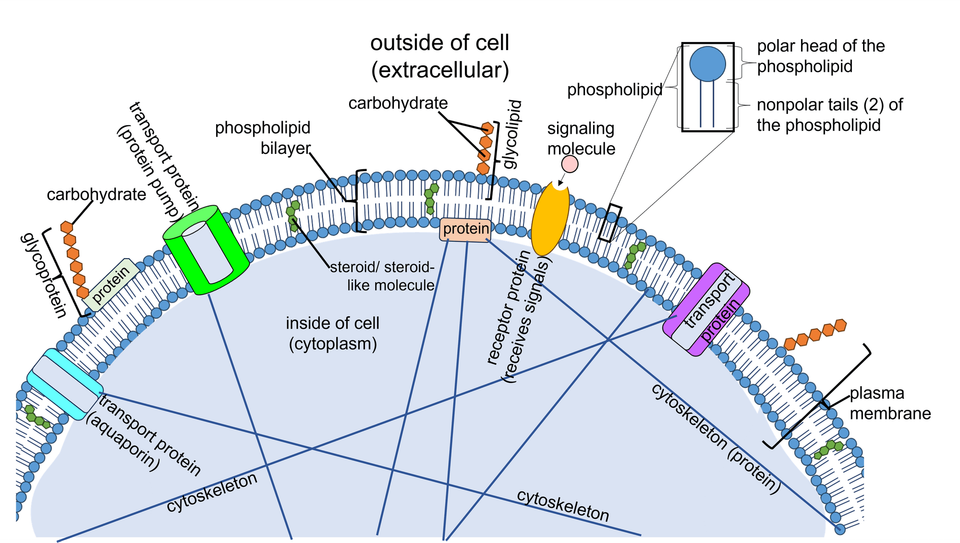
To coordinate the bending of the lipid bilayer, the polymer appears to force individual protein units into higher-order physical assemblies. Ursula said in response to questions from Primary that IRSp53 dimers must form larger clusters to curve a membrane, and testing confirmed that long polyP chains trigger phase separation of IRSp53 into concentrated droplet assemblies. The research group hypothesizes that multiple protein dimers latch onto a single extended polyP strand, assembling into constrained multimers that physically buckle the membrane outward in a manner analogous to how caveolin complexes induce inward membrane curvature.
Why do metastatic cancer cells lose their grip?
Cellular mobility becomes dangerous when non-malignant tissue transforms into aggressive cancer. Malignant cells typically dismantle their adhesive structures, detach from the primary tumor mass, and slip into the bloodstream or surrounding organs. When the researchers examined metastatic fibroblasts and breast cancer organoids, they found that polyP levels were markedly reduced and intracellularly reorganized compared with healthy, non-transformed cells.1
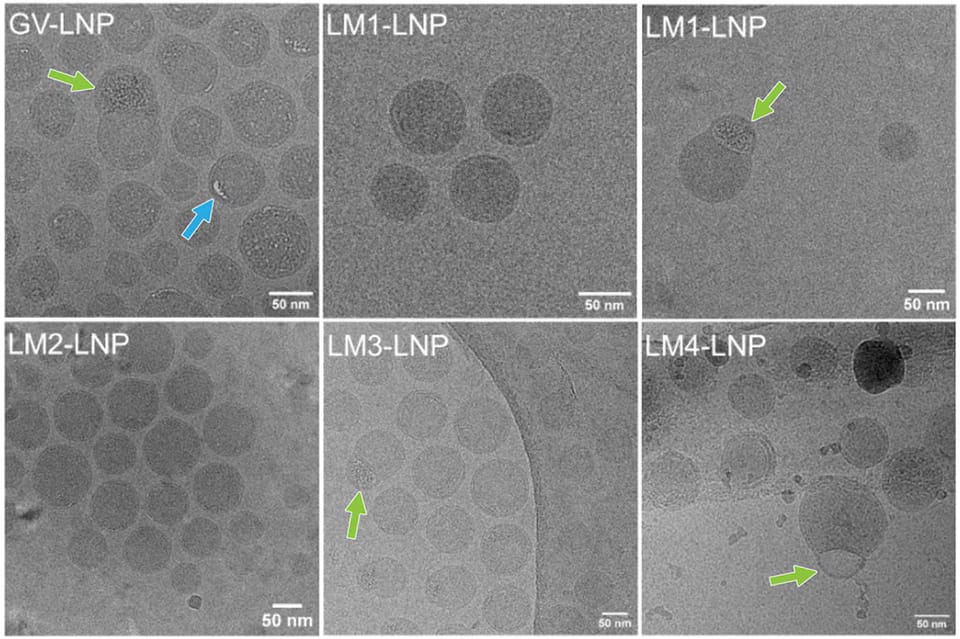
Without sufficient polyP scaffolding at the plasma membrane, metastatic cancer cells failed to maintain stable filopodial attachments, shifting instead into an invasive, migratory state. To benchmark this deficit, the group used healthy mammary tissue organoids as a non-cancerous baseline. The team tested whether this mechanical switch could be thrown in reverse. By packaging endogenous polyP into lipid nanoparticles, tiny spherical fatty capsules engineered to ferry molecular cargo across cell membranes, the authors delivered the polymer directly back into the metastatic cells.1
The choice of therapeutic material relied on specific molecular chain lengths. In vitro experiments showed that a polymer chain consisting of 300 phosphate units reliably spurred IRSp53 phase separation and stimulated filopodial assembly ex vivo, matching the natural range of 130 to 700 units normally measured in mammalian cells. The researchers calibrated the delivery dosage to restore healthy physiological levels in metastatic cells while preventing toxic phosphate overload in surrounding tissue.
Replenishing polyP restored normal filopodial behavior in the experimental models. The nanoparticle delivery suppressed the invasive phenotypes of both metastatic fibroblasts and breast cancer organoids.1 Furthermore, restoring the polymer reversed gene expression signatures associated with metastatic progression, indicating that the presence of polyP helps enforce a non-invasive cellular identity.1
What can the laboratory findings show so far?
The experimental results reflect observations in cultured fibroblasts and three-dimensional breast cancer organoids maintained in dishes. The paper was posted to the bioRxiv server in September 2026 and has not yet completed formal peer review.3 While the laboratory measurements indicate a direct molecular link between polyP levels, filopodial stability, and invasion, they cannot predict how systemic polyP delivery would behave inside the complex physiology of a living mammal.
The sequence of events connecting cancer onset to polymer loss remains unresolved. Whether polyP depletion acts as an initial molecular trigger for malignancy or arises as a consequence of transformation is still an open question, Ursula told Primary. Similarly, the exact mechanism linking peripheral filopodial changes to genetic reprogramming in the nucleus is not yet fully defined. Changes in filopodial dynamics could transmit mechanical forces through the actin cytoskeleton to rewire nuclear transcription, but altered polyP could also influence gene expression through its parallel functions in mitochondrial energy regulation.
Because polyP performs distinct duties across multiple cellular organelles, raising or lowering its abundance throughout an entire organism could alter unrelated metabolic processes. The study demonstrates what happens when polyP is artificially restored to isolated cancerous clusters, but it does not evaluate long-term toxicity, clearance rates, or organ-specific targeting in vivo.
Where will testing of this primordial tumor suppressor lead?
The authors concluded that polyP operates as a primordial tumor suppressor, an evolutionary ancient safeguard that preserves tissue integrity by locking cell motility in check.1 The finding opens a distinct avenue for oncology research focused on biophysical mechanics rather than classical kinase signaling pathways.
The protective effect may extend across multiple malignancies beyond mammary tissue. Ursula noted that polyP depletion also tracks with therapeutic failure in patient-derived ovarian cancer cells, where the cells with the lowest polyP levels showed the greatest resistance to chemotherapy drugs, and restoring the polymer helped resensitize them to treatment. In addition, previous studies in mouse xenograft models of colon cancer demonstrated that injecting polyP into solid tumors arrested their growth, suggesting that diverse cancers may exploit polyP depletion to facilitate spread.
Future work will need to map the precise regulatory pathways that cancer cells use to deplete their natural polyP reserves during malignant transformation. Scientists will also need to test whether lipid nanoparticles loaded with polyP can selectively target secondary metastases in animal models without perturbing normal phosphate balance in healthy organs.
This piece was prepared from the bioRxiv preprint and public records together with answers from Ursula to seven questions from the Primary news team, completed September 2026.
The record
24 sentences trace to 2 sources and 1 contributor.
-
1
RA
 Rai, A., Jain, A., Zunker, H., Obua, B. N., Ramchandani, H., Guan, J., Mousumi, A., Xi, Y., Erwin, A., Mahadevan, P., Oleson, B. J., Bardwell, A. B., Shoudis, J., Song, J., Suresh, M., Mosalaganti, S.
Paper
· biorxiv.org · 3 Sep 2026
The filopodial scaffold polyphosphate dictates cell adhesion-versus-invasion decisions
Preprint · may not have been peer reviewed
See the source
- 2 Contribution — Ursula Jakob 20 statements added to this article
- 3 The filopodial scaffold polyphosphate dictates cell adhesion- versus -invasion decisions See the source
Other consulted pages1 page
biorxiv.org1 page
preprints.epiforecasts.io1 page
sciety.org1 page
Article history
-
Published 17 Nov 2026, 19:42Assembled by the Primary desk from 2 sources · 1 contributor · 24 cited sentences
-
Ursula Jakob, the corresponding author
- Go to the sentence: However, polyP also gathers in large amounts at the outer cell membrane, where its physiological function was previously unexplained.
- Go to the sentence: In those transformed cells, polyP concentrations are generally low and mostly pool around the cell nucleus.
- Go to the sentence: When lead author Akash Rai shifted the inquiry to healthy primary cells, Ursula told Primary, he discovered that polyP levels were substantially higher and prominently enriched along the outer plasma membrane, specifically concentrating inside filopodia.
- Go to the sentence: The researchers discovered that polyP acts as a physical scaffold inside the filopodia.
- Go to the sentence: The polymer directly recruits and organizes IRSp53, a specialized cellular protein that induces outward curvature in lipid membranes.
- Go to the sentence: The team observed that elevating cellular polyP increased filopodial stability and enhanced cell adhesion, whereas lowering polyP accelerated filopodial disassembly and prompted cells to migrate.
- Go to the sentence: Ursula said in response to questions from Primary that IRSp53 dimers must form larger clusters to curve a membrane, and testing confirmed that long polyP chains trigger phase separation of IRSp53 into concentrated droplet assemblies.
- Go to the sentence: The research group hypothesizes that multiple protein dimers latch onto a single extended polyP strand, assembling into constrained multimers that physically buckle the membrane outward in a manner analogous to how caveolin complexes induce inward membrane curvature.
- Go to the sentence: When the researchers examined metastatic fibroblasts and breast cancer organoids, they found that polyP levels were markedly reduced and intracellularly reorganized compared with healthy, non-transformed cells.
- Go to the sentence: To benchmark this deficit, the group used healthy mammary tissue organoids as a non-cancerous baseline.
- Go to the sentence: By packaging endogenous polyP into lipid nanoparticles, tiny spherical fatty capsules engineered to ferry molecular cargo across cell membranes, the authors delivered the polymer directly back into the metastatic cells.
- Go to the sentence: In vitro experiments showed that a polymer chain consisting of 300 phosphate units reliably spurred IRSp53 phase separation and stimulated filopodial assembly ex vivo, matching the natural range of 130 to 700 units normally measured in mammalian cells.
- Go to the sentence: The researchers calibrated the delivery dosage to restore healthy physiological levels in metastatic cells while preventing toxic phosphate overload in surrounding tissue.
- Go to the sentence: The nanoparticle delivery suppressed the invasive phenotypes of both metastatic fibroblasts and breast cancer organoids.
- Go to the sentence: Furthermore, restoring the polymer reversed gene expression signatures associated with metastatic progression, indicating that the presence of polyP helps enforce a non-invasive cellular identity.
- Go to the sentence: Whether polyP depletion acts as an initial molecular trigger for malignancy or arises as a consequence of transformation is still an open question, Ursula told Primary.
- Go to the sentence: Changes in filopodial dynamics could transmit mechanical forces through the actin cytoskeleton to rewire nuclear transcription, but altered polyP could also influence gene expression through its parallel functions in mitochondrial energy regulation.
- Go to the sentence: The authors concluded that polyP operates as a primordial tumor suppressor, an evolutionary ancient safeguard that preserves tissue integrity by locking cell motility in check.
- Go to the sentence: Ursula noted that polyP depletion also tracks with therapeutic failure in patient-derived ovarian cancer cells, where the cells with the lowest polyP levels showed the greatest resistance to chemotherapy drugs, and restoring the polymer helped resensitize them to treatment.
- Go to the sentence: In addition, previous studies in mouse xenograft models of colon cancer demonstrated that injecting polyP into solid tumors arrested their growth, suggesting that diverse cancers may exploit polyP depletion to facilitate spread.