Crispr edits can leave animals carrying dozens of different genetic outcomes
Single-cell gene editing can generate unintended genetic patchworks that scatter across body tissues and pass unexpected mutations to the next generation, according to new long-read sequencing in zebrafish.

When molecular scissors alter a fertilized egg, the standard expectation has been that the resulting organism will carry a uniform genetic change in nearly every cell. A microscopic cut is made at an intended address, the cell repairs the break, and as that single cell divides into trillions, the altered code is supposed to replicate faithfully throughout the growing body.
The biological reality is considerably messier. Cellular repair machinery does not fix broken DNA strands in a single identical way across successive cell divisions, creating an organism built from a patchwork of competing genetic blueprints, a state known as genetic mosaicism. If the repair process introduces distinct insertions, deletions, or off-target cuts as cells multiply, different tissues within the same animal end up carrying entirely different sequences. When those divergent mutations make their way into reproductive cells, an animal can pass genetic variants to its offspring that were never observed during standard screening of the parent.
According to a study published on September 15, 2026, in the journal Genome Medicine by Ida Höijer, Adam Ameur, and colleagues at Uppsala University, this internal divergence is far more extensive than traditional molecular tools have recorded.12 Using an amplification-free sequencing approach to read long stretches of native DNA, the researchers found that individual adult zebrafish can carry dozens of separate genetic outcomes from a single round of editing, including complex structural rearrangements and off-target mutations that are inherited by the next generation.12
How does a single edit create a genetic patchwork?
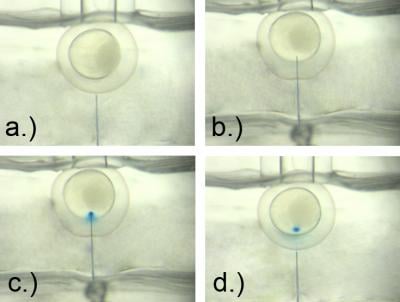
A single genetic modification can multiply into diverse outcomes because the enzyme responsible for cutting DNA continues to act while the embryonic cell divides. To modify an animal, researchers typically inject the Crispr-Cas9 enzyme and a guiding RNA molecule directly into a fertilized egg at the single-cell stage, aiming to break the double helix at a pre-selected sequence so that natural repair mechanisms disrupt or alter the target gene.13 If the cutting enzyme remains active after the egg divides into two, four, or eight cells, each daughter lineage can repair the break independently, introducing distinct errors at the cut site.
The precise duration of that cutting activity remains difficult to pinpoint in living embryos. Adam said in response to questions from Primary that “it is clear that the activity can continue through several cell divisions and persist long enough to introduce widespread genetic mosaicism in the founder fish, including in the germ cells.”
Traditional sequencing methods often mask this diversity because they rely on polymerase chain reaction, an enzymatic copying step that amplifies target DNA before analysis. That amplification step preferentially replicates shorter, simpler fragments, frequently hiding large structural variants or low-frequency mutations and distorting the measured balance between maternal and paternal chromosomes. In the study, long-range amplification of the target loci resulted in skewed read depths across alleles, obscuring the true composition of the cellular mixture.1 Adam told Primary that when evaluating offspring that should possess balanced parental contributions, “in the long-range amplification data, we noticed that some alleles were almost completely missing, implying that long-range amplification, at least in some cases, can give very biased measurements of allele frequencies.”
What did native long-read sequencing reveal in zebrafish?
Amplification-free sequencing uncovered deep genetic variation across both target sites and unintended off-target loci without distorting allele proportions. The authors examined 30 samples comprising pooled larvae and individual zebrafish subjected to Crispr-Cas9 micro-injection, using PacBio single-molecule technology known as PureTarget to sequence targeted genomic loci without prior enzymatic amplification.1 The sequencing reached an average target coverage exceeding 1,100 times across target regions, with every sequenced read originating from a distinct physical DNA molecule, achieving a consensus accuracy level designated as QV39, which represents an error rate below one error per several thousand base pairs.1
To separate genuine biological variation from potential technical artifacts at this depth, the team established strict analytical boundaries. Adam told Primary that “the threshold for somatic mutations was set at 1%, even though the high quality and coverage of the data would have allowed reliable detection of variants also at lower frequencies.”
That unbiased depth revealed that genetic mosaicism was widespread across individual adult founder fish, which are the first-generation animals grown directly from injected eggs. The paper reports that a single adult founder harboured up to 18 distinct on-target repair events and 11 unintended off-target alterations.1 Because the technique captured native DNA strands directly, the two natural inherited haplotypes of each target locus retained balanced sequencing depth, allowing the authors to detect small insertions and deletions alongside larger structural rearrangements that previous amplification methods routinely overlooked.12
The experimental structure was deliberately arranged to track how these edits spread across related organisms. Adam told Primary that the study examined multiple larval pools and individual zebrafish from the same crossing, a design that permitted researchers to pinpoint induced alterations shared among siblings across developmental stages.
Can mosaic mutations pass down to offspring?
Divergent editing outcomes frequently enter the germline of founder animals and segregate into the subsequent generation. When the researchers bred founder pairs and analysed their juvenile first-generation offspring, they observed that several Crispr-Cas9 editing outcomes, including large structural variants and off-target mutations, were transmitted directly to the second generation.1 Notably, the authors detected as many as seven unique editing events distributed among sibling offspring born to a single founder breeding pair, demonstrating that the reproductive cells of the parents harboured an assortment of separate mutation events.1
That volume of diversity in a single brood contradicted standard genetic expectations. Under classical inheritance, a pair of diploid parents can contribute at most four unique alleles for a given genetic site. Adam told Primary that the team expected to detect at most four distinct edits among the offspring, explaining that identifying seven shared events can only be explained by mosaicism in parental germ cells.
The study also analysed chemical marks on the DNA, specifically measuring 5-methylcytosine CpG methylation levels across the target regions to determine whether the cutting and repair process altered nearby epigenetic programming. The paper reported that genome-edited zebrafish samples displayed no observable changes in these 5-methylcytosine methylation signals compared to baseline states, indicating that while sequence architecture shifted dramatically, local methylation patterns remained largely intact.1 Adam noted to Primary that the study evaluated a handful of genomic sites out of millions of possibilities, pointing out that other experimental settings and target locations have previously demonstrated changes in CpG methylation.
What does the finding leave unresolved?
These findings come with natural boundaries rooted in the targeted nature of the experimental design. The study specifically tracked pre-defined on-target and off-target loci selected before sequencing, meaning it cannot provide a comprehensive accounting of every spontaneous mutation that may have occurred across the wider zebrafish genome. The measurements were also carried out in a specific laboratory model organism following micro-injection at the single-cell stage, so the precise frequency and distribution of mosaic events will differ in other experimental systems.
The authors stressed that the exact mutation frequencies observed in these fish should not be assumed to match other laboratory protocols or breeding programs. Adam told Primary that while the results reflect a specific experimental arrangement, the findings make clear that researchers must sequence on-target and off-target regions in offspring, adding that germline editing should not be conducted in humans. Translating these observations into future editing protocols will require assessing how different delivery formats, guide designs, and repair contexts govern genetic diversity before edited lines are moved forward into long-term breeding or therapeutic evaluation.
The record
17 sentences trace to 3 sources and 1 contributor.
-
1
IH
 Ida Höijer, Robin van Schendel, Anastasia Emmanouilidou, Rebecka Östlund, Ignas Bunikis, Marcel Tijsterman, Marcel den Hoed, Adam Ameur
Official record
· pubmed.ncbi.nlm.nih.gov · 18 Sep 2026
Accurate characterization of CRISPR-Cas9 genome editing outcomes and mosaicism with near-perfect long reads
See the source
- 2 Gene editing - PacBio See the source
- 3 CRISPR-Cas9 induces large structural variants at on-target and off-target sites in vivo that segregate across generations | Scholarly Publications See the source
- 4 Contribution — Adam Ameur 13 statements added to this article
Other consulted pages1 page
scienmag.com1 page
pacb.com1 page
Article history
-
Published 18 Nov 2026, 20:26Assembled by the Primary desk from 3 sources · 1 contributor · 17 cited sentences
-
Adam Ameur, colleagues at Uppsala University
- Go to the sentence: Adam said in response to questions from Primary that “it is clear that the activity can continue through several cell divisions and persist long enough to introduce widespread genetic mosaicism in the founder fish, including in the germ cells.”
- Go to the sentence: In the study, long-range amplification of the target loci resulted in skewed read depths across alleles, obscuring the true composition of the cellular mixture.
- Go to the sentence: Adam told Primary that when evaluating offspring that should possess balanced parental contributions, “in the long-range amplification data, we noticed that some alleles were almost completely missing, implying that long-range amplification, at least in some cases, can give very biased measurements of allele frequencies.”
- Go to the sentence: The authors examined 30 samples comprising pooled larvae and individual zebrafish subjected to Crispr-Cas9 micro-injection, using PacBio single-molecule technology known as PureTarget to sequence targeted genomic loci without prior enzymatic amplification.
- Go to the sentence: The sequencing reached an average target coverage exceeding 1,100 times across target regions, with every sequenced read originating from a distinct physical DNA molecule, achieving a consensus accuracy level designated as QV39, which represents an error rate below one error per several thousand base pairs.
- Go to the sentence: Adam told Primary that “the threshold for somatic mutations was set at 1%, even though the high quality and coverage of the data would have allowed reliable detection of variants also at lower frequencies.”
- Go to the sentence: The paper reports that a single adult founder harboured up to 18 distinct on-target repair events and 11 unintended off-target alterations.
- Go to the sentence: When the researchers bred founder pairs and analysed their juvenile first-generation offspring, they observed that several Crispr-Cas9 editing outcomes, including large structural variants and off-target mutations, were transmitted directly to the second generation.
- Go to the sentence: Notably, the authors detected as many as seven unique editing events distributed among sibling offspring born to a single founder breeding pair, demonstrating that the reproductive cells of the parents harboured an assortment of separate mutation events.
- Go to the sentence: Adam told Primary that the team expected to detect at most four distinct edits among the offspring, explaining that identifying seven shared events can only be explained by mosaicism in parental germ cells.
- Go to the sentence: The paper reported that genome-edited zebrafish samples displayed no observable changes in these 5-methylcytosine methylation signals compared to baseline states, indicating that while sequence architecture shifted dramatically, local methylation patterns remained largely intact.
- Go to the sentence: Adam noted to Primary that the study evaluated a handful of genomic sites out of millions of possibilities, pointing out that other experimental settings and target locations have previously demonstrated changes in CpG methylation.
- Go to the sentence: Adam told Primary that while the results reflect a specific experimental arrangement, the findings make clear that researchers must sequence on-target and off-target regions in offspring, adding that germline editing should not be conducted in humans.