Pulsating stars reveal hidden ceiling on oscillation energy
Summing the total brightness variability across thousands of vibrating stars exposes two distinct groups and a strict cap on how strongly they can oscillate.
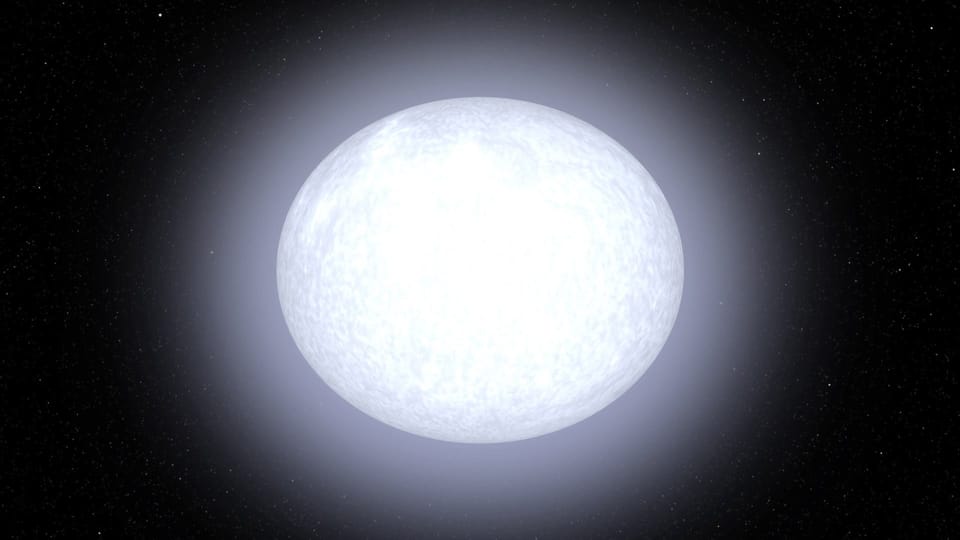
Across the night sky, thousands of intermediate mass stars do not shine steadily. Instead, they swell and shrink rhythmically, their outer layers heaving inward and outward like an astronomical chest breathing over cycles of minutes to hours. For decades, astronomers who study these rapid shakers, known as delta Scuti stars, faced a baffling puzzle. Pointing a telescope at one star would reveal a gentle, single-note vibration, while pointing at an almost identical neighbour would uncover a chaotic jumble of dozens of competing frequencies, some whispering quietly and others ringing out with unexpected force.
Understanding what controls this stellar cacophony matters because pulsating stars serve as natural seismic probes. Just as earthquakes allow geologists to reconstruct the layered interior of Earth, acoustic sound waves travelling through a star let astrophysicists measure its core density, chemical composition, and age. Yet researchers could not reliably explain why two stars with similar masses and temperatures would distribute their oscillatory drive so unevenly, or whether there was an overarching physical rule governing the total intensity of their ringing.
To grasp why these stars pulse in the first place, consider the delicate balance that keeps any star stable. In a quiet star, outward thermal pressure from nuclear fusion balances the inward pull of gravity. In a delta Scuti star, a particular layer within the stellar envelope acts like a heat engine. When the star contracts under gravity, this interior layer of helium becomes doubly ionised as helium atoms lose both of their electrons. The newly ionised helium turns opaque and blocks radiation, trapping the star heat energy beneath it. Trapped heat drives up the local temperature and gas pressure, pushing the overlying layers outward until the star expands. As the star expands, the helium layer cools, recombines with electrons, and becomes transparent again, releasing the trapped heat into space. Gravity then pulls the outer layers back inward, compressing the helium and repeating the cycle. Temperature across the star dictates the depth and efficiency of this driving layer, setting the pace and frequency at which sound waves echo through the stellar envelope.
Astronomers had long catalogued these stars by identifying the single tallest frequency peak in their brightness variations. However, focusing solely on the loudest individual frequency missed how much total work the stellar heat engine was actually doing across all of its vibrating modes simultaneously. When scientists added together the power across every detected frequency rather than tracking only the loudest peak, an unexpected order emerged from the noise. The total pulsation power revealed an apparent ceiling on oscillation strength, as well as a sharp split dividing high-frequency pulsators into two separate camps.
How do stellar vibrations distribute their total energy?
Summing the integrated power across every oscillation mode reveals that delta Scuti stars possess an intrinsic energy ceiling that caps how vigorously their envelopes can oscillate. In a preprint posted on the arXiv server on September 16, 2026, a research team led by Prasad Mani and Timothy R. Bedding at the University of Sydney, along with Simon J. Murphy, Daniel Hey, and Tom Love, reported on an analysis of thousands of these vibrating stars.1 The researchers evaluated the integrated power spectral density, a mathematical sum of the squared variations in stellar brightness across all observed frequencies, to establish an energy proxy for each star. For a simple harmonic oscillator, mechanical energy scales with the square of the amplitude multiplied by the square of the oscillation frequency. By applying this relation to the stellar light curves, the researchers demonstrated that once frequency is accounted for, the net pulsation energy across the main instability strip flattens into a consistent plateau rather than climbing continuously.
This flat boundary points directly to an upper limit on the efficiency of the helium heat engine, which astrophysicists call the kappa mechanism. While individual modes within a star can fluctuate wildly in amplitude, the star as a whole appears to operate under a constrained energy reservoir. If a star drives higher-frequency modes, it must do so at smaller amplitudes, or confine its energy to fewer active frequencies. The finding suggests that modes inside the star actively compete with one another for the available thermal drive, preventing any single star from exceeding a fundamental seismic energy budget.
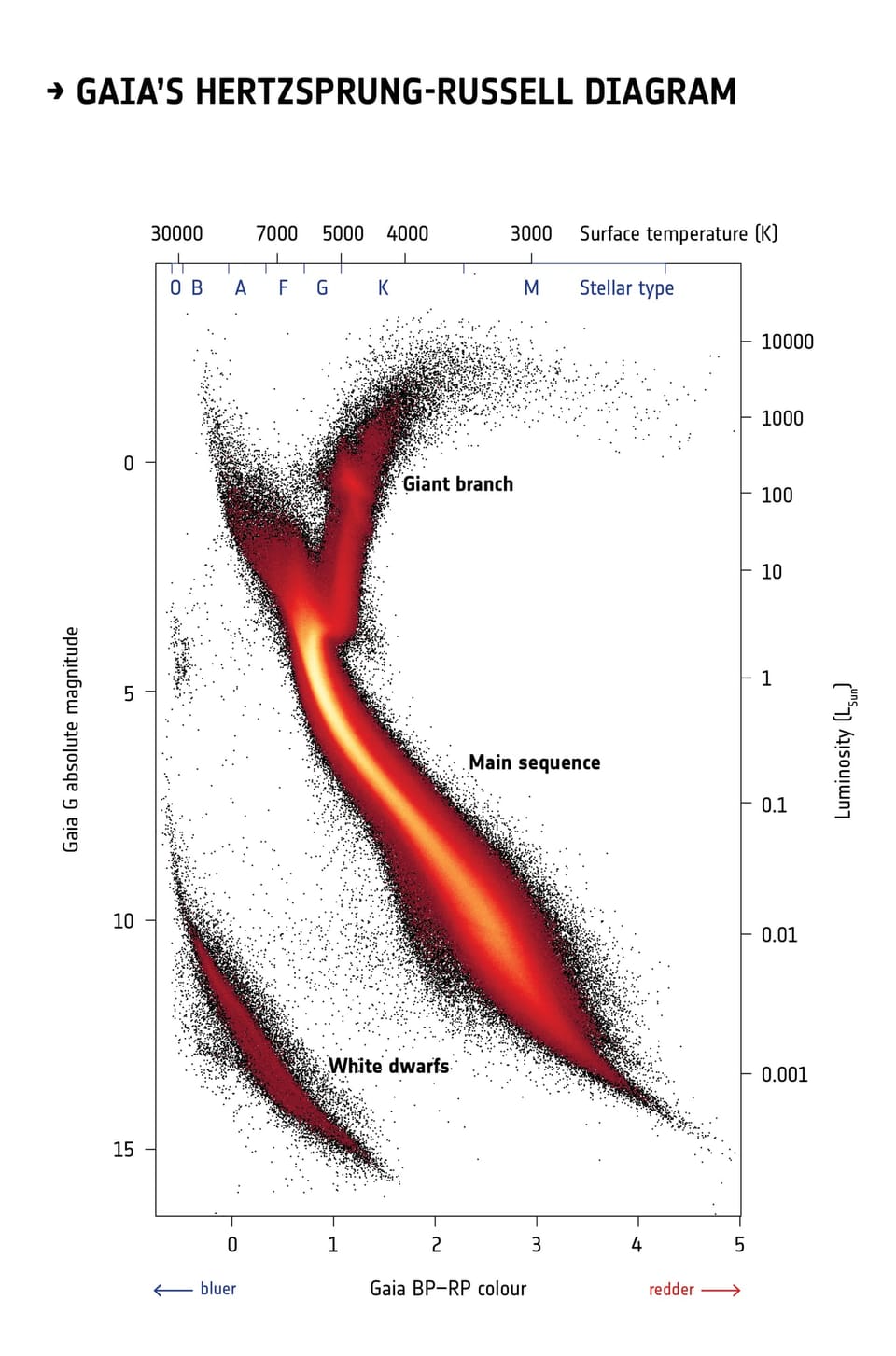
The collective view also revealed an unexpected division among stars that pulse at very high frequencies, above 40 cycles per day. Rather than forming a continuous spread, the high-frequency stars separated into two distinct clusters divided by a clear gap in total power. One cluster displayed robust, energetic oscillations near the zero-age main sequence, the developmental line where young stars begin burning hydrogen in their cores. The other cluster exhibited faint, low-power pulsations despite vibrating at similarly brisk cadences. The authors suggested this division may mark a physical transition between two entirely different driving mechanisms inside the stars.
Why do high-frequency pulsators split into two groups?
The split between energetic and faint high-frequency stars likely marks a fundamental change in how heat and gas movement drive stellar oscillations near the surface. While the classical helium valve operates deep within the stellar envelope, cooler or rapidly churning stellar layers can also generate oscillations through turbulent convection. In turbulent pressure driving, chaotic boiling motions in convective pockets near the surface buffet the surrounding gas, exciting sound waves randomly much like acoustic noise in boiling water. Because this turbulent layer sits shallow in the stellar atmosphere, its acoustic vibrations ring at naturally higher frequencies, but the stochastic kicking cannot inject nearly as much coherent power as the deeper, coordinated helium engine. The result is a subpopulation of fast-shaking stars whose total pulsation energy remains permanently subdued.
Mani and the team observed that stars on the low-power branch appeared noticeably more scattered across the colour-magnitude diagram than their high-power counterparts. This positional dispersion matches what theorists expect when surface turbulence, rather than a well-defined interior ionisation zone, dictates stellar variability. In contrast, the younger, high-power stars at high frequencies showed cleanly organised pulsation patterns, known as regular frequency spacings, which reflect sound waves propagating cleanly through a calm interior. The presence of a distinct under-density separating the two branches implies that stars do not gradually drift between these regimes, but rather experience a rapid transition in dominant driving physics.
Moving across the classical instability strip from hotter to cooler stars, the team also tracked a steady increase in integrated power spectral density. Hotter delta Scuti stars possess thinner partial helium ionisation zones because their steep internal temperature gradients push the ionisation boundary outward toward the stellar surface. A thinner driving zone operates on a shorter thermal timescale, preferentially exciting sound waves with higher frequencies. As stars cool, their ionisation zones deepen and broaden, allowing the heat engine to convert thermal energy into large, low-frequency pressure oscillations with far higher observed brightness power.
How did the researchers measure the energy of thousands of stars?
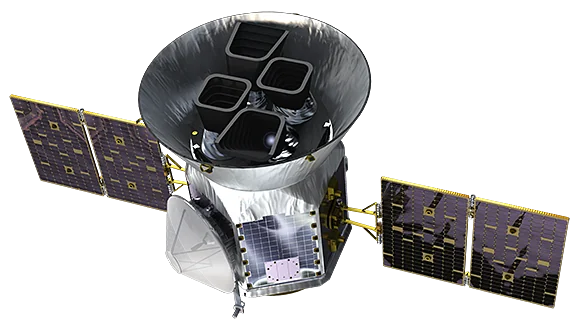
To measure the subtle vibrations of thousands of stars simultaneously, the researchers turned to high-precision space photometry collected by NASA's Transiting Exoplanet Survey Satellite, commonly known as TESS. The team began with all-sky astrometric data from the European Space Agency's Gaia spacecraft, specifically its third data release, Gaia DR3. By applying strict selection filters, the researchers isolated stars with apparent magnitudes brighter than magnitude 8 in the Gaia photometric band, ensuring that observational noise would not overwhelm faint pulsation signals. They also restricted parallax uncertainties to less than 10 percent and filtered out binary systems whose mutual eclipses could mimic true stellar pulsations, leaving a starting sample of 9,263 stars spanning distances between 15 and 630 parsecs from Earth.
The researchers then downloaded high-cadence light curves produced by the TESS Science Processing Operations Center, prioritising 120-second observations alongside 200-second and 600-second cadence data. These brief exposure intervals provided the high temporal sampling required to detect modes vibrating dozens of times each day without suffering from mathematical aliasing. For each star, the team used the Lomb-Scargle algorithm to calculate an amplitude spectrum, defining a star as a genuine delta Scuti pulsator if it displayed at least one pulsation peak with a signal-to-noise ratio greater than 5 in its pressure-mode frequency domain. This rigorous cut yielded a core sample of 3,200 bright pulsating stars.1
Calculating the integrated energy required stripping away observational noise without discarding true stellar signals. The team high-pass filtered each light curve by dividing it by a smoothed curve convolved with a Gaussian kernel of width 1 cycle per day, effectively removing slow instrumental drifts, rotational variations, and low-frequency gravity modes. After computing the power spectrum by squaring the Fourier amplitudes, the researchers subtracted the mean white-noise floor, calculated in quiet high-frequency regions between 95 and 100 cycles per day for rapid cadences. Integrating the resulting power spectral density across the full frequency array produced the total variance of the star's light variations. Finally, the team calculated the centroid frequency, denoted as nu max, representing the power-weighted centre of the pulsation spectrum, and multiplied the integrated power by the square of this centroid frequency to obtain a robust proxy for total kinetic oscillation energy.
What can these measurements tell us about stellar interiors?
The derived energy values are observational proxies based on visible surface brightness variations, meaning they do not represent direct mechanical probes of physical displacement throughout the entire volume of the star. Calculating energy by multiplying the total power by the square of the centroid frequency assumes that the star's oscillation energy concentrates near that single characteristic frequency, rather than distributing unevenly across a broad spectrum. While this approach avoids magnifying high-frequency white noise, it simplifies the complex geometry of three-dimensional stellar sound waves into a one-dimensional linear oscillator approximation. Furthermore, the findings are drawn from a preprint that has been posted to the arXiv repository and has not yet completed formal peer review. In addition, large-amplitude stars known as high-amplitude delta Scuti pulsators violate these simple linear assumptions entirely, showing pronounced non-linear shock behaviours that require separate theoretical treatment.
Despite these caveats, the identification of a universal energy cap provides stellar theorists with a crucial observational constraint. For years, computer simulations of stellar envelopes have struggled to predict which specific modes will reach detectable amplitudes, frequently predicting that dozens of modes should grow unstable when real stars display only a handful. Knowing that an overarching thermal-to-kinetic energy budget governs the entire mode spectrum will help modelers incorporate non-linear mode coupling, the process by which competing oscillation modes share, dampen, and transfer energy between one another inside the star.
The next challenge for asteroseismologists will be testing how rapid stellar rotation interacts with this newly discovered energy limit. Many delta Scuti stars spin at hundreds of kilometres per second, flattening their poles, generating internal circulation currents, and complicating their acoustic sound paths. By combining the global energy metric with detailed structural models across different stellar ages and rotation rates, astronomers hope to turn delta Scuti stars from enigmatic, noisy oscillators into dependable cosmic clocks that illuminate the lifespans of stars across the Milky Way.
The record
2 sentences trace to 1 source.
-
1
PM
 Prasad Mani, Timothy Bedding, Simon Murphy, Daniel Hey, Tom Love
Paper
· arxiv.org · 16 Sep 2026
Characterizing bright $\delta$ Scuti pulsators using TESS light curves:II. Pulsation amplitude and energy distributions
Preprint · may not have been peer reviewed
See the source
Other consulted pages1 page
arxiv.org3 pages
- Characterizing bright 𝛿 Scuti pulsators using TESS light curves: II. Pulsation amplitude and energy distributions
- The 𝛿 Scuti stars of the Cep–Her Complex. I: Pulsator fraction, rotation, asteroseismic large spacings, and the 𝜈_max relation
- The $δ$ Scuti stars of the Cep--Her Complex. I: Pulsator fraction, rotation, asteroseismic large spacings, and the $ν_{\rm max}$ relation