Alzheimer blood tests show validation gaps across diverse patient groups
Diagnostic accuracy could drop when blood tests move from elite research trials into community clinics treating older, medically complex patients.
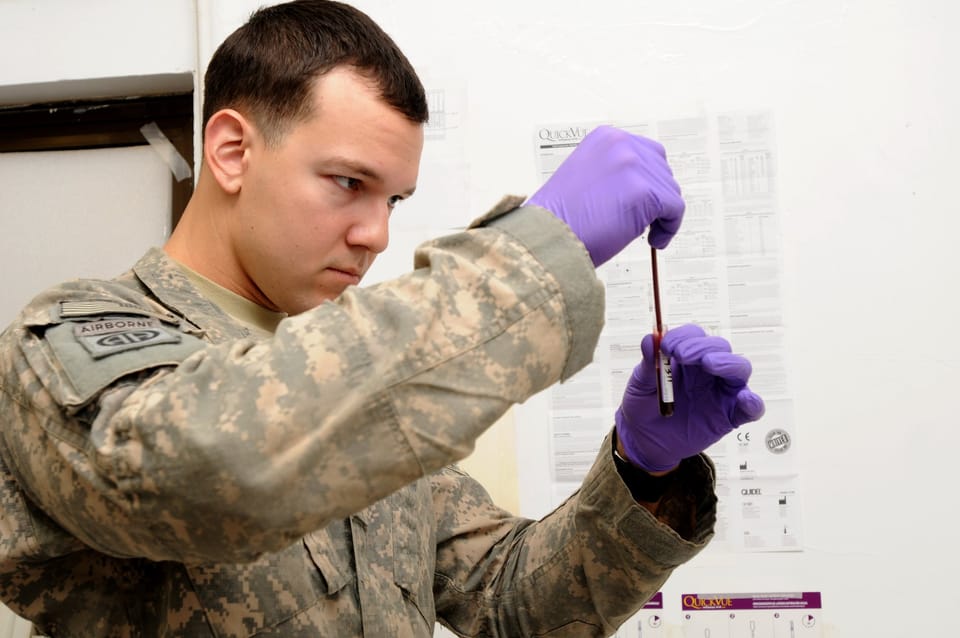
A simple blood draw that reveals signs of Alzheimer's disease before overt symptoms appear has become one of modern medicine's most anticipated diagnostic goals. For decades, identifying the underlying pathology of the condition required either an invasive spinal tap to collect cerebrospinal fluid or an expensive positron emission tomography scan to photograph abnormal protein deposits in living brain tissue. Replacing those procedures with a routine vial of blood taken in an ordinary clinic promises to make detection faster, cheaper, and far more accessible across global healthcare systems.
Yet a laboratory test that excels in research trials can falter when doctors deploy it among the wider public. Diagnostic blood tests identify diseases by measuring microscopic molecular signals that spill from affected organs into circulation. In Alzheimer's disease, specialized brain proteins undergo structural alterations as the condition develops, and tiny quantities of these altered proteins escape through the blood-brain barrier into the bloodstream. Clinicians detect these trace fragments using targeted laboratory assays and compare the measured concentration against an established numerical cutoff. An individual whose blood concentration exceeds that threshold receives a presumptive diagnosis of underlying Alzheimer's pathology, while someone whose level sits below it is considered unlikely to harbor the disease.
This diagnostic logic depends on the stability of the baseline. Protein clearance and circulation rates vary across the human body based on kidney function, vascular disease, age, general metabolic state, and genetic background. When organs clear proteins at different speeds, the concentration of a circulating biomarker can rise or fall independently of any brain pathology. If a diagnostic cutoff is established only among individuals who are unusually healthy and free of other medical conditions, doctors cannot know whether an elevated reading in an everyday patient signals true brain pathology or simply the presence of chronic kidney disease, high blood pressure, or natural metabolic variation. Before any clinical standard can be safely trusted, researchers must establish that the test performs consistently across the full demographic and medical spectrum of people who seek healthcare.
Who participated in the evaluations of the leading biomarker?
The vast majority of individuals who provided blood samples for the leading Alzheimer's blood test were recruited from specialized research cohorts and resided in Europe or North America.1 Marco Toccaceli Blasi and colleagues conducted a systematic review of observational research focused on phosphorylated tau at threonine 217, an emerging blood biomarker designated as p-tau217 that indicates the presence of Alzheimer's disease pathology.1 Their findings, published in the journal Ageing Research Reviews, revealed that the scientific evidence underpinning this biomarker rests on an exceptionally narrow slice of the global population.

Across 128 observational studies identified by the authors, 64.1 percent of all enrolled participants were recruited from dedicated research cohorts instead of routine clinical settings such as memory clinics or primary care practices.1 Geographic representation was heavily concentrated in two regions: North America accounted for 50.0 percent of the participants in the review, while Europe accounted for 48.4 percent of them.1
The clinical and demographic characteristics of the participants showed an equal lack of diversity.1 Cognitively unimpaired individuals formed the largest single category, making up 44.6 percent of all participants assessed across the 128 studies.1 Among participants whose racial background was documented, 77.4 percent were White.1 In contrast, non-White racial groups, individuals aged 85 and older, people with lower levels of education, and patients managing multiple co-occurring medical illnesses were largely underrepresented throughout the analyzed literature.1
Reporting on racial background was itself exceptionally scarce across the published literature. Marco Toccaceli Blasi, the lead author of the review, told Primary that "only 33 (25.8%) of the 128 retained studies reported information on the racial composition/ethnicity of enrolled participants." Performance appears to shift when tests migrate into routine care. Marco Toccaceli Blasi told Primary that "available evidence suggests that p-tau217 has lower specificity in real-world settings than in research cohorts." Marco Toccaceli Blasi noted that incorporating demographic and medical factors into clinical evaluations could help improve diagnostic precision.
How consistently did earlier studies record patient backgrounds?
Scientific investigations of blood p-tau217 documented participant health and background characteristics with substantial inconsistency, frequently omitting basic clinical variables from their published reports.1 Marco Toccaceli Blasi and colleagues carried out their review according to the Preferred Reporting Items for Systematic Reviews and Meta-Analyses guidelines, a standardized protocol designed to ensure transparent evidence synthesis.1 They extracted data from each qualifying study regarding geographic location, recruitment setting, participant demographics, and diagnosed medical conditions.1
The authors found that several fundamental clinical variables relevant to interpreting biomarker concentrations appeared in only a small minority of the 128 published studies.1 Many papers failed to report whether participants suffered from concurrent illnesses or what level of formal schooling they had completed.1 Marco Toccaceli Blasi told Primary that the review team was "particularly struck by the limited reporting of comorbidity data, which was available in fewer than one-quarter of the studies." Non-neurological conditions may alter the molecular readings themselves, as Marco Toccaceli Blasi noted that emerging evidence indicates conditions including "kidney dysfunction, anemia, and cardiovascular disease, may affect circulating p-tau217 levels."

Physical characteristics and organ health can influence how the body filters proteins. Marco Toccaceli Blasi told Primary that "available evidence suggests that kidney function and body weight are the strongest contributors, along with dyslipidemia, cardiovascular disease and anemia." However, Marco Toccaceli Blasi added that "their impact on clinical performance and interpretability appears to be limited," while emphasizing that demonstrating biomarker reliability across different clinical situations remains essential.
Without consistent records of those factors, medical teams cannot determine how non-neurological illnesses or socioeconomic differences might alter baseline blood protein levels.1 The findings of the systematic review describe patterns in the published literature rather than measuring how p-tau217 functions inside individual bodies.1 The authors evaluated only what previous observational studies explicitly chose to report, meaning that gaps in published documentation may obscure data that individual study teams collected but never printed. Because key medical and demographic characteristics were absent from a large share of the source papers, the analysis cannot establish exact numerical error rates or diagnostic thresholds for underrepresented groups. Furthermore, the review pooled findings across 128 observational studies that employed different assay technologies and recruitment criteria rather than assessing a single standardized commercial blood test.
What is required before these blood tests enter widespread practice?
Bringing blood tests for Alzheimer's disease into everyday medical care will require validating biomarker cutoffs in representative community cohorts and standardizing how clinical trials report participant health.1 When these tests reach community clinics, physicians will use them on older individuals who frequently manage chronic kidney disease, metabolic disorders, and vascular conditions that were systematically excluded from early research cohorts.1 If diagnostic cutoffs are not adjusted for those co-occurring conditions, healthy patients could face false-positive diagnoses while others experience delayed care.1
Because of these complexities, Marco Toccaceli Blasi argued that Alzheimer's blood biomarkers should currently be confined to specialized clinical environments. Marco Toccaceli Blasi told Primary that blood tests should be used in patients exhibiting early cognitive symptoms "within specialist settings, where results can be comprehensively interpreted alongside demographic and clinical information and the possibility of co-pathologies, rather than as stand-alone measures."
Marco Toccaceli Blasi and colleagues concluded that future studies must intentionally enroll cohorts that reflect real-world clinical diversity, including older individuals, non-White populations, and patients with complex medical histories.1 Marco Toccaceli Blasi noted that demonstrating stable biomarker cutoffs across ancestries and comorbidities in real-world cohorts "would substantially increase confidence in their biological and clinical generalizability." The authors also stated that establishing standardized reporting requirements for clinical variables will be essential to ensure that p-tau217 can be adopted safely and accurately in routine healthcare settings.1
The record
29 sentences trace to 1 source and 2 contributors.
-
1
MT
 Marco Toccaceli Blasi, Simona Buscarnera, Martina Salzillo, Marc Suárez-Calvet, Gianmarco Iaccarino, Giulia Grande, Martina Valletta, T Rune Nielsen, Anja Hviid Simonsen, Filippo Nuti, Giuseppe Bruno,
Official record
· pubmed.ncbi.nlm.nih.gov · 10 Sep 2026
Sociodemographic and clinical characteristics of participants in blood p-tau217 studies for Alzheimer's disease: A systematic review
See the source
- 2 Contribution — Marco Toccaceli Blasi 3 statements added to this article
- 3 Contribution — Marco Canevelli 13 statements added to this article
Other consulted pages1 page
frontiersin.org1 page
Article history
-
Published 20 Nov 2026, 22:15Assembled by the Primary desk from 1 source · 2 contributors · 29 cited sentences
-
Marco Canevelli
- Go to the sentence: Marco Toccaceli Blasi told Primary that "available evidence suggests that p-tau217 has lower specificity in real-world settings than in research cohorts."
- Go to the sentence: Marco Toccaceli Blasi noted that incorporating demographic and medical factors into clinical evaluations could help improve diagnostic precision.
- Go to the sentence: The authors found that several fundamental clinical variables relevant to interpreting biomarker concentrations appeared in only a small minority of the 128 published studies.
- Go to the sentence: Many papers failed to report whether participants suffered from concurrent illnesses or what level of formal schooling they had completed.
- Go to the sentence: Marco Toccaceli Blasi told Primary that the review team was "particularly struck by the limited reporting of comorbidity data, which was available in fewer than one-quarter of the studies."
- Go to the sentence: Non-neurological conditions may alter the molecular readings themselves, as Marco Toccaceli Blasi noted that emerging evidence indicates conditions including "kidney dysfunction, anemia, and cardiovascular disease, may affect circulating p-tau217 levels."
- Go to the sentence: Without consistent records of those factors, medical teams cannot determine how non-neurological illnesses or socioeconomic differences might alter baseline blood protein levels.
- Go to the sentence: Bringing blood tests for Alzheimer's disease into everyday medical care will require validating biomarker cutoffs in representative community cohorts and standardizing how clinical trials report participant health.
- Go to the sentence: When these tests reach community clinics, physicians will use them on older individuals who frequently manage chronic kidney disease, metabolic disorders, and vascular conditions that were systematically excluded from early research cohorts.
- Go to the sentence: If diagnostic cutoffs are not adjusted for those co-occurring conditions, healthy patients could face false-positive diagnoses while others experience delayed care.
- Go to the sentence: Marco Toccaceli Blasi told Primary that blood tests should be used in patients exhibiting early cognitive symptoms "within specialist settings, where results can be comprehensively interpreted alongside demographic and clinical information and the possibility of co-pathologies, rather than as stand-alone measures."
- Go to the sentence: Marco Toccaceli Blasi noted that demonstrating stable biomarker cutoffs across ancestries and comorbidities in real-world cohorts "would substantially increase confidence in their biological and clinical generalizability."
- Go to the sentence: The authors also stated that establishing standardized reporting requirements for clinical variables will be essential to ensure that p-tau217 can be adopted safely and accurately in routine healthcare settings.
-
Marco Toccaceli Blasi, lead author
- Go to the sentence: Marco Toccaceli Blasi, the lead author of the review, told Primary that "only 33 (25.8%) of the 128 retained studies reported information on the racial composition/ethnicity of enrolled participants."
- Go to the sentence: Marco Toccaceli Blasi told Primary that "available evidence suggests that kidney function and body weight are the strongest contributors, along with dyslipidemia, cardiovascular disease and anemia."
- Go to the sentence: However, Marco Toccaceli Blasi added that "their impact on clinical performance and interpretability appears to be limited," while emphasizing that demonstrating biomarker reliability across different clinical situations remains essential.