Preschool tooth decay drops when clinics and kindergartens coordinate with parents
A collaborative oral health trial in Chengdu connected daily classroom habit tracking, home guidance, and hospital checkups to reduce plaque and expand cavity treatments among preschool children.
Primary teeth emerge rapidly during toddlerhood, but the protective enamel covering them is thinner and softer than the enamel on adult teeth. When young children consume sugary snacks or fall asleep with milk bottles, resident oral bacteria ferment those carbohydrates into organic acids that strip minerals from the tooth surface. Left unchecked, this localized acid production dissolves the outer mineral matrix, producing early childhood caries, the clinical term for dental decay in children under six years old.1 Because three-year-olds lack the motor dexterity and patience required to scrub every tooth surface thoroughly, preventing cavities depends almost entirely on external supervision. Yet pediatric dental care has often treated home habits, school days, and clinical visits as separate worlds, leaving parents to navigate brushing routines with minimal day-to-day guidance.
Untreated cavities in primary teeth cause chronic pain, impair chewing function, interrupt sleep, and disrupt early speech development. Damaged milk teeth can also affect the spacing and health of permanent teeth growing beneath the gums, occasionally requiring invasive surgical restorations under general anesthesia. Early childhood caries remains among the most widespread non-communicable childhood conditions across the globe, imposing heavy financial burdens on families and clinical workloads on pediatric dental clinics.1 While public health authorities frequently distribute pamphlets or promote smartphone applications to encourage preventive hygiene, toddlers cannot independently engage with mobile software, making standard digital health solutions ineffective without active adult intermediaries.1
The biological sequence leading to tooth decay relies on a straightforward progression that provides clear points for intervention. First, residual food particles and saliva form a thin sticky film known as dental plaque along the gumline and between teeth. Bacteria residing within that plaque consume dietary carbohydrates and excrete acidic waste products. Each acid exposure causes demineralization, leaching calcium and phosphate ions from the crystalline structure of the enamel. If fluoride is applied and plaque is mechanically brushed away, saliva can remineralize the weakened enamel before a permanent cavity forms. When cleaning is irregular or dietary sugar exposure is frequent, demineralization outpaces repair, eventually breaking through the enamel into the softer dentin layer underneath. Disrupting this chain requires consistent mechanical plaque removal, topical fluoride delivery, and prompt clinical sealing of vulnerable crevices.
To test whether uniting care environments could alter this trajectory, researchers established a linked intervention in Chengdu, China, connecting kindergartens, families, and hospital dental specialists.1 According to a prospective single-arm intervention study published in Frontiers in Dental Medicine, combining classroom behavioral reinforcement, structured parental instruction, and personalized clinical care significantly improved oral hygiene and cavity treatment among preschool children over a six-month evaluation period.1 The study authors reported that children participating in the cooperative system demonstrated measurable reductions in dental plaque accumulation, higher rates of tooth fillings for existing lesions, increased adoption of fluoride toothpaste, and broader use of preventive fluoride varnishes and dental sealants.1
How did the Chengdu collaborative network connect daily habits with clinical care?
The collaborative framework operated across three interdependent settings: the family home, the kindergarten classroom, and the pediatric dental clinic. Pediatric dentists affiliated with the West China Hospital of Stomatology at Sichuan University led clinical evaluations and personalized risk assessments for participating children.1 The researchers created a specialized management toolkit that translated clinical guidelines into daily habits for both parents and preschool pupils.1 This toolkit supplied parents with practical management tips detailing proper brushing techniques, flossing practices, age-appropriate toothbrush selection, and the correct volume of fluoride toothpaste to place on the brush head.1
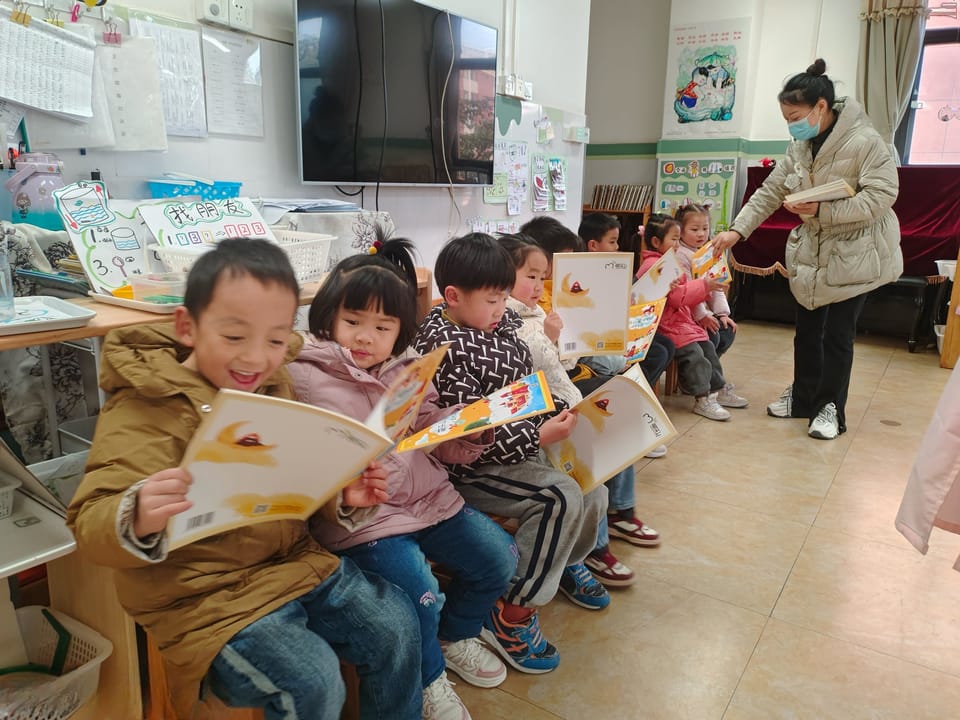
Kindergartens served as the daily operational hub for habit formation, recognizing that children spend most of their waking hours in preschool environments. Prior to launching the program, the research team conducted structured training sessions for all participating kindergarten teachers.1 The training instructed educators on the study objectives, how to explain the home toolkit to parents, how to track weekly submissions, and how to issue structured reminders.1 Children maintained behavioral and dietary guidance charts that encouraged morning and evening brushing, rinsing after meals, and flossing.1 Parents photographed their completed weekly physical tracking charts and uploaded them to dedicated class WeChat communication groups managed directly by kindergarten teachers.1
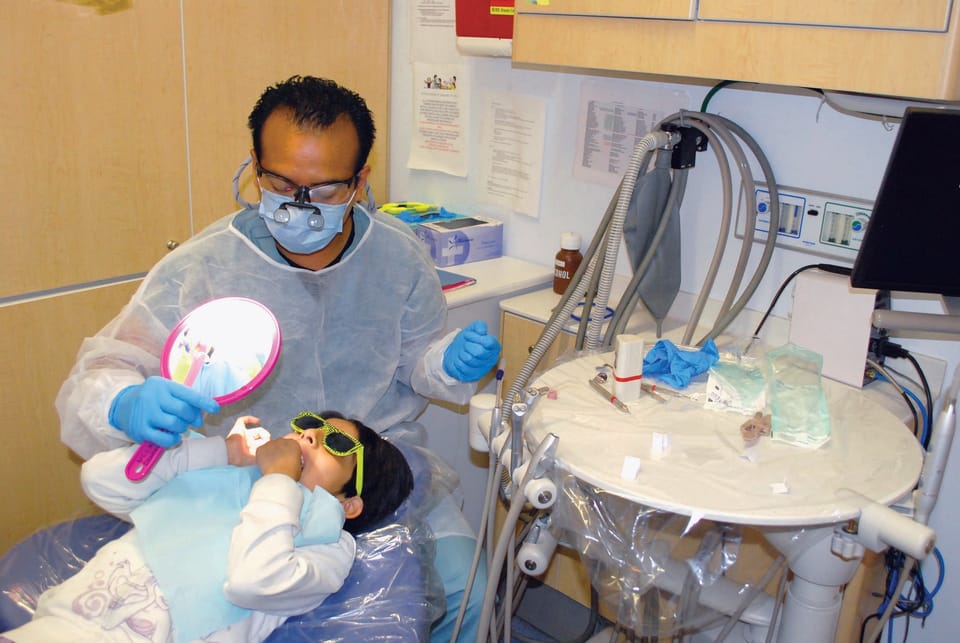
Teachers tracked these submissions each week to verify household compliance, using positive reinforcement tools tailored to early childhood psychology to encourage cooperation. At regular clinical follow-up intervals, children who sustained excellent adherence received recognition and modest rewards to reinforce their motivation and model positive habits for classroom peers.1 Meanwhile, pediatric dentists conducted chair-side guidance lasting 5 to 10 minutes during clinical visits, using dental models and illustrated brushing guides to highlight specific teeth requiring enhanced cleaning or restorative attention.1 The hospital team also transmitted digital educational articles and individualized online feedback templates directly to parents based on questionnaire responses and physical examination findings.1
The division of labor across these three environments was designed to address distinct friction points in habit development. Asked which component drove the behavioral shift when children resisted home oral hygiene, Liwei Zheng, a researcher on the project, said that “classroom visual charts and parent coaching contribute most to facilitating behavioral changes when children resist toothbrushing at home.” Liwei added that “routine clinical visits further consolidate these improvements in children’s oral health behaviors.”
What changes occurred in children oral health and parental behaviors?
Participation in the coordinated program produced significant improvements across clinical dental measures and domestic oral health practices. The authors reported that 475 children aged 3 to 5 years enrolled at baseline, and 421 children completed the full six-month follow-up schedule, reflecting an attrition rate of 11.4 percent.1 Over the course of the six-month intervention, clinical examinations documented a statistically significant decrease in dental plaque accumulation, measured using the Silness-Loe Plaque Index. Concurrently, the paper reported a statistically significant increase in the total number of filled primary teeth, indicating that parents acted on clinical diagnostic pathways by bringing children to clinics for restorative dental care.1
Preventive therapies expanded alongside restorative treatments during the trial. The authors documented statistically significant increases in the proportion of children receiving professional topical fluoride varnish applications or pit and fissure sealants, which coat deep grooves on molar surfaces to shield enamel from acid-producing bacteria.1 Daily home care habits shifted in tandem, with the study recording a statistically significant rise in the number of children using fluoride toothpaste during daily brushing.1 Furthermore, parents demonstrated statistically significant gains in objective oral health knowledge and positive attitudes regarding early dental care, alongside improvements in children oral health-related quality of life scores measured through the converted Early Childhood Oral Health Impact Scale.
Baseline assessments revealed notable disparities across participant age groups before the intervention began. Among the enrolled cohort, five-year-old children exhibited a significantly higher baseline caries prevalence rate of 67.6 percent compared to 41.8 percent among three-year-olds and 50.6 percent among four-year-olds.1 The five-year-old group also presented with significantly higher mean decayed teeth counts of 3.85 compared to 2.05 in three-year-olds and 1.96 in four-year-olds.1 The paper attributed this baseline gap partly to a higher concentration of severe early childhood caries among older participants, where 33 percent of five-year-olds met severe criteria compared to 19.4 percent of three-year-olds and 14 percent of four-year-olds.1 Sex-based differences at baseline were minimal: boys presented with a slightly higher mean plaque index score of 1.41 than girls at 1.28, but caries prevalence rates were comparable, standing at 57.3 percent for boys and 56.4 percent for girls.
Tracking participant retention across the trial revealed distinct engagement patterns. Regarding why fifty-four families disengaged before completing the protocol, Liwei said that attrition was attributable to “several factors, including family relocation, early involvement in the project, changes in family structure, and self-evaluation by families regarding their children’s oral health status.” Liwei noted that “children with better baseline oral health status tended to drop out at an early stage.”
What can these initial findings show, and what remains unproven?
The reported outcomes reflect preliminary observations from a single-arm prospective pre-post study, not definitive proof of long-term prevention. Because every enrolled participant received the collaborative intervention, the study lacked an untreated concurrent control group. The authors explained that practical and ethical considerations governed this design, as withholding preventive and restorative pediatric dental care from an identified control cohort in preschool settings would raise significant ethical concerns.1 However, the absence of a control group means the study cannot definitively separate the specific effects of the tripartite model from general maturation or heightened parental attention prompted by enrollment.
Addressing whether developmental growth over six months could explain the observed benefits, Liwei argued that natural maturation alone cannot account for the physical changes recorded in clinics. Liwei said that “six months of natural physical maturation alone would not induce spontaneous changes in dental plaque accumulation, the total number of filled primary teeth, the proportion of children receiving fluoride applications or pit and fissure sealants.” Liwei stated that “significant gains in objective oral health knowledge and positive attitudes regarding early dental care among parents depend on a systemic collaborative network.”
The evaluation period lasted six months, which is sufficient to measure changes in soft plaque deposits, parental knowledge, and restorative appointment attendance, but too brief to establish lifelong cavity reduction. Primary tooth decay can take months or years to progress through dense enamel to visible cavitation. Valid questionnaire responses were recovered from 400 parents at baseline, representing an 84.2 percent response rate, but the proportion of questionnaires completed by parents of children with severe early childhood caries was lower, at 63.2 percent, compared to 90.3 percent among caries-free children and 91.6 percent among children with mild caries.1 Regarding this disparity, Liwei said that “the lower questionnaire completion rate in this group explains why children from these families present severe tooth decay,” noting that “non-response bias per se may even underestimate the oral health risks within this population.” Furthermore, because Chengdu does not operate a municipal drinking water fluoridation program, the findings reflect an environment where topical toothpaste and clinical varnish provide the sole sources of fluoride exposure.1
The geographical and institutional setting also shaped the implementation of the protocol. Explaining the local context, Liwei noted that “topical fluoride application serves as the primary caries prevention strategy adopted in China,” while pointing out that “several rural regions in Southwest China are endemic high-fluoride areas, making community water fluoridation inappropriate.” Liwei stated that the workflow depends on coordination among institutions, which was supported in Chengdu because “West China Hospital of Stomatology, Sichuan University—one of the most authoritative and leading stomatological institutions in China—is located” there, providing technical capacity.
The investigation carried out its clinical examinations using three trained pediatric dentists who achieved high inter-examiner reliability on calibrated re-examinations, recording a mean Cohen kappa agreement of 0.851 for decayed teeth and 0.847 for filled teeth. Even so, parental questionnaire responses regarding daily brushing frequency, flossing, and snack consumption remain subject to self-reporting bias. Parents aware that kindergarten teachers were monitoring weekly charts may have over-reported positive home behaviors. The research team stated that randomized controlled trials featuring concurrent control arms and extended multi-year observation windows are necessary to confirm whether the collaborative system sustainably prevents new primary and permanent tooth decay over time.1
Where does preschool oral health management head next?
Integrating schools into public dental health management addresses a long-standing structural gap in early childhood healthcare delivery. In many healthcare systems, pediatric dentists encounter young patients only after extensive decay has caused acute toothaches or facial swelling. By converting early childhood educators into facilitators who reinforce daily brushing charts, the Chengdu program embedded health surveillance into the standard rhythm of early schooling. The model demonstrates how public institutions can coordinate health habits without demanding expensive standalone technology, utilizing paper charts, visual models, and existing communication apps.
Evaluating the justification for expanding these programs involves balancing operational effort against health priorities. Asked what cavity rate threshold in future trials would justify the logistical demands, Liwei said that “in the context of research, extended trials are required to confirm a quantitative outcome.” Liwei argued that “the current trial has demonstrated that the family-kindergarten-clinic linkage system can significantly improve toddlers’ oral health,” adding that “under the Healthy China Initiative, any logistical cost is justifiable for safeguarding children’s well-being.”
Expanding this collaborative framework across wider municipal populations will require evaluating logistical demands on educational staff. Kindergarten teachers in the Chengdu project managed weekly submissions and issued routine reminders alongside their daily instructional duties. Assessing whether teachers in lower-resourced or rural preschools can maintain similar compliance tracking without instructional burnout represents an important practical challenge for education authorities. Health departments will also need to examine how public insurance or municipal subsidies can support the restorative treatments identified during school-based dental screenings, ensuring that low-income households can complete recommended dental clinic referrals.
For clinical practitioners, the findings suggest that written clinic discharge instructions are far more effective when paired with structured reinforcement from school teachers. As researchers prepare subsequent randomized clinical trials to test the durability of this care triangle, pediatric healthcare systems can examine how kindergarten partnerships might prevent decay before dental restorations become unavoidable.
The record
37 sentences trace to 1 source and 1 contributor.
-
1
F
 Frontiers
Document
· frontiersin.org · 5 Oct 2026
A “family-school-hospital” collaborative oral health management model for preschool children: a prospective single-arm pre-post intervention study
See the source
- 2 Contribution — Liwei Zheng 16 statements added to this article
Other consulted pages1 page
frontiersin.org2 pages
link.springer.com2 pages
- The influence of parents’ oral health literacy and behavior on oral health of preschool children aged 3–6 years- evidence from China - BMC Oral Health
- Effects of dental treatment under general anesthesia on the oral health quality of life and dental fear of preschool children: a systematic review and meta-analysis - BMC Oral Health
Article history
-
Published 20 Nov 2026, 21:56Assembled by the Primary desk from 1 source · 1 contributor · 37 cited sentences
-
Liwei Zheng, a researcher on the project
- Go to the sentence: According to a prospective single-arm intervention study published in Frontiers in Dental Medicine, combining classroom behavioral reinforcement, structured parental instruction, and personalized clinical care significantly improved oral hygiene and cavity treatment among preschool children over a six-month evaluation period.
- Go to the sentence: Liwei added that “routine clinical visits further consolidate these improvements in children’s oral health behaviors.”
- Go to the sentence: The authors reported that 475 children aged 3 to 5 years enrolled at baseline, and 421 children completed the full six-month follow-up schedule, reflecting an attrition rate of 11.4 percent.
- Go to the sentence: Regarding why fifty-four families disengaged before completing the protocol, Liwei said that attrition was attributable to “several factors, including family relocation, early involvement in the project, changes in family structure, and self-evaluation by families regarding their children’s oral health status.”
- Go to the sentence: Liwei noted that “children with better baseline oral health status tended to drop out at an early stage.”
- Go to the sentence: The authors explained that practical and ethical considerations governed this design, as withholding preventive and restorative pediatric dental care from an identified control cohort in preschool settings would raise significant ethical concerns.
- Go to the sentence: Liwei said that “six months of natural physical maturation alone would not induce spontaneous changes in dental plaque accumulation, the total number of filled primary teeth, the proportion of children receiving fluoride applications or pit and fissure sealants.”
- Go to the sentence: Liwei stated that “significant gains in objective oral health knowledge and positive attitudes regarding early dental care among parents depend on a systemic collaborative network.”
- Go to the sentence: Valid questionnaire responses were recovered from 400 parents at baseline, representing an 84.2 percent response rate, but the proportion of questionnaires completed by parents of children with severe early childhood caries was lower, at 63.2 percent, compared to 90.3 percent among caries-free children and 91.6 percent among children with mild caries.
- Go to the sentence: Regarding this disparity, Liwei said that “the lower questionnaire completion rate in this group explains why children from these families present severe tooth decay,” noting that “non-response bias per se may even underestimate the oral health risks within this population.”
- Go to the sentence: Furthermore, because Chengdu does not operate a municipal drinking water fluoridation program, the findings reflect an environment where topical toothpaste and clinical varnish provide the sole sources of fluoride exposure.
- Go to the sentence: Explaining the local context, Liwei noted that “topical fluoride application serves as the primary caries prevention strategy adopted in China,” while pointing out that “several rural regions in Southwest China are endemic high-fluoride areas, making community water fluoridation inappropriate.”
- Go to the sentence: Liwei stated that the workflow depends on coordination among institutions, which was supported in Chengdu because “West China Hospital of Stomatology, Sichuan University—one of the most authoritative and leading stomatological institutions in China—is located” there, providing technical capacity.
- Go to the sentence: The research team stated that randomized controlled trials featuring concurrent control arms and extended multi-year observation windows are necessary to confirm whether the collaborative system sustainably prevents new primary and permanent tooth decay over time.
- Go to the sentence: Asked what cavity rate threshold in future trials would justify the logistical demands, Liwei said that “in the context of research, extended trials are required to confirm a quantitative outcome.”
- Go to the sentence: Liwei argued that “the current trial has demonstrated that the family-kindergarten-clinic linkage system can significantly improve toddlers’ oral health,” adding that “under the Healthy China Initiative, any logistical cost is justifiable for safeguarding children’s well-being.”