Industrial living alters the gut microbiomes of domestic dogs
Household pets develop distinct microbial communities that mirror their owners' daily routines, challenging standard veterinary measures that assume a single universal baseline for canine health.

Dogs have lived alongside human settlements for thousands of years, sharing domestic shelters, working routines, and daily meals.1 Pet owners typically assume that a healthy companion dog maintains a stable, universal internal biology regardless of where it resides. Under standard veterinary assumptions, canine digestive wellness is treated as a uniform biological baseline across household animals. Emerging ecological research indicates that the microscopic communities living inside a canine digestive tract vary significantly across human societies.12 The daily routines, environments, and dietary patterns of human keepers actively reshape the microbial populations residing within their canine companions.12
These internal populations matter because gut microbes perform tasks that extend well beyond breaking down food and producing solid waste.1 Trillions of bacteria, viruses, and fungi inhabit an animal's gastrointestinal tract, where they carry out critical physiological functions.12 A massive portion of a dog's immune system resides directly in the gut, where balanced bacterial communities help train immune cells to combat infectious pathogens and prevent chronic inflammation.12 The gut and the brain also maintain constant communication through nervous and chemical pathways, linking microbial balance to the regulation of fear, stress, and canine anxiety.12 Conversely, an imbalanced microbiome correlates with chronic skin disorders, persistent food sensitivities, recurrent ear infections, lethargy, inflammatory bowel disease, and acute digestive upset such as nausea or diarrhea.12
The biological connection between human habits and canine gut health follows a straightforward chain of physical steps. Dogs ingest microbes and nutrient residues directly from their physical surroundings, whether licking floor surfaces, eating scraps, or consuming processed food from bowls. In the digestive tract, specialized bacteria ferment complex dietary fibers and carbohydrates that the host animal cannot digest alone, multiplying or declining according to the specific nutrients supplied.12 When human societies shift from rural foraging and small-scale farming toward industrialized cities, household hygiene increases, food becomes processed, and living spaces become physically isolated from the outdoors. Those lifestyle alterations eliminate natural exposure to soil and wild microbes while replacing diverse raw foods with uniform commercial kibble, causing certain bacterial lineages to dominate while other ancestral organisms disappear.1
How do domestic routines alter canine biology?
Canine digestive systems absorb environmental microbes and nutrients directly from the shared living spaces of their human households.12 A study published in the journal mSystems reveals that human industrialization acts as a wide-reaching ecological force that restructures the gut microbiomes of domestic dogs while preserving their underlying canine biology.13 The investigation shows that companion animals in industrialized settings undergo directional shifts in bacterial communities that parallel changes observed in human populations transitioning to modern urban life.13 Despite these parallel environmental pressures, host species specificity remains dominant, meaning dogs and humans develop parallel bacterial adaptations without losing their distinct biological identities.31
Kimberly Ange-van Heugten, a professor of animal science at North Carolina State University, examined these ecological shifts alongside an international team of researchers including lead authors Gautam and Bhandari.13 The scientists set out to address a fundamental gap in animal biology, noting that previous canine microbiome research focused almost exclusively on pets living in industrialized households or controlled kennel environments.31 To observe how canine microbial communities change across differing human societies, the researchers collected and analyzed fecal genetic data from 261 dogs living across four countries: Nepal, Thailand, the United Arab Emirates, and the United States.31
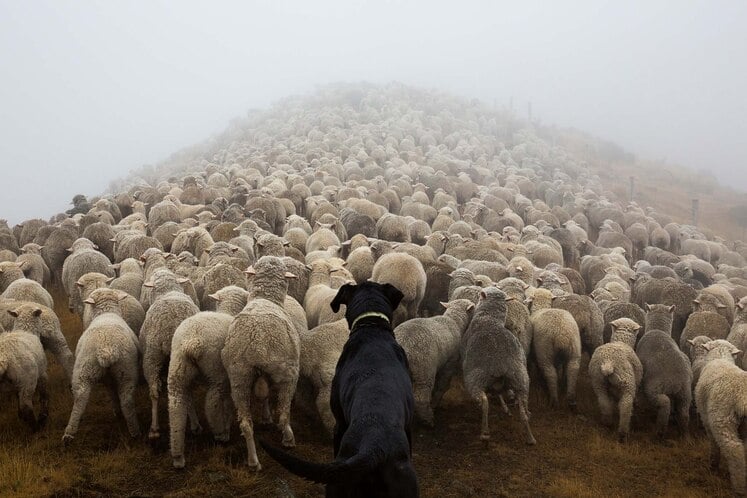
The research team conducted genetic profiling using 16S ribosomal RNA sequencing, an analytical technique that identifies bacterial groups by reading a shared, highly conserved genetic barcode found across bacteria.3 To ensure that medical interventions did not distort natural community patterns, the investigators excluded four dogs that had received recent antibiotic therapy, leaving a primary study cohort of 257 antibiotic-free dogs.3 The researchers classified the dogs across five distinct categories of human food provision: forager animals that relied entirely on wild resources, agrarian dogs that consumed non-commercial farm crops, pastoralist dogs accompanying herders whose diets fluctuated with livestock movement, urban dogs eating trash and commercial scraps near settlements, and industrialized household pets living exclusively on commercial diets.1
What happens when pet diets shift to commercial food?
Dogs relying entirely on commercial pet food develop distinct bacterial groupings and metabolic profiles compared with animals eating wild or farm-grown foods.31 Statistical analyses showed that human lifestyle served as the single strongest correlate of bacterial composition in the canine gut across the four nations surveyed.3 Industrialized dogs exhibited clear directional shifts in genus-level bacterial communities and co-abundance networks, showing that whole guilds of bacteria expanded or contracted in unison under commercial feeding regimens.3 In addition, computational reconstructions of microbial gene expression indicated that the predicted metabolic capacities of gut communities in industrialized dogs differed significantly from those found in foraging or agrarian dogs.3 In a summary prepared for the paper, the authors described how industrial living reshapes companion animals:
Domestic dogs are one of the closest animal companions of humans, yet we know surprisingly little about how their gut microbiomes vary outside industrialized pet populations. This study shows that industrialization-associated lifestyle change is not only relevant to human microbiomes but also a broader ecological force that reshapes gut microbial communities in animals living alongside us. By comparing dogs across diverse human lifestyles, we show that shared environments can impose parallel pressures on the gut bacterial communities of humans and dogs, while each host maintains a distinct microbial identity. These findings suggest that gut microbial communities are shaped by the interaction between host biology and changing ecological conditions. Expanding microbiome research beyond industrialized settings is therefore essential for understanding what microbial diversity has been retained, altered, or lost during recent lifestyle transitions.1
The study represents an observational genetic survey that analyzed existing populations without conducting controlled feeding trials or clinical tests.3 The genetic sequencing data describe community correlations and predicted functional potential, meaning they cannot establish whether the observed bacterial differences alter an animal's daily nutrient requirements or modify how sick dogs respond to medical treatments.12 Collecting fecal samples across four sovereign nations and coordinating their analysis within a single laboratory posed considerable logistical hurdles, leaving many global regions, distinct dog breeds, and intermediate human cultures unexamined.12 Furthermore, while the canine and human microbiomes shifted in similar directions under industrialization, variations between individual dogs were also influenced by geographic origin, local weather patterns, and ambient temperatures.12
Can veterinarians define a single normal microbiome?
Veterinary researchers cannot identify a single universal microbial profile that represents healthy digestion across all domestic dogs.12 Because the gut communities of household pets differ fundamentally from those of animals living in foraging, pastoralist, or agrarian environments, establishing a single reference baseline for canine gut health is biologically misleading.12 Diagnostic tools and commercial microbiome tests that treat the gut flora of industrialized pets as the gold standard risk mischaracterizing natural, lifestyle-driven bacterial variations as gastrointestinal disorders.1 Moreover, the parallel pressures observed between humans and canines suggest that negative lifestyle factors in modern homes, including exposure to contaminated foodstuffs, chronic sleep disruption, and reduced outdoor physical activity, likely affect companion animals as well.12
Scientists now aim to expand canine microbiome surveys across broader geographic regions and non-industrialized communities to determine which ancestral bacterial lineages have been retained, altered, or lost over centuries of human coexistence.1 Future clinical studies will need to test directly whether specific microbial differences alter how dogs metabolize commercial nutrients or handle pharmaceutical therapies.12 By determining how human domestic habits reshape animal biology, researchers hope to improve veterinary care without assuming that every dog requires the same microbial community to thrive.1
The record
40 sentences trace to 3 sources.
-
1
NS
 NC State
Document
· futurity.org · 20 Nov 2026
You can affect your dog’s gut microbiome
See the source
- 2 How people live helps determine a healthy gut microbiome for their dogs — Perspicora See the source
- 3 Industrialization restructures the domestic dog gut microbiome while preserving host specificity. See the source