A computer proof of the Riemann Hypothesis passes initial independent checks
Independent mathematical software has verified millions of lines of machine logic without finding an error, though human understanding of the claimed proof remains completely open.
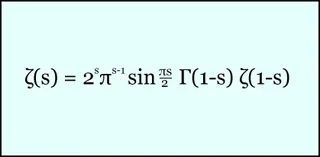
Prime numbers form the elementary building blocks of arithmetic, yet their appearance along the number line seems at first glance entirely erratic. When counted across larger and larger intervals, these indivisible integers thin out in a manner that hints at deep underlying structure. For more than a century and a half, mathematicians have studied this structure through the zeros of a special equation known as the Riemann zeta function, an analytical tool that encodes the distribution of primes as frequencies in a musical chord. Bernhard Riemann conjectured in 1859 that every non-obvious point where this function evaluates to zero lies precisely on a single vertical coordinate line in the complex plane, a proposition known as the Riemann Hypothesis.1
Establishing whether that conjecture is universally true represents one of the most prominent unsolved challenges in pure mathematics, carrying a prize from the Clay Mathematics Institute.12 If the coordinate condition holds, it ensures that prime numbers deviate from their smooth average as little as mathematically possible. An unproven assumption of this property sits at the foundation of hundreds of published theorems across number theory. A complete proof would convert all of those conditional results into established mathematical certainty overnight.
On November 20, 2026, Levent Alpöge, a mathematician working at Anthropic, posted a four-page note on his personal website stating that he and an artificial intelligence system named Claude had discovered a proof of the Riemann Hypothesis and formalized it in the Lean programming language.21 In Lean, mathematical statements and their derivations are written as computer code, which allows automated verification programs to inspect every deductive step back to foundational logical axioms. The following day, Andrew Sutherland, a mathematician at the Massachusetts Institute of Technology, published verification logs confirming that the entire collection of formal files compiled cleanly and passed multiple independent computational verification checks.31
Why do the zeros of the zeta function govern prime numbers?
The locations where the Riemann zeta function equals zero dictate the fluctuations in the distribution of prime numbers because the explicit formula connecting them translates the coordinates of those zeros into geometric wave patterns. When the prime counting function counts primes weighted by their logarithms up to a cutoff value, that total decomposes into a primary linear term minus an infinite sum of wave components, where each individual component is driven by one non-trivial zero of the zeta function. If any non-trivial zero were situated away from the critical line with a real coordinate greater than one half, its corresponding wave component would swell in amplitude and create violent, unbalanced clustering among the primes. Confining every zero to a real coordinate of exactly one half guarantees that the prime numbers spread out with maximal regularity, keeping the discrepancy bounded within a tight square root margin.

Dirichlet L-functions extend this exact analytical framework from the whole numbers to arithmetic progressions, governing how primes separate into families such as numbers ending in particular digits. The Generalized Riemann Hypothesis asserts that the non-trivial zeros of these Dirichlet L-functions likewise sit entirely on the identical critical line.3 In a four-page note on his website, Alpöge reported that the proof method extends beyond the classical zeta function to resolve this generalized conjecture for Dirichlet L-functions as well.2
What did the automated verification across multiple systems reveal?
The automated verification conducted across multiple independent computer programs established that the submitted proof contains zero logical gaps and relies solely on the three standard foundational axioms of Lean mathematics. In the verification logs published on his Massachusetts Institute of Technology web page, Sutherland reported that all 175,187 modules in the formalization compiled with zero errors using Lean version 4.33.1.31 When Sutherland executed the axiom audit on the five central theorems contained in the primary code file, the system confirmed that the entire deduction depended exclusively on propositional extensionality, the axiom of choice, and quotient sound, which represent the standard logical bedrock of ordinary working mathematics.31 The verification audit also confirmed that the environment declared zero auxiliary axioms outside the core initialization files of the system.31
To ensure that the compilation had not introduced corrupted intermediate code, Sutherland performed a complete replay of every compiled module through the built-in checker of Lean. In that test, 175,187 out of 175,187 modules passed without a single rejection.31 The formal repository itself represents a staggering volume of code: notes compiled by the Lean developer community record that the unpacked archive spans 17,374,215 lines of computer instructions across 818,755 theorem and lemma declarations.12 The code contains no comments and no resort to unverified placeholders, with every file sitting directly within the dependency hierarchy of the final headline theorem.2
Because software bugs could theoretically exist inside any individual proof assistant, Sutherland replayed the exported deduction through distinct verification kernels written independently by different programmers. One external checker called nanoda, which is written in the Rust programming language, processed the full export of the proof and accepted all declarations after running for 27 minutes and 42 seconds across 80 processor threads.31 Another independent checker called con-leche processed 1,468,418 exported declarations and accepted them in three minutes and 15 seconds across 64 processor threads.31 A specialized statement comparison mode in con-leche evaluated the submitted proof against an isolated target file containing only standard library definitions and confirmed that all five headline theorems were fully justified by the solution code.31
A third independent verification tool, lean4lean, checked the compiled files module by module and certified all 175,187 modules as valid, with 175,182 passing under standard operational settings and five passing after raising a computational execution limit.31 Sutherland also tested the result against arithmetic properties that do not rely on the standard library definition of the zeta function. By combining the proof archive with an independent formalization of criteria established by Guy Robin and Jeffrey Lagarias, Sutherland demonstrated unconditional divisor sum inequalities with zero hypotheses, which were similarly verified by nanoda and con-leche.31

What can computer verification tell mathematicians about the argument?
Computer verification can certify that a long formal deduction is logically valid from specified axioms, but it cannot explain the core mathematical mechanisms or convey conceptual understanding to human researchers. The verification results published by Sutherland confirm that the software kernels checked millions of deductions without encountering an inconsistency. However, machine checking does not constitute conventional mathematical peer review, nor does it guarantee that the formal definitions in the library perfectly match every nuanced expectation of human number theorists without subtle artifacts. In his verification notes, Sutherland emphasized that a passing check shows that the formal statements follow from the three standard axioms according to the computational kernels, relying entirely on those tools and on library definitions behaving as intended.31
Furthermore, the physical build environment carried specific procedural constraints. Sutherland noted that his initial build ran on cloud machines without a protective sandbox and compiled files by direct software calls rather than through the default build package manager.31 The compiled file checksums were tied to an absolute source directory path, meaning that only an identical filesystem structure reproduces the complete set of file hashes.3 Full end-to-end runs using the official comparator package and single-threaded default kernel replays of the 62-gigabyte exported proof remained underway at the time of reporting.31
The broader mathematical community also faces the obstacle that no human-readable paper exists. In his announcement note, Alpöge stated that a generated prose translation of the formal codebase exceeded 250,000 pages, leading him to release only the raw Lean files.21 Alpöge described the underlying approach as a descendant of Sergei Stepanov's method for curves over finite fields, with Claude suggesting long chains of theta lifts between unitary groups to generate required multiplicities.1 Alpöge acknowledged that he presented the argument before mastering the surrounding mathematics of higher-rank automorphic forms, noting that his prose summary paraphrased the model and might require revision as human mathematicians investigate the work.12
What happens next as the mathematical community evaluates the claim?
The next phase of evaluation requires human mathematicians to reverse-engineer the enormous codebase to extract its underlying mathematical ideas and determine whether they can be simplified into a comprehensible theoretical framework. Terence Tao described the submission in an online entry as an enormous formal-only proof whose core strategy still needs to be extracted and understood.4 Outside the digital realm of automated theorem provers, the Clay Mathematics Institute continues to list the Riemann Hypothesis as unsolved, as its formal rules require published peer review and a multi-year period of scrutiny by the wider international research community.12
Efforts to study the codebase are already underway across volunteer repositories and mathematical discussion forums. Members of the Lean prover community have mirrored the source archive, creating comparative tools and pruning redundant files while preserving the original submission.5 At the same time, independent supercomputing clusters have initiated sandboxed builds to replicate every digital checksum. Whether this extraordinary artifact eventually yields a concise paper or stands as an inscrutable computational monolith, it marks an unprecedented intersection where artificial intelligence, automated formal logic, and centuries-old mathematical questions converge.
The record
27 sentences trace to 5 sources.
- 1 Claude Riemann Hypothesis Claim: What Is Verified (November 2026) See the source
- 2 The Riemann Hypothesis: a claimed proof, delivered in Lean See the source
- 3 Verification files for the Lean proof of the Riemann Hypothesis See the source
- 4 AI and Mathematics Research Watch — 21 Nov 2026 See the source
- 5 GitHub - leanprover-community/riemann-hypothesis: Independent Comparator setup for the Lean formalization of the Riemann Hypothesis (Alpöge, 2026-11-20) See the source