Binary star proportions stay remarkably constant across Milky Way open clusters
A study of 376 local star clusters suggests a subtle balance of dynamical destruction and evaporation keeps binary shares steady at 29 percent.
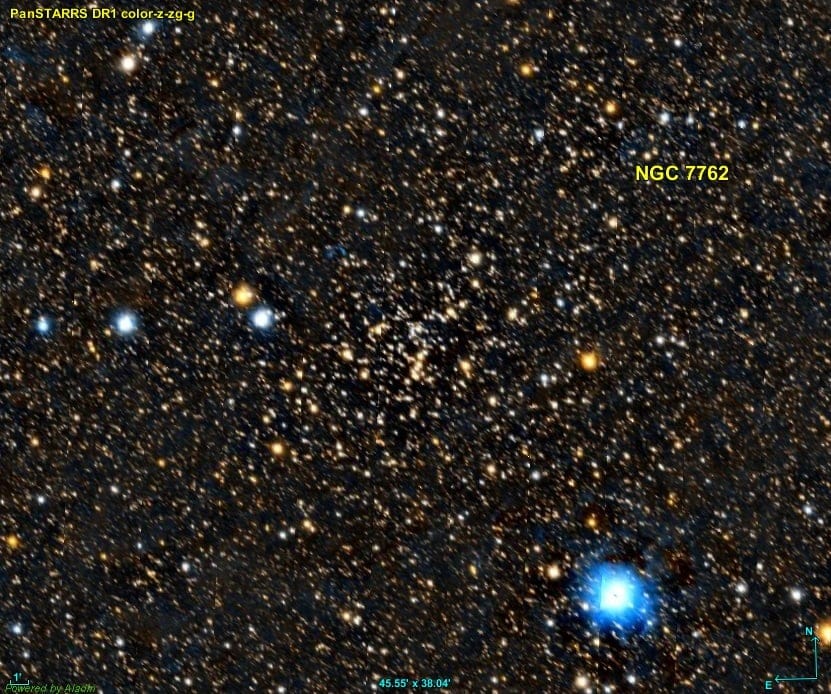
Across the starry disks of nearby galaxies, stars are rarely born in isolation.1 Massive clouds of cold molecular gas collapse under their own gravity, fragmenting into turbulent pockets that ignite dense families of sibling suns known as open clusters. Within these crowded stellar nurseries, gravitationally bound pairs called binary systems are exceptionally common, with two stars locked into mutual orbits around a shared center of mass.1 Yet as clusters drift through the Milky Way, their members constantly interact, brushing past one another in gravitational skirmishes that can alter orbits or shatter weakly bound systems entirely.
Because stellar clusters experience relentless internal friction, astronomers long expected the fraction of stars living in binary pairs to decline steadily as a cluster matures.1 Each close encounter between stars acts as a potential disruption event, stripping vulnerable companions away from each other and leaving behind solitary, drifting stars. If stellar collisions and close flybys systematically dismantle pairs over tens or hundreds of millions of years, an ancient star cluster should display a substantially lower fraction of binaries than a newborn sibling group that has barely emerged from its natal cloud.
Recent observations of stellar systems in our corner of the galaxy reveal an unexpected stability in this cosmic census. A preprint posted to the arXiv server on September 17, 2026, by astrophysicists Priya Hasan and Mohammed Saifuddin of the Maulana Azad National Urdu University in Hyderabad, India, examines hundreds of nearby open clusters. Instead of finding a steep decline in binary populations over time, the researchers discovered that the overall proportion of binary systems remains remarkably consistent across clusters of wildly differing ages, sizes, and total masses.1
How do gravitational interactions reshape stellar pairs inside a cluster?
Stellar pairs inside a cluster undergo constant orbital reorganization driven by close gravitational encounters with neighboring stars. To understand why a cluster binary population changes over time, it helps to follow the chain of physical events that unfold after star formation ceases.1 When an interstellar gas cloud breaks apart, fragmentation produces both tightly orbiting stellar pairs and widely separated companions.1 As these newborn stars move through the collective gravitational field of the cluster, they frequently pass close to one another, exchanging orbital energy and momentum during chaotic encounters.
The fate of any given pair depends on its initial binding energy, which measures how tightly gravity holds the two companion stars together. During a close encounter with an intruding single star, a weakly bound or soft binary, where the stars orbit at wide separations with low speeds, tends to absorb kinetic energy from the collision.1 This added energy pushes the companion stars further apart until the pair completely dissolves into two independent single stars.1 Conversely, a tightly bound or hard binary, orbiting closely with high orbital speed, typically gives up kinetic energy to passing stars during encounters.1 This loss of orbital energy causes the two stars to fall closer together, tightening and hardening their mutual orbit.1
At the same time, heavier objects inside a stellar cluster experience dynamical friction, transferring kinetic energy to lighter objects and gradually sinking toward the deep gravitational center of the cluster. Because a binary system contains the combined mass of two stars, it is generally heavier than an average single star.1 As a result of this mass segregation, binary systems sink toward the dense central core of the cluster over time.13 Meanwhile, lighter single stars get kicked toward the outer edges during close encounters, where the galactic tidal field gradually pulls them away into the general field of the Milky Way through stellar evaporation.13
What did the survey of nearby open clusters reveal?
The survey demonstrated that across a vast sample of local open clusters, the unresolved binary star fraction hovers around a single consistent number regardless of cluster properties.1 Hasan and Saifuddin examined 376 open clusters located within 1,000 parsecs, or roughly 3,260 light-years, of the Sun, drawing their sample from the open cluster catalog compiled by Tristan Cantat-Gaudin and colleagues in 2020.1 The authors report that the median unresolved binary fraction across these 376 clusters is 0.29 with an uncertainty of 0.03, meaning that roughly 29 percent of stellar systems in these clusters are detected as pairs.1

When the authors plotted this binary fraction against fundamental physical properties of the clusters, the expected historical patterns failed to appear. Hasan and Saifuddin report that the binary fraction exhibits no clear dependence on cluster age, showing no systematic decline as clusters age from tens of millions to billions of years.1 Furthermore, the authors found no clear dependence of the median binary fraction on cluster core radius, limiting cluster radius, or median stellar mass.1 Whether a cluster was compact or sprawling, lightweight or massive, its global share of binary stars remained centered near 29 percent.1
Speaking to Primary about the unexpected uniformity of the results across diverse stellar families, Priya said, “It is generally expected that the binary fraction should decline with age, as the binaries may be disrupted by interactions. But with the ASteCA analysis, it became clear that it is a constant.” When asked what observational signature in older systems would have indicated cosmic dissolution, Priya told Primary that “This would be indicated by an decrease in the binary fraction with age, which was not observed.”
To establish these physical parameters, the researchers used data from the European Space Agency Gaia mission, specifically its third data release known as Gaia DR3.1 The Gaia space telescope provides six-dimensional information for over a billion stars, measuring their two-dimensional positions on the sky, distances via parallax, two-dimensional proper motions across the celestial sphere, and line-of-sight radial velocities.1 Because members of an open cluster originated from the same molecular cloud, they move through space with shared velocities and lie at comparable distances, allowing astronomers to separate true cluster members from unrelated foreground and background field stars with unprecedented clarity.1
How can astronomers detect binary systems without seeing two separate stars?
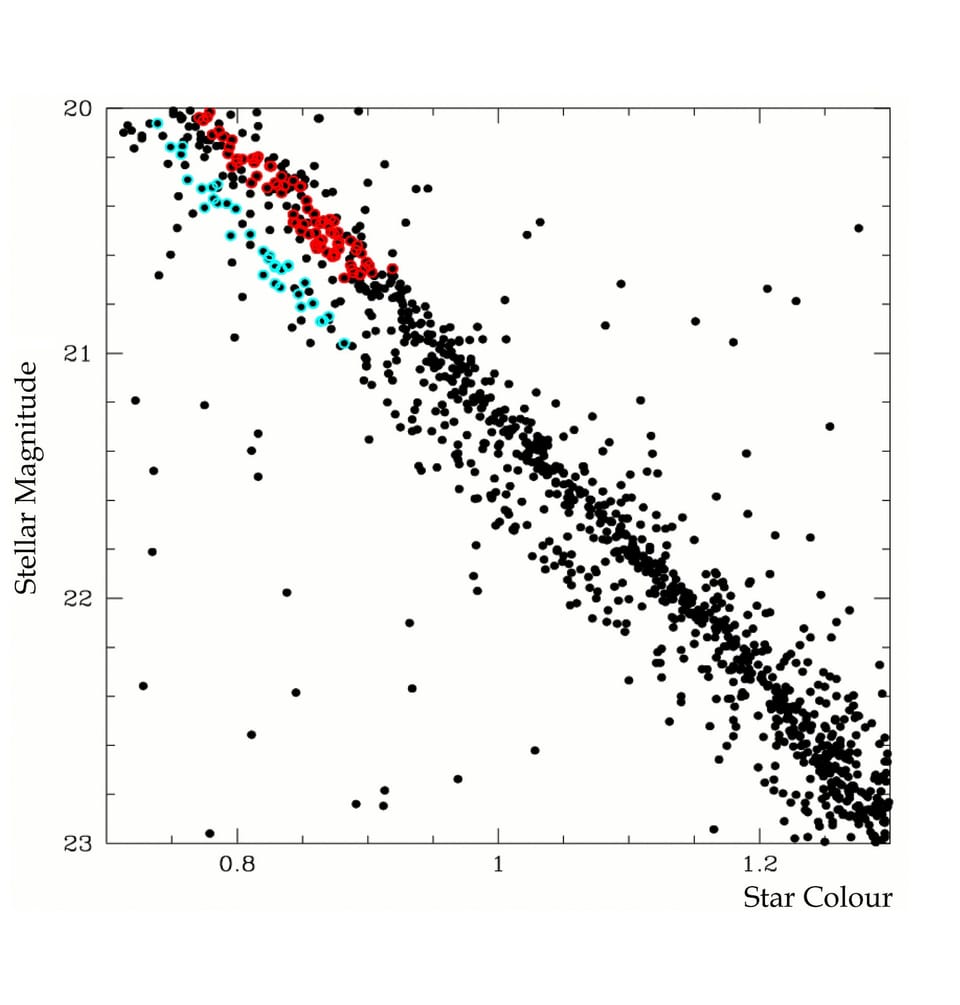
Astronomers identify unresolved binary stars by detecting their combined brightness on a colour-magnitude diagram, an observational chart that plots the brightness of stars against their colour or surface temperature.1 In a normal single-star population, hydrogen-burning stars align along a narrow diagonal band known as the main sequence, where hotter, more massive stars shine brightly with bluer colours and cooler, lower-mass stars shine faintly with redder colours. When two stars orbit so closely that a telescope cannot split them into individual pinpricks of light, their photons blend together into a single observed point source.1
Because the light from both stars enters the detector simultaneously, the combined system appears brighter than either individual component while displaying an intermediate colour. For stellar pairs with roughly equal masses, where both stars contribute significantly to the total luminosity, this combined brightness shifts the system upward and to the red on the diagram, placing it distinctly above the single-star main sequence.1 Hasan and Saifuddin capitalized on this characteristic upward shift by employing the Automated Stellar Cluster Analysis software package, known as ASteCA, developed by Martín Perren and collaborators in 2015.
ASteCA evaluates observed star clusters by generating thousands of synthetic stellar populations based on theoretical models of stellar evolution called isochrones. During this synthetic modeling, the software populates simulated clusters with both single stars and unresolved binary systems, assigning secondary stars to primary stars using probabilistic mass distributions. The software then compares the two-dimensional distribution of stars on the observed colour-magnitude diagram against the synthetic models using a Poisson likelihood ratio, fitting cluster age, metallicity, interstellar dust extinction, distance, and the unresolved binary fraction simultaneously. Afterward, a post-processing algorithm evaluates the photometric position of each observed star relative to the synthetic distributions, calculating the probability that any given detection represents an unresolved binary rather than a single star.1
Explaining how subtle shifts in observational colour diagrams influence these automated detections, Priya told Primary, “These types of binaries are unresolved. These stars would be shifted to the upper right in the color-magnitude diagram, and hence the errors could be the corresponding errors in magnitude and color, which are < 0.005 for Gmag < 20.”
Why does the global proportion of paired stars remain so stable?
The apparent constancy of the global binary fraction indicates that several competing dynamical mechanisms within the cluster actively balance one another over time.13 Rather than implying that binary systems remain static and untouched, the authors argue that the stable fraction emerges from a steady equilibrium between binary destruction, orbital hardening, and the ongoing loss of single stars.1 As wide, weakly bound binaries are disrupted during chaotic encounters, their elimination is offset by the preferential loss of single stars from the outer boundaries of the cluster.13
When questioned about how physical timescales for disruption and single-star loss stay balanced across so many contrasting environments, Priya offered a candid assessment of the field’s current understanding, telling Primary, “Interesting Question. At present we know that they do stay coupled, but do not know exactly how.”
Theoretical work has long anticipated this kind of dynamical balancing act. In a 2009 theoretical study using Monte Carlo evolution simulations, John M. Fregeau, Nataliya Ivanova, and Frederic A. Rasio investigated the evolution of binaries in dense stellar systems.1 Fregeau, Ivanova, and Rasio found that in dense clusters, the dominant processes driving core binary evolution are the mass segregation of binaries into the cluster core and the preferential destruction of binaries within that crowded core.31 On a global scale, Fregeau and colleagues showed that these destructive effects and the preferential tidal stripping of single stars tend to roughly balance, leading to overall cluster binary fractions that remain roughly constant with time.31
Earlier numerical simulations by Jarrod R. Hurley and colleagues in 2007 similarly found that the global binary fraction of a star cluster can stay close to its initial primordial value for the vast majority of the lifetime of the cluster, shifting dramatically only during the final phases of tidal dissolution.1 While fragile wide binaries are selectively broken apart in the core, the steady evaporation of lower-mass single stars into the surrounding galaxy continually reduces the denominator of single stars among the surviving cluster members.1 The net outcome is an observational stalemate: the internal composition and spatial arrangement of binary orbits change substantially, but the total proportion of binary systems measured across the entire cluster barely budges.1
What can these photometric measurements leave out?
These photometric estimates do not represent a complete census of every binary star system residing within the surveyed clusters. The authors note that photometric techniques are primarily sensitive to unresolved binaries where the mass ratio between the secondary and primary star is close to unity.1 When a companion star is substantially less massive than its primary partner, its faint light contribution fails to displace the combined system noticeably from the single-star main sequence, making extreme mass-ratio binaries virtually undetectable in photometric color-magnitude diagrams.1
Addressing the missing census of asymmetric pairs, Priya told Primary that the true binary population could easily exceed the observed 29 percent figure, explaining that “It could increase since the stars with smaller mass ratios may get detected as a single star with an increased brighness and color.”
Furthermore, observational broadening of the main sequence can arise from astrophysical and instrumental sources other than binarity, including photometric measurement errors, differential interstellar dust extinction across the cluster field, rapid stellar rotation, and residual field-star contamination that survives statistical cleaning.1 Disentangling those overlapping astrophysical effects remains a formidable practical challenge. Commenting on the difficulty of separating rotation and dust extinction from real binary systems, Priya told Primary, “That is difficult to do. Spectroscopy can resolve these issues.”
The study is also restricted to clusters within 1,000 parsecs of the Sun, where Gaia astrometry exhibits superior precision, introducing potential selection effects that favor clusters with clearer member sequences.1 Finally, the research paper by Hasan and Saifuddin was initially posted to the arXiv repository as a preprint, but the publication status has shifted since its initial appearance. Although the public document was posted as a preprint that may not have been peer reviewed, Priya told Primary that “The paper has already undergone peer review. It has been accepted for publication.”1
Connecting these findings to the wider architecture of star systems could help resolve broader questions about how galaxies form and distribute stars into interstellar space. Because nearly half of all solar-type stars in the galactic field exist in binary pairs, understanding how clusters process their initial binary populations clarifies whether the stars orbiting our galaxy today reflect pristine conditions from star-forming clouds or the scars of ancient dynamical skirmishes. To untangle these competing origins, Hasan and Saifuddin suggest that future studies must combine photometric surveys with radial-velocity monitoring, high-resolution imaging, and direct N-body simulations, tracking how binary orbits tighten, drift, and dissolve across the Milky Way.1
The record
49 sentences trace to 2 sources and 1 contributor.
-
1
PH
 Priya Hasan, Mohammed Saifuddin
Paper
· arxiv.org · 18 Sep 2026
On the Constancy of Binary Star Fractions in Local Star Clusters
Preprint · may not have been peer reviewed
See the source
- 2 Contribution — Priya Hasan 11 statements added to this article
-
3
A
arxiv.org
Paper
· arxiv.org
Evolution of the Binary Fraction in Dense Stellar Systems
Preprint · may not have been peer reviewed
See the source
Other consulted pages1 page
Article history
-
Published 23 Nov 2026, 21:25Assembled by the Primary desk from 2 sources · 1 contributor · 49 cited sentences
-
Priya Hasan
- Go to the sentence: Instead of finding a steep decline in binary populations over time, the researchers discovered that the overall proportion of binary systems remains remarkably consistent across clusters of wildly differing ages, sizes, and total masses.
- Go to the sentence: Hasan and Saifuddin report that the binary fraction exhibits no clear dependence on cluster age, showing no systematic decline as clusters age from tens of millions to billions of years.
- Go to the sentence: Speaking to Primary about the unexpected uniformity of the results across diverse stellar families, Priya said, “It is generally expected that the binary fraction should decline with age, as the binaries may be disrupted by interactions. But with the ASteCA analysis, it became clear that it is a constant.”
- Go to the sentence: When asked what observational signature in older systems would have indicated cosmic dissolution, Priya told Primary that “This would be indicated by an decrease in the binary fraction with age, which was not observed.”
- Go to the sentence: ASteCA evaluates observed star clusters by generating thousands of synthetic stellar populations based on theoretical models of stellar evolution called isochrones.
- Go to the sentence: Rather than implying that binary systems remain static and untouched, the authors argue that the stable fraction emerges from a steady equilibrium between binary destruction, orbital hardening, and the ongoing loss of single stars.
- Go to the sentence: When questioned about how physical timescales for disruption and single-star loss stay balanced across so many contrasting environments, Priya offered a candid assessment of the field’s current understanding, telling Primary, “Interesting Question. At present we know that they do stay coupled, but do not know exactly how.”
- Go to the sentence: The authors note that photometric techniques are primarily sensitive to unresolved binaries where the mass ratio between the secondary and primary star is close to unity.
- Go to the sentence: Addressing the missing census of asymmetric pairs, Priya told Primary that the true binary population could easily exceed the observed 29 percent figure, explaining that “It could increase since the stars with smaller mass ratios may get detected as a single star with an increased brighness and color.”
- Go to the sentence: Furthermore, observational broadening of the main sequence can arise from astrophysical and instrumental sources other than binarity, including photometric measurement errors, differential interstellar dust extinction across the cluster field, rapid stellar rotation, and residual field-star contamination that survives statistical cleaning.
- Go to the sentence: Although the public document was posted as a preprint that may not have been peer reviewed, Priya told Primary that “The paper has already undergone peer review. It has been accepted for publication.”