Proposed Riemann hypothesis proof draws on artificial intelligence and verification code
A claimed solution to the distribution of prime numbers could connect disparate branches of arithmetic, though scholars must still translate millions of lines of machine instructions into human understanding.
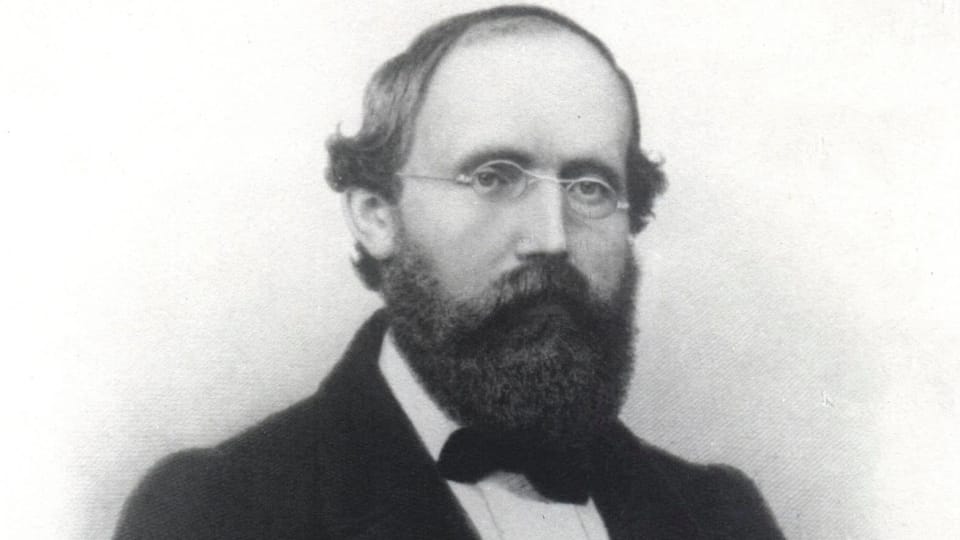
Prime numbers appear haphazardly along the infinite expanse of whole numbers, yet their placement obeys a hidden order that has mystified scholars for generations.1 Because these integers are divisible only by one and themselves, they form the basic building blocks from which all other whole numbers are assembled through multiplication.2 As numbers increase, primes thin out, but their individual arrivals seem erratic. In 1859, the German mathematician Bernhard Riemann discovered that this apparent randomness is governed by an exact mathematical object known as the Riemann zeta function.31
To trace where primes occur, mathematicians map inputs into this zeta function across a continuous two-dimensional plane.3 The function drops to zero at specific points called zeroes.3 Riemann showed that every wave-like fluctuation in the density of prime numbers matches the positions of these zeroes.3 If all the non-trivial zeroes lie strictly on a single vertical line on the plane, prime numbers are distributed as evenly as pure chance allows, without unexpected clusters or wide gaps.3
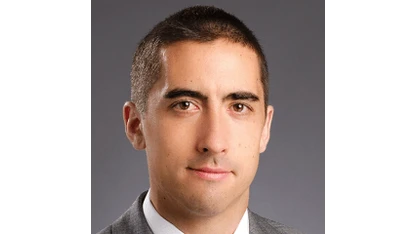
In November 2026, Levent Alpöge, a mathematician on leave from Harvard University and working at the artificial intelligence company Anthropic in San Francisco, posted a preprint claiming a computer-assisted proof of the conjecture using the language model Claude.3 On the same day, Ravi Vakil, a mathematician at Stanford University, posted an independent preprint authored by Alessandro Maria Masullo, who received a doctorate at Stanford in 2020 under number theorist Brian Conrad.3 The sudden appearance of two proposed solutions for one of the most famous open questions in mathematics immediately spurred intense scrutiny across the field.3
Why does the distribution of prime numbers matter?
Prime numbers anchor modern arithmetic, and establishing the exact distribution of their occurrences would resolve thousands of dependent mathematical propositions.1 Bernhard Riemann formulated the problem in 1859, nearly 170 years ago, while examining how the count of primes behaves as numbers grow toward infinity.412 The Clay Mathematics Institute designated the conjecture as one of seven Millennium Prize Problems in the year 2000, offering a reward of 1 million dollars for a verified proof.32 Alpöge reported that his proof extends to the Generalized Riemann Hypothesis, an expansion covering wider classes of mathematical functions. Hector Pasten, a mathematician at the Pontifical Catholic University of Chile, noted that confirming the argument would provide a unified conceptual bridge between separated branches of mathematics, functioning "something like a Rosetta Stone."1
What did the computer-assisted proof actually do?
Levent Alpöge constructed a formal mathematical argument within an implementation running to 17 million lines of code in the Lean programming language, supported by the artificial intelligence model Claude.2 Alpöge outlined the broader mathematical strategy in a four-page summary document.32 Lean operates as an interactive theorem prover, a software environment that checks whether every logical deduction complies with strict axiomatic rules.12 Tristan Buckmaster, a mathematician at New York University who previously collaborated with Alpöge, noted that Alpöge spent months developing specialised methods to produce mathematical deductions with large language models.3 Alpöge reported that more than 250,000 pages of working notes emerged from his collaborative work with the system, culminating in a machine-verified script that independent researchers could compile directly.21
Can mathematicians trust seventeen million lines of code?
Verification inside the Lean programming environment confirms strict logical consistency, but it does not automatically confer conceptual understanding to human readers. Andrew Sutherland, a mathematician at the Massachusetts Institute of Technology, compiled Alpöge's formal files in Lean and described the compilation as a landmark event in human computation. James Maynard, a Fields Medal winner at the University of Oxford, stated: "I suspect that the proof will turn out to be correct."3 Yet Maynard and other specialists cautioned that the machine code remains exceedingly dense, meaning scholars will require extensive time to deconstruct the mathematical principles underlying the automated steps.3
The current findings are posted preprints that have not undergone formal peer review.3 Formal validation by the Lean engine demonstrates that the code satisfies internal logical syntax, but it cannot rule out potential specification errors or misalignments with the intended mathematical theorem.12 Translating 17 million lines of software instructions into standard prose will require months or years of painstaking analysis by independent specialists.2 Consequently, the Clay Mathematics Institute continues to list the Riemann Hypothesis as unsolved on its official register while formal evaluation procedures take place.2
Scholars note that mathematical progress requires intuitive comprehension alongside syntactic certainty. Alex Kontorovich, distinguished professor and mathematics department chair at Rutgers University, explained that studying a traditional paper allows mathematicians to follow each deduction until they gain a deep understanding of why a proposition holds true.2 Andrew Granville, a number theorist at the University of Montreal, observed that the initial four-page summary was difficult to parse and would have benefited from clearer exposition.3 Martin Bridson, president of the Clay Mathematics Institute, stated that reaching true understanding from the initial announcement will be a long and difficult journey.2 As specialists begin translating the automated deductions into conventional literature, the work will test whether artificial intelligence can reshape how humans understand fundamental truths about numbers.
The record
28 sentences trace to 4 sources.
- 1 Anthropic mathematician proves Riemann hypothesis, most famous problem in all of math See the source
-
2
N
 NPR
Third-party reporting
· npr.org · 21 Nov 2026
Anthropic worker claims to have solved a Holy Grail of math problems with the help of AI
See the source
-
3
N
 nature.com
Paper
· nature.com
Mathematicians astounded by AI and human-written proofs of iconic Riemann hypothesis
Journal article
See the source
-
4
BR
 Brendan Ruberry
Document
· semafor.com · 22 Nov 2026
Claude helps topple Riemann problem
See the source