A single thermal snapshot can map the hidden interior of a diffusing system
Mathematical analysis demonstrates that one instantaneous spatial measurement can reconstruct unknown internal absorption coefficients without historical tracking, according to a new preprint.

When heat spreads through an uneven material, the temperature profile flattens with remarkable speed. Warm peaks dissipate into cooler valleys, erasing the sharp irregularities of the past until the entire object trends toward a featureless equilibrium. The underlying physical properties of the medium determine how fast that smoothing occurs. An internal absorption rate or a local chemical reaction can accelerate the cooling in some zones and sustain warmth in others. Measuring those internal parameters directly is often impossible without slicing the material open. Observers must instead infer the invisible interior by watching how the temperature evolves across the surface.
Deducing the properties of a medium from indirect measurements of diffusion belongs to a broader class of mathematical challenges known as inverse problems.1 The forward problem predicts where heat or molecules will travel when the composition of the medium is known. The inverse problem runs that reasoning in reverse. It asks what the medium must look like given only the observed spread. These questions arise across hydrology when tracking groundwater contaminants, in spatial ecology when modeling whether an endangered species will persist or vanish across fragmented habitats, and in industrial engineering when assessing structural heat transfer.1 In every such setting, the linear potential term dictates whether the diffusing substance grows, decays, or stabilises.1
The physical process links the internal medium to the observed profile through an unbroken causal chain. A quantity begins diffusing from an unknown initial distribution within a defined physical space. As the substance moves, the local properties of the medium continuously interact with it, amplifying or absorbing the diffusing quantity at every point. An observer points an external sensor, such as an infrared camera, at the system to record the concentration field across the entire domain at a single chosen instant. Because the governing physical laws allow no two distinct internal profiles to produce identical spatial patterns from that history, the snapshot preserves the cumulative influence of the medium, provided the observer holds a known baseline on a single arbitrary reference patch.
In a preprint posted to the arXiv mathematics repository on September 17, 2026, mathematicians Michel Cristofol of Aix-Marseille University and Alexandre Kawano of the Universidade de Sao Paulo proved that this single snapshot is mathematically sufficient to identify the internal potential term across an n-dimensional space.1 Their analysis establishes a mathematical stability inequality linking errors in the reconstructed potential directly to measurement discrepancies in the single observation.1 The proof demonstrates that two different potentials cannot generate the same heat profile at that chosen moment, establishing both the uniqueness and the stability of the reconstruction without requiring any knowledge of the starting state.1
Why is recovering an internal potential from diffusion so challenging?
Diffusion smooths out fine spatial details over time, which makes backward calculations mathematically unstable. In the classical forward heat equation, sharp initial spikes in temperature quickly soften into broad, gentle curves. When mathematicians attempt to reverse the equation to calculate past states or internal coefficients, microscopic uncertainties in the measurement blow up into enormous errors. The technical literature classifies such challenges as ill-posed problems, where small changes in observation can cause arbitrary divergence in the estimated parameter. For decades, researchers addressed this instability by demanding continuous observation across time or by measuring heat flux through boundary walls.
The linear potential term represents the rate of local production or destruction in a linear reaction-diffusion equation. The authors report that the overall behavior of the solution depends largely on this linear component, which determines whether a biological population persists or goes extinct in spatial ecology models.1 Because multiple environmental factors combine to form this coefficient, physical instruments cannot measure it directly in real time.1 Instead, researchers must reconstruct it from concentration data, even though full continuous monitoring of an entire volume across all space and time is rarely feasible in realistic laboratory or field conditions.
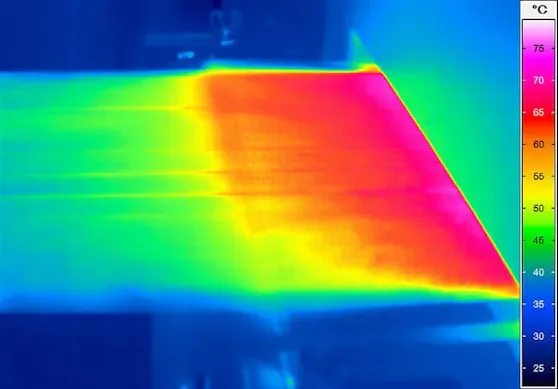
To bypass the need for continuous spatial and temporal monitoring, Cristofol and Kawano focused on overdetermination at a single time slice. The authors emphasize that determining the initial state through direct measurement becomes unfeasible once a heating process has already started.1 In two dimensions, capturing the state of an entire domain at a single fixed instant can be achieved using thermography.1 The practical advantage of their formulation lies in replacing complicated historical tracking with an accessible instantaneous profile, using the natural memory embedded within the heat field to uncover the invisible background structure.
The physical intuition behind why a single slice preserves this information rests on the nature of parabolic propagation. In response to questions from Primary, Michel explained that "In the framework of the diffusion equations, the spreading is instantaneous on all the domain at t > 0." Michel noted that while an observer might guess a single late-stage reading "could contain informations on a x-dependant coefficient, but clearly not enough information." The mathematical difficulty lies in extracting that hidden signal without relying on impossible assumptions about past conditions.
How did earlier studies attempt to solve the backward heat problem?
Earlier investigations into reaction-diffusion coefficients relied on far more extensive observational data. In an earlier 2006 preprint by Michel Cristofol, Patricia Gaitan, and Hichem Ramoul, researchers established simultaneous stability for a coefficient and the initial condition in a two-by-two reaction-diffusion system by tracking measurements inside a subdomain across an extended observation window. That historical approach relied on a global Carleman-type estimate with an observation acting over a spatial subdomain across time. Other foundational methods in the inverse-problem literature required measuring the flow of heat continuously along the external boundary of the system or applying integral overdetermination techniques.
The established mathematical framework developed by Aleksandr Bukhgeim and Michael Klibanov in 1981 demonstrated that Carleman inequalities could yield rigorous stability estimates for coefficient recovery. As Cristofol and Kawano note in their paper, those classical formulations typically required localized measurements across both space and an extended time interval, combined with domain-wide observations at a fixed time.1 Other researchers pursued optimization algorithms, optimal control frameworks, or pointwise sensor networks in one-dimensional settings. Each of those historical methods demanded either repeated measurements over duration intervals or severe geometric simplifications to prevent mathematical instabilities from overwhelming the calculations.
The central difficulty in eliminating extended time monitoring has always been controlling the time derivative of the diffusing state. When measurements occur only at a single moment, the rate at which the field is changing at that exact instant remains hidden. Without that temporal velocity, standard energy methods fail to bound the difference between candidate potentials. Cristofol and Kawano resolved this obstacle by transforming the time derivative into an auxiliary variable that satisfies its own related parabolic equation, allowing them to bridge the gap between static spatial measurements and dynamic rates of change.
How does the mathematical proof establish stability from a single snapshot?
The mathematical proof relies on weighted integral inequalities known as Carleman estimates to suppress uncontrolled fluctuations in the differential equations.1 Cristofol and Kawano define specialized exponential weight functions that depend on a spatial profile, a temporal scale factor that vanishes at the beginning and end of the time interval, and an adjustable positive parameter.1 By multiplying the governing partial differential equation by these carefully chosen exponential weights and integrating over space and time, the authors create mathematical bounds where higher-order derivatives dominate and absorb lower-order terms as the scaling parameter grows large.
To connect the single-time snapshot to the unknown potential, the authors examine the difference between two solutions corresponding to two different potentials that share an identical value on an arbitrary fixed open subdomain. They differentiate the difference equation with respect to time, which yields an auxiliary system governing the temporal rate of change. Applying Carleman inequalities to this rate of change produces an integral estimate bounded by the unknown potential and localized measurements. Because the exponential weight reaches its temporal maximum at the midpoint of the observation window, the authors can evaluate the integral at the observation instant, effectively bounding the spatial difference between the two potentials.
The resulting inequality demonstrates that the square-integrable difference between two potential terms is bounded by a constant multiplied by the second-order Sobolev norm of the difference between the two solution profiles at the chosen observation time.1 The constant depends on the reference subdomain, the observation instant, and the admissible bounds of the physical parameters. If the measured profiles at that single instant match, the difference between the potentials must evaluate to zero, confirming that only one unique physical potential could have produced the observed snapshot.
What can the mathematical result tell researchers, and where does it stop?
The result presented by Cristofol and Kawano is a rigorous mathematical existence and stability proof, not an empirical measurement or an off-the-shelf numerical reconstruction algorithm. The preprint has been posted to arXiv and has not yet undergone formal peer review. While the stability inequality guarantees that small observational errors will produce proportional errors in the reconstructed potential, implementing the method in software requires solving severely ill-conditioned linear systems that may prove sensitive to discrete sensor noise.
The proof also operates under specific mathematical restrictions regarding the physical system. The formulation assumes that the potential is already known completely within an arbitrary open subdomain, which acts as a spatial anchor for the entire calculation.1 When asked by Primary whether physical geometries might prevent establishing that anchor, Michel said, "Very little ! I guess that such kind of observations is realistic for most of the physical phenomena modeled by the diffusion equation." This assumption provides the necessary zero-difference baseline that allows the Carleman estimate to control errors across the remaining unmeasured space.
Furthermore, the theorem requires the background state of the system to remain strictly bounded away from zero across the entire domain at the observation instant.1 Explaining the necessity of this lower bound, Michel told Primary, "This hypothesis is technically mandatory because we can’t divide by such a vanishing field and we need to do it in some steps of the proof." The authors note that this non-vanishing condition can be satisfied by applying non-homogeneous boundary conditions or introducing specialized internal controls.1 The analysis additionally assumes smooth domain boundaries and an elliptic, positive-definite diffusion matrix that remains stable throughout the process.
The authors also highlight an unresolved theoretical boundary regarding the observation time itself. While their theorem holds for any positive observation instant within the time window, establishing uniqueness and stability when the observation occurs at the initial moment remains an open and challenging problem in mathematical analysis.1 Asked why zero time remains mathematically unreachable, Michel said that "The method of Carleman estimates involves weight functions which vanish at the bound of the integrals used in the energy estimates." Michel added that reconstructing from the initial moment would require extending integration symmetrically across negative time, "and this is impossible in the case of heat equations (contrary to the case of wave equation !!)"
What are the wider implications for modeling natural and engineered systems?
Establishing that a single spatial observation uniquely fixes an internal potential provides a strong theoretical justification for non-invasive testing techniques. In engineering, inspecting composite materials or industrial furnaces often relies on surface thermography, where thermal cameras capture heat distributions across exposed surfaces. Knowing that instantaneous spatial data mathematically determines internal reaction rates means engineers can design non-destructive diagnostic tools without installing invasive interior probes or collecting continuous time series.
In environmental science and ecological modeling, the mathematical principle supports more efficient monitoring strategies. Biologists tracking population dynamics across landscapes often possess habitat maps for a well-studied nature reserve, corresponding to the arbitrary known subdomain required by the theorem. If satellite surveys or field counts provide an instantaneous density map of the organism across the broader region, the stability framework suggests it is mathematically possible to reconstruct the underlying reproduction or mortality potential across the entire unmeasured territory.
The next analytical step lies in exploring whether the required observation set can be reduced even further. In the final section of their work, Cristofol and Kawano discuss the minimal set of spatial measurements required to determine a potential without imposing prior knowledge on any subdomain.1 Resolving that conjecture will help define the ultimate physical limits of how much hidden interior structure can be extracted from a single snapshot of a spreading world.
The record
26 sentences trace to 1 source and 1 contributor.
-
1
MC
 Michel Cristofol (AMU, I2M), Alexandre Kawano (USP)
Paper
· arxiv.org · 17 Sep 2026
Inverse problems for the diffusion equation with one time observation
Preprint · may not have been peer reviewed
See the source
- 2 Contribution — Michel Cristofol 9 statements added to this article
Other consulted pages3 pages
arxiv.org2 pages
Article history
-
Published 23 Nov 2026, 21:25Assembled by the Primary desk from 1 source · 1 contributor · 26 cited sentences
-
Michel Cristofol
- Go to the sentence: In response to questions from Primary, Michel explained that "In the framework of the diffusion equations, the spreading is instantaneous on all the domain at t > 0."
- Go to the sentence: Michel noted that while an observer might guess a single late-stage reading "could contain informations on a x-dependant coefficient, but clearly not enough information."
- Go to the sentence: The formulation assumes that the potential is already known completely within an arbitrary open subdomain, which acts as a spatial anchor for the entire calculation.
- Go to the sentence: When asked by Primary whether physical geometries might prevent establishing that anchor, Michel said, "Very little ! I guess that such kind of observations is realistic for most of the physical phenomena modeled by the diffusion equation."
- Go to the sentence: Furthermore, the theorem requires the background state of the system to remain strictly bounded away from zero across the entire domain at the observation instant.
- Go to the sentence: Explaining the necessity of this lower bound, Michel told Primary, "This hypothesis is technically mandatory because we can’t divide by such a vanishing field and we need to do it in some steps of the proof."
- Go to the sentence: While their theorem holds for any positive observation instant within the time window, establishing uniqueness and stability when the observation occurs at the initial moment remains an open and challenging problem in mathematical analysis.
- Go to the sentence: Asked why zero time remains mathematically unreachable, Michel said that "The method of Carleman estimates involves weight functions which vanish at the bound of the integrals used in the energy estimates."
- Go to the sentence: Michel added that reconstructing from the initial moment would require extending integration symmetrically across negative time, "and this is impossible in the case of heat equations (contrary to the case of wave equation !!)"