Deep ocean volcanic rocks reveal explosive eruptions under crushing pressure
Volcanic debris discovered six kilometres beneath the Pacific Ocean shows that extreme seafloor pressures cannot completely suppress explosive eruptions, challenging assumptions about how underwater crust forms.
Deep beneath the surface of the ocean, the weight of water creates an environment that seems entirely hostile to volcanic blasts. On dry land, an erupting volcano tears molten rock into fine ash and scorching pumice because trapped gases bubble outward violently as they reach the thin air of the atmosphere. Underwater, the tremendous physical load of kilometres of ocean acts like an immovable lid, holding volatile elements in place and squeezing rising lava into placid, rounded pillows rather than blasting it across the seabed. For decades, the fundamental physics of liquid pressure suggested that explosive volcanism should become physically impossible once the ocean overhead grows sufficiently deep.
Yet explosive eruptions have now left undeniable physical wreckage across the deepest chasm on the planet. An expedition studying the rugged walls of the Mariana Trench has uncovered deposits of pyroclastic rock, the consolidated debris produced by violent volcanic fragmentation, more than six kilometres beneath the sea surface.12 The discovery shatters previous depth records for explosive underwater eruptions and forces geologists to rethink how molten rock, volcanic gases and extreme pressures interact along the boundaries where tectonic plates collide.12
How do volcanic explosions work beneath the sea?
Volcanic explosions happen when trapped substances escape from molten rock faster than the surrounding environment can absorb their expansion. Deep beneath the crust, magma holds dissolved water, carbon dioxide and other volatile compounds locked inside its liquid mixture under intense geothermal pressure.1 As that liquid rock ascends toward the surface, the surrounding pressure steadily drops, allowing dissolved volatile compounds to separate out of solution and form expanding gas bubbles.1 If those bubbles multiply and inflate with sufficient rapidity, their expansion shatters the molten liquid into airborne ash, pumice and fragmented debris before the material can cool.1
When this process occurs underwater, the immense physical weight of the overlying water column directly counteracts that bubble growth. The deeper the eruption site sits, the heavier the hydrostatic load pushing back against the volatile compounds dissolved in the magma. At a depth of six kilometres, the pressure exerted by the Pacific Ocean is roughly 600 times greater than atmospheric pressure at sea level.1 Under such unrelenting compression, ordinary steam and volcanic gas bubbles cannot swell dramatically enough to blast liquid lava apart in the familiar terrestrial fashion.13
What did the expedition find in the Mariana Trench?
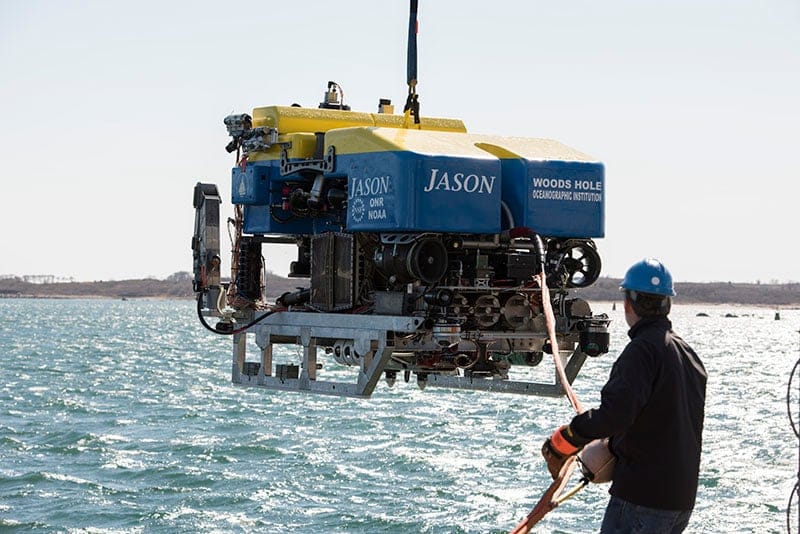
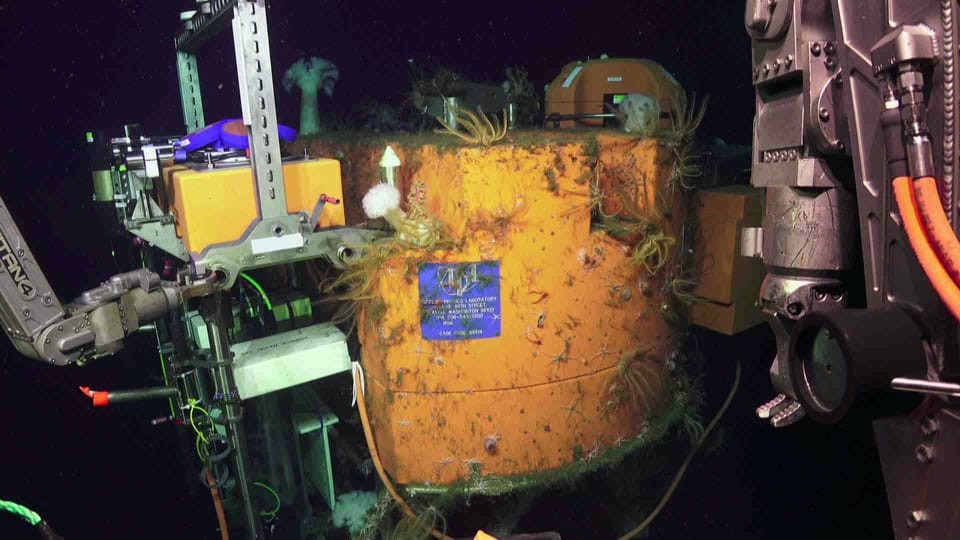
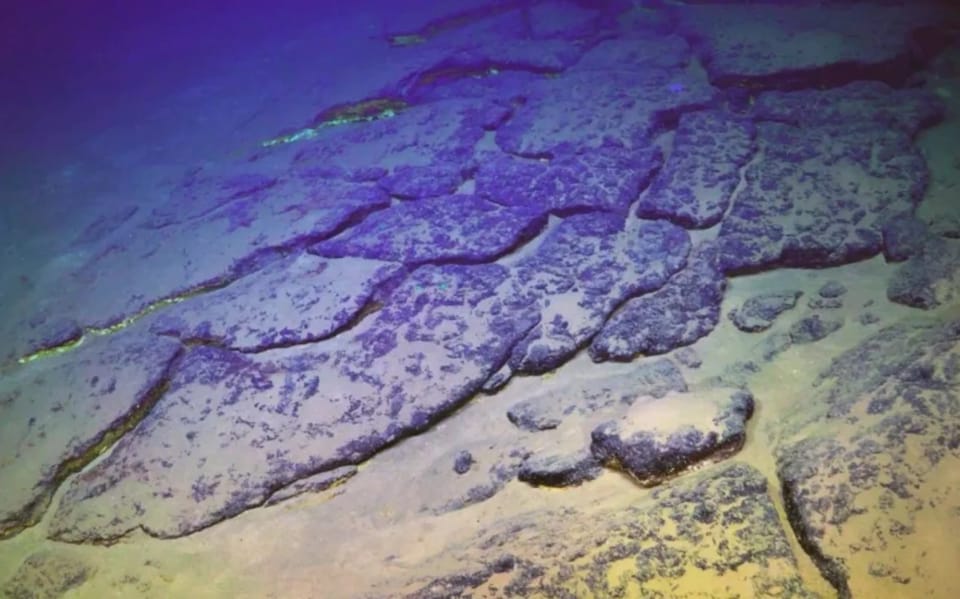
Researchers exploring the southern reaches of the Mariana Trench discovered flat sheets of pyroclastic rock resting on the steep slopes of the inner trench wall.43 An international team of scientists, including Robert J. Stern of the University of Texas at Dallas along with Ignacio Pujana, Molly K. Anderson, Emily J. Chin, Nicholas Dygert, Yumiko Harigane, Veronique Le Roux, Matthew Leybourne and Yasuhiko Ohara, reported the finding in Frontiers in Earth Science.1 The robotic vehicle Jason/Medea documented and sampled the deposits at depths exceeding 6,000 metres below sea level, reaching down to 6,148 metres along the Challenger Deep Forearc Segment.2
The volcanic rocks formed thin layers displaying rounded margins and remarkably regular fracture patterns.1 Microscopic and chemical analysis revealed that the sheets consist of pyroclastic flow deposits, which represent scorching avalanches of shattered volcanic debris, rock and gas that settled together while still hot.15 Because the fragments retained enough thermal energy to weld back together on the seafloor, scientists determined that the eruption occurred nearby rather than drifting down from distant shallow water.41
The discovery extends the known depth limit for explosive marine volcanism by more than two kilometres.1 In 2008, an earlier expedition documented evidence of explosive eruptions at roughly four kilometres depth along the Gakkel Ridge in the Arctic Ocean.1 The new deposits in the western Pacific establish that explosive fragmentation can still take place under physical pressures far beyond what researchers previously considered viable for marine pyroclastic flows.2
Why did the magma explode under such high pressure?
Supercritical fluids, which exist beyond the physical threshold where liquids and gases remain distinct states of matter, offer the primary explanation for how deep magma shatters.12 When pure water exceeds a temperature of roughly 374 degrees Celsius and experiences pressure above 221 bar, it becomes a supercritical fluid that combines the density of a liquid with the penetrating mobility of a gas.1 In a deep-sea volcanic conduit six kilometres beneath the waves, volatile water and dissolved gases easily surpass these critical conditions.
As magma ascends through the crust, these supercritical fluids separate rapidly from the molten silicate without needing to undergo conventional boiling or massive bubble expansion.1 Their sudden volumetric release exerts enough mechanical force to fracture the hot magma into fragments. Because supercritical fluids occupy far less volume than atmospheric steam, the resulting submarine eruption produces a dense, focused slurry of hot rock and volatile fluid that rushes along the seafloor rather than blasting an ash plume high into the water column.1
The geologic setting where the rocks were found makes their presence even more unexpected. The Challenger Deep Forearc Segment sits in the narrow strip of seafloor between the trench axis and the active volcanic island chain, a tectonic zone that began forming roughly 52 million years ago as the Pacific plate slipped beneath the Philippine Sea plate.12 In typical subduction zones, the forearc mantle remains relatively cold because fluids from the descending slab chill the overriding crust, suppressing the melting required to generate fresh young lavas.13
The research suggests that the southern Mariana region is stretching from east to west at rates reaching approximately 45 millimetres per year, driven by the rapid opening of the adjacent Mariana Trough backarc basin. This intense stretching appears to allow hot mantle material to upwell into the forearc, generating fresh magma that feeds deep volcanic vents unusually close to the trench itself.2
What can the current evidence leave unanswered?
These rock samples cannot reveal the precise location of the vent from which the pyroclastic flow originally erupted.45 The observations come from rock fragments and camera surveys gathered during seven dives across an approximately 300-kilometre stretch of the trench wall, rather than an active vent monitored in real time.13 Because the research relied on physical sampling and photographic interpretation of solidified deposits, the role of supercritical fluids remains a well-reasoned physical hypothesis rather than directly measured eruption dynamics.12 Furthermore, the robotic system operated near its maximum engineering threshold of 6,500 metres, leaving the deeper seabed of the Challenger Deep, which reaches nearly 11,000 metres below sea level, entirely unexamined by this expedition.1
Even with these mechanical boundaries, the discovery demonstrates that volatile-rich magmas can produce explosive fragmental rocks across a much broader range of oceanic pressures than previously recognized. The presence of young volcanic deposits right alongside ancient mantle rocks confirms that the Challenger Deep Forearc Segment is undergoing active, complex extension that directly influences how tectonic plates bend and sink into the mantle. Determining how widespread these deep explosive eruptions are will require engineers to build submersibles that can operate regularly at depths below seven kilometres, where the deepest volcanic processes on Earth remain completely hidden.
The record
27 sentences trace to 5 sources.
-
1
MA
 Mihai Andrei
Document
· zmescience.com · 24 Nov 2026
Robot Exploring the Deep Ocean Finds Volcanoes That Shouldn’t Be Able to Explode
See the source
-
2
F
 Frontiers
Third-party reporting
· frontiersin.org · 23 Nov 2026
Frontiers | ROVing in the deep: tectonic and magmatic complexities of the Challenger Deep forearc segment, Southern Mariana convergent margin
See the source
-
3
F
frontiersin.org
Third-party reporting
· frontiersin.org · 23 Nov 2026
Robot submarine exploring world’s deepest ocean trench finds unprecedented volcanic activity
See the source
-
4
P
 popsci.com
Third-party reporting
· popsci.com · 23 Nov 2026
Mysterious volcanic rock discovered in the Mariana Trench
See the source
-
5
N
 nationalgeographic.com
Third-party reporting
· nationalgeographic.com · 23 Nov 2026
World's Deepest Explosive Volcanic Eruption Just Discovered in an Oceanic Trench
See the source