Digital cognitive tests reveal how screen interfaces alter executive function scores
Live error tallies and browser timers can elevate testing pressure and distort measurements during computerized psychological assessments in university settings, according to new research.
When a person sits down to solve a demanding mental puzzle, performance depends on internal cognitive faculties such as working memory, impulse control, and mental flexibility. For decades, clinicians and psychologists evaluated these mental faculties, collectively termed executive functions, using physical materials under quiet, personal supervision. An evaluator handed over printed cards, colored blocks, or paper sheets, noting completion times with a handheld stopwatch kept out of direct view. In that classical environment, the administration tools remained unobtrusive, allowing the subject to focus on the underlying mental challenge.
As cognitive assessment shifts from physical testing rooms into web browsers across higher education, that quiet dynamic changes fundamentally. A software application does not simply reproduce a paper test on a screen. A browser window introduces active visual cues, real-time counters, automated notifications of incorrect attempts, and progress bars directly into the participant's visual field. When an individual attempts to solve an abstract reasoning problem while a prominent digital timer counts down seconds in the corner of the display, the testing instrument itself becomes an active element of the cognitive load.
Understanding this interaction is increasingly important because universities and researchers frequently deploy computerized screening batteries to evaluate student learning needs, study cognitive development, and measure the efficacy of educational interventions. If software interfaces create extraneous friction or provoke acute evaluation anxiety, the resulting performance metrics risk reflecting how well an individual handles an intimidating interface rather than measuring baseline executive control.
The sequence that governs digital assessment involves several interconnected cognitive steps. First, an individual must read and comprehend standardized digital instructions displayed on a monitor. Next, the user must hold those rules in working memory while manipulating digital objects on screen, whether clicking colored words, sorting geometric shapes, or rearranging virtual discs. Throughout this problem-solving sequence, the central nervous system deploys inhibitory control to suppress impulsive responses and mental flexibility to adjust strategies when rules change unexpectedly. However, because the assessment takes place in a web browser, the user must simultaneously monitor interface elements, interpret automated error alerts, and navigate digital session controls. When digital counters and dynamic error notifications demand visual attention, they compete directly for the working memory capacity and attentional focus required to complete the core behavioral task.
To provide empirical insight into these dynamics, an academic investigation led by Connie Atristain-Suárez and colleagues examined how interface factors interact with performance during digital evaluations.1 A paper published on September 15, 2026, in the journal Frontiers in Education documented Bloom 2.0, a browser-based assessment platform created to capture both task-level cognitive performance and participant user experience. The researchers assembled an open-access dataset tracking 64 undergraduate students who completed a comprehensive battery of six computerized executive function tasks under academic supervision.12
How does a digital interface influence cognitive assessment?
Digital interfaces alter cognitive testing by introducing interactive visual elements, automated timing mechanisms, and instant feedback that can evoke emotional reactions alongside task performance. In a traditional evaluation, human examiners observe participant hesitation and regulate testing tempo, providing supportive structure without inserting extra visual distractions. Computerized platforms, by contrast, present instructions through text panels and enforce algorithmic progression through automated software rules.
The Bloom 2.0 platform delivered standardized instructions at the beginning of each assessment module, followed by real-time visual tracking during each behavioral challenge.1 The software recorded elapsed completion time, correctness indicators, and individual error tallies as students interacted with each exercise.1 While continuous digital tracking ensures exact precision down to the second, presenting live counters directly to participants creates an evaluative pressure that does not exist in standard pencil-and-paper examinations.
The study recorded participant demographic details, degree program enrollment, grade averages, and self-reported measures of sleep and general physical health.1 By capturing these contextual variables alongside millisecond-level interaction logs, the dataset allows secondary investigators to examine how personal baselines and interface features combine to influence behavioral outcomes during complex digital problem solving.
What tasks did the university students complete?
Students in the assessment completed six established behavioral exercises that examine distinct facets of problem solving, working memory, and mental flexibility. The assessment battery incorporated the Wisconsin Card Sorting Test, Raven's Progressive Matrices, the Stroop Color-Word Task, the Token Test, and two separate variants of the Tower of Hanoi, using three-disc and four-disc configurations.12 Together, these instruments represent widely recognized paradigms in neuropsychological evaluation.
In the Tower of Hanoi tasks, participants must transfer a stack of graded discs from one peg to another following strict movement constraints, an exercise designed to test sequential planning, spatial reasoning, and working memory. Raven's Progressive Matrices presents non-verbal visual patterns with missing pieces, requiring users to deduce underlying geometric rules without relying on language skills. The Token Test evaluates language processing and verbal comprehension by asking participants to execute spoken or written instructions of increasing complexity using geometric tokens.
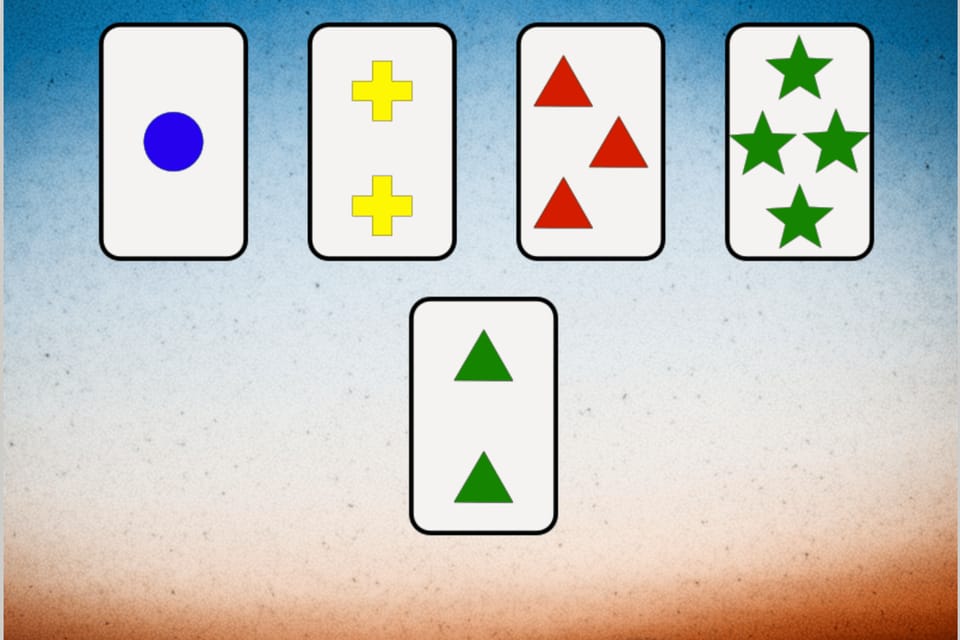
The Stroop Color-Word Task measures inhibitory control, requiring an individual to name the font color of a printed word while suppressing the automatic reflex to read the conflicting word itself, such as reading the word red printed in blue font. The Wisconsin Card Sorting Test evaluates cognitive flexibility and the ability to adapt to changing environmental feedback, as participants sort visual cards based on changing criteria such as shape, color, or number without being explicitly told the sorting principle in advance. Across all six exercises, the platform recorded total duration, correct answers, and specific error counts, categorizing participant achievement into normal, mild, or moderate performance tiers according to pre-established algorithmic cut-off scores.1
Addressing these classifications, Connie Atristain-Suárez, one of the study's lead researchers, said in response to questions from Primary that "these thresholds were not intended to function as clinical cut-offs." She explained that they serve as operational markers within the current software version to deliver structured feedback, noting that "if, in a future validation study, participants classified by Bloom 2.0 as normal, mild, or moderate consistently showed substantially different results when assessed with established reference instruments, that would be a clear indication that the current thresholds need to be revised or replaced."
The participant cohort consisted of 64 undergraduate students recruited from the Faculty of Engineering and the Faculty of Business at a university in Mexico City.12 The platform automatically randomized the administration sequence of the six tasks for each user session, a design choice intended to prevent predictable order effects and fatigue patterns from distorting specific individual tests.1
However, the assumption that randomization entirely resolved task fatigue remains open to scrutiny. Atristain-Suárez told Primary that "we did not observe an obvious ordering effect during the sessions, but I would be cautious about interpreting that as evidence that no such effect existed." She noted that qualitative responses indicated fatigue during prolonged tasks, adding that "for now, I would treat randomization as a methodological safeguard rather than evidence that ordering effects were completely eliminated."
What did student ratings and feedback reveal about the testing platform?
Student evaluations revealed that while participants broadly valued the digital platform, real-time counters and prolonged task sequences triggered noticeable fatigue and testing anxiety. Following the completion of the six cognitive exercises, 55 of the 64 participants completed a Spanish-language adaptation of the End-User Computing Satisfaction survey, a standardized psychometric questionnaire comprising 15 Likert-scale items evaluated across four distinct domains: Content, Accuracy, Format, and Timeliness.12
Each survey item asked students to rate their experience on a five-point scale, ranging from strong disagreement to strong agreement.1 The questions measured whether the platform delivered sufficient explanatory information, maintained perceived processing reliability, presented interface elements clearly, and supplied prompt feedback upon task completion.1 In an earlier evaluation of the system published in June 2026, researchers found that 81.0 percent of responses were rated 4 or 5, indicating high overall user satisfaction.2

The evaluation also incorporated two open-ended questions inviting students to describe system strengths and suggest direct functional improvements.12 Qualitative analysts reviewed the resulting comments using an inductive thematic coding protocol, tagging each text submission with one or more non-exclusive categorical labels. This annotation categorized student commentary into six recurring experiential themes: clarity of instructions, positive general appraisal, interface and visual design, cognitive fatigue or loss of focus, session closure and final feedback, and anxiety generated by visible timers or error counters.12
David Escobar-Castillejos, a co-author of the research, provided important context regarding the frequency of these emotional responses. He told Primary that only two of the 55 students who answered the survey raised the issue of anxiety, making it the least frequent of the six qualitative themes, whereas instruction clarity arose in 32 responses. However, Escobar-Castillejos noted that the tension was concentrated in specific tasks, explaining that in the Wisconsin Card Sorting Test, where rules shift without notice, students watch the error tally rise for doing what the test requires. He observed that "hiding the counters during the task and showing them at the end would fix that without changing the task."
What are the primary constraints of the collected data?
The dataset's utility is bounded by a relatively compact sample of university students from two academic departments, as well as specific omissions in granular task logs. The records reflect observations from 64 participants enrolled exclusively in business and engineering curricula during March 2026, meaning the sample cannot be treated as representative of broader demographic or clinical populations.1 Atristain-Suárez emphasized this boundary in comments to Primary, stating that "our interpretation stops with the population we actually studied: undergraduate students from engineering and business programs." She pointed out that navigating a digital evaluation involves software literacy and visual processing, which may differ widely in older or clinical groups.
Furthermore, while 64 individuals completed the full battery of cognitive exercises, only 55 participants submitted the satisfaction questionnaire, creating a slight discrepancy across analytical files.1 Addressing why nine students skipped the survey, Escobar-Castillejos told Primary that records rule out disproportionate session duration, as their median completion time across the battery was about 20 minutes compared to 22 minutes for respondents. He attributed the drop-off to the session handoff, explaining that the survey was hosted on an external link rather than embedded within the core application.
The authors also noted that certain operational exports lacked fine-grained error subtypes, such as detailed category breakdowns for card sorting mistakes, and contained occasional missing background fields, including unrecorded birth dates.1 Escobar-Castillejos explained to Primary that the application stored one summary record per participant upon completion rather than logging trial-by-trial events. Consequently, calculating perseverative errors in card sorting or per-trial response latencies in the Stroop task remains impossible from the current export files.
These limitations mean the dataset cannot serve as a clinical diagnostic standard or a universal norm for digital executive functioning. Instead, the collection functions as an observational resource illustrating the operational reality of web-based testing in higher education, where software characteristics, usability perceptions, and task performance intersect.
The published dataset is structured into three harmonized files covering cognitive performance worksheets, survey scores, and coded feedback tables, organized in accordance with Findable, Accessible, Interoperable, and Reusable data principles. All direct personal identifiers, including names and email addresses, were stripped or anonymized prior to public archiving, ensuring participant privacy while maintaining unique session keys across all three files.1
This linked architecture allows future researchers to conduct secondary evaluations without having to collect new primary data. Computational scientists and psychologists can examine whether specific interface ratings correlate with elevated error rates, train machine learning models to detect mental fatigue from task completion duration, or recode the open-ended text using alternative thematic frameworks. As academic institutions expand their reliance on automated digital platforms, analyzing the intersection between software usability and mental performance will determine whether digital assessments support or distort educational measurement.
The record
32 sentences trace to 2 sources and 2 contributors.
-
1
F
 Frontiers
Document
· frontiersin.org · 15 Sep 2026
Dataset from Bloom 2.0: task performance, user satisfaction, and open-ended feedback from a web-based assessment platform for executive function and related cognitive processes in higher education
See the source
-
2
F
Frontiers
Third-party reporting
· frontiersin.org · 12 Jun 2026
Frontiers | Evaluating user perception and satisfaction in a digital platform designed for executive function assessment: a user-centered evaluation of Bloom 2.0 in higher education
See the source
- 3 Contribution — Connie Atristain-Suárez 7 statements added to this article
- 4 Contribution — David Escobar-Castillejos 10 statements added to this article
Other consulted pages2 pages
scripta.up.edu.mx1 page
frontiersin.org2 pages
Article history
-
Published 27 Nov 2026, 20:17Assembled by the Primary desk from 2 sources · 2 contributors · 32 cited sentences
-
David Escobar-Castillejos, co-author
- Go to the sentence: David Escobar-Castillejos, a co-author of the research, provided important context regarding the frequency of these emotional responses.
- Go to the sentence: He told Primary that only two of the 55 students who answered the survey raised the issue of anxiety, making it the least frequent of the six qualitative themes, whereas instruction clarity arose in 32 responses.
- Go to the sentence: However, Escobar-Castillejos noted that the tension was concentrated in specific tasks, explaining that in the Wisconsin Card Sorting Test, where rules shift without notice, students watch the error tally rise for doing what the test requires.
- Go to the sentence: He observed that "hiding the counters during the task and showing them at the end would fix that without changing the task."
- Go to the sentence: Furthermore, while 64 individuals completed the full battery of cognitive exercises, only 55 participants submitted the satisfaction questionnaire, creating a slight discrepancy across analytical files.
- Go to the sentence: Addressing why nine students skipped the survey, Escobar-Castillejos told Primary that records rule out disproportionate session duration, as their median completion time across the battery was about 20 minutes compared to 22 minutes for respondents.
- Go to the sentence: He attributed the drop-off to the session handoff, explaining that the survey was hosted on an external link rather than embedded within the core application.
- Go to the sentence: The authors also noted that certain operational exports lacked fine-grained error subtypes, such as detailed category breakdowns for card sorting mistakes, and contained occasional missing background fields, including unrecorded birth dates.
- Go to the sentence: Escobar-Castillejos explained to Primary that the application stored one summary record per participant upon completion rather than logging trial-by-trial events.
- Go to the sentence: Consequently, calculating perseverative errors in card sorting or per-trial response latencies in the Stroop task remains impossible from the current export files.
-
Connie Atristain-Suárez, one of the study's lead researchers
- Go to the sentence: Addressing these classifications, Connie Atristain-Suárez, one of the study's lead researchers, said in response to questions from Primary that "these thresholds were not intended to function as clinical cut-offs."
- Go to the sentence: She explained that they serve as operational markers within the current software version to deliver structured feedback, noting that "if, in a future validation study, participants classified by Bloom 2.0 as normal, mild, or moderate consistently showed substantially different results when assessed with established reference instruments, that would be a clear indication that the current thresholds need to be revised or replaced."
- Go to the sentence: The platform automatically randomized the administration sequence of the six tasks for each user session, a design choice intended to prevent predictable order effects and fatigue patterns from distorting specific individual tests.
- Go to the sentence: Atristain-Suárez told Primary that "we did not observe an obvious ordering effect during the sessions, but I would be cautious about interpreting that as evidence that no such effect existed."
- Go to the sentence: She noted that qualitative responses indicated fatigue during prolonged tasks, adding that "for now, I would treat randomization as a methodological safeguard rather than evidence that ordering effects were completely eliminated."
- Go to the sentence: The records reflect observations from 64 participants enrolled exclusively in business and engineering curricula during March 2026, meaning the sample cannot be treated as representative of broader demographic or clinical populations.
- Go to the sentence: Atristain-Suárez emphasized this boundary in comments to Primary, stating that "our interpretation stops with the population we actually studied: undergraduate students from engineering and business programs."