Solar eclipses revealed how gravity bends passing starlight
Archival records trace how Albert Einstein collaborated with German astronomers during solar expeditions to verify whether the gravitational pull of the Sun deflects background rays.
When starlight travels across interstellar space toward Earth, it appears to travel in straight lines across the void. That expectation changes whenever light passes near a massive celestial body. The gravitational field of a star alters the path of passing radiation, deflecting light inward toward the center of mass. To an observer viewing the distant source from Earth, the star appears displaced from its true astronomical location.
Verifying this displacement provided early confirmation that mass shapes the geometry of surrounding space. If light moved unaffected by gravity, background stars would remain fixed in their cataloged positions regardless of what intervened between them and terrestrial telescopes. Demonstrating that the Sun could displace the apparent position of background stars offered researchers an empirical way to evaluate Albert Einstein's emerging gravitational theories.
The observational process requires a precise sequence of natural circumstances. First, distant stars must shine continuously from deep space along sightlines passing directly beside the edge of the Sun. Second, the mass of the Sun must exert a gravitational pull on the photons traversing this corridor of space. Third, that deflection must alter the incoming angle of the rays before they reach terrestrial telescopes, creating an apparent outward displacement on photographic plates. Under normal daylight conditions, intense solar glare completely overwhelms background celestial objects. A total solar eclipse must temporarily cover the solar disk, darkening the sky so photographic plates can record the faint stars surrounding the blocked rim.
In a historical paper posted on September 11, 2026, to the arXiv preprint server, physicist Günther Rüdiger documented the observational campaigns and personal diplomacy that accompanied this effort. The preprint examined the interactions between theoretical physicists and observational astronomers, tracing how early proposals for measuring light deflection motivated field expeditions across Europe.

How can an eclipse reveal the bending of starlight?
Total solar eclipses block blinding sunlight so astronomical instruments can detect slight shifts in the apparent positions of distant stars.1 In 1911, Albert Einstein suggested that photons passing close to the Sun are deflected by its effective mass.1 According to the preprint by Rüdiger, Einstein calculated that this gravitational deflection would shift the positions of background stars by up to one arcsecond, an angular measurement representing one thirty-six-hundredth of a degree.1 Günther said that this initial estimate relied on the "standard Newton theory of gravitation, not yet relativistic spave curvature" to compute how mass pulled on light rays. Astronomers welcomed these suggestions with enthusiasm because total eclipses offered a practical setting to observe the predicted deflection.1
Einstein subsequently revised his prediction by incorporating relativistic space curvature, which doubled the expected deflection value.1 This doubling meant starlight grazing the solar limb would shift by nearly two arcseconds, compared with the single arcsecond originally derived from mass considerations alone.1 Günther noted that for observational astronomers at the time, evaluating the revised calculation "was a challenge to answer a fundamental new question by astronomical techniques and experiences" during brief periods of totality. Astronomers responded enthusiastically to these refined calculations, recognizing that measuring the larger displacement was within the technical reach of specialized eclipse cameras.1
Why did early eclipse expeditions fail to capture the shift?
Geopolitical conflict and unpredictable field conditions repeatedly prevented astronomers from recording the delicate light deflection predicted around the Sun. In 1914, German astronomer Erwin Freundlich led an expedition to record a solar eclipse, but the effort failed after the outbreak of the First World War disrupted the team's operations.1 International tensions and logistical interruptions cut short the planned observations before photographic plates could be exposed. Reflecting on that missed opportunity, Günther explained that if Freundlich had succeeded in measuring the bending in 1914, "He had found two arcseconds so that Einsteins prediction of 1911 (one arcsecond) was wrong. Sensation, Freundlich had found as the first observer that something is wrong with the Newtonian theory" before the general theory was even finalized.
Rüdiger's original paper describes the positive result of Eddington's 1919 eclipse campaign.
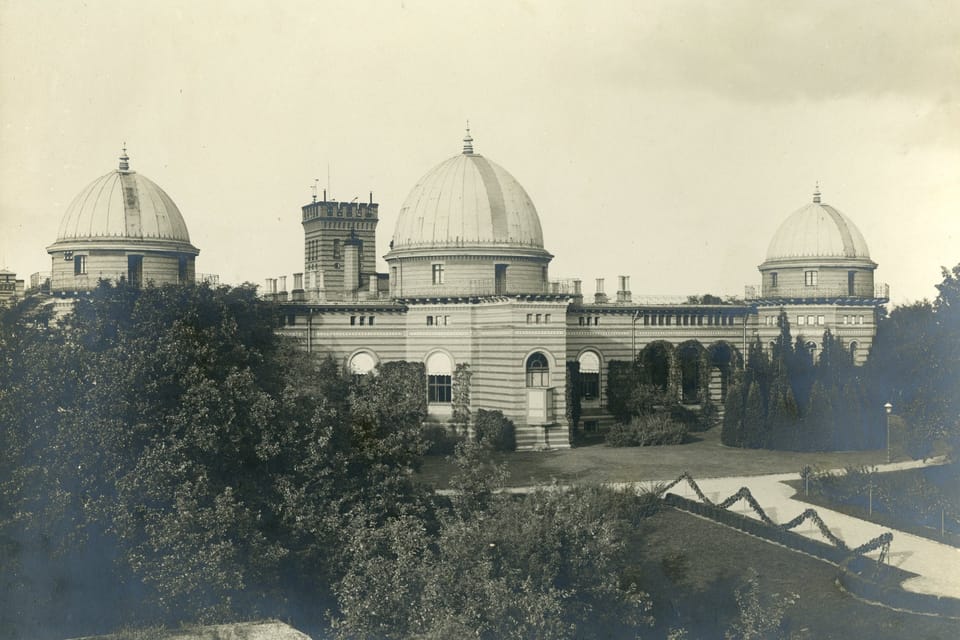
Observational setbacks persisted into the twentieth century as later teams struggled to obtain reliable measurements. Rüdiger reported that the historical sequence of these observational campaigns concluded with an unsuccessful Potsdam expedition to the island of Öland in Sweden during the solar eclipse of 1954. Decades after the initial theoretical proposals, variable weather and specialized technical demands continued to complicate direct optical confirmation during brief totality windows. Optical campaigns ceased because "It was Einsteins argumentation that new efforts with solar eclipses cannot improve the known results. An almost perfect agreement between observation and theory resulted only later by \"very long baseline interferometry\" in radio astronomy," Günther said.
What drew Albert Einstein to the Potsdam astronomical society?
Albert Einstein joined the Astronomische Gesellschaft in 1921 to build relationships with the observational astronomers whose field expeditions could verify his gravitational theories.1 A newly found conference photograph highlighted in Rüdiger's study shows Einstein attending the first post-war meeting of the society.1 The gathering took place on the Telegraphenberg in Potsdam, an important scientific hill housing major German observatories.1 Explaining how the archival image emerged, Günther said: "The new photograph has been found in the archive of the Hassenstein family after a contact with the 100 years old son of Walter Hassenstein, former astronomer in the Astrophysical Observatory Potsdam."
The conference photograph documents Einstein's status as a new member of the Astronomische Gesellschaft at that 1921 meeting.1 Joining the professional society allowed Einstein to engage directly with the observers who designed expedition instruments and planned field campaigns to record future eclipses. Although some historical accounts focus strictly on academic prizes, Günther cautioned that "It is too simplistic to claim that Einstein was merely waiting for the Nobel Prize, as he was still very active during his time in Berlin, but he was highly convinced that he deserved the prize."
The findings presented by Rüdiger constitute a historical and archival analysis of early observational campaigns. The work examines surviving institutional documents, expedition chronologies, and conference imagery from German scientific societies. As an archival paper posted to the arXiv preprint server, it has not yet undergone formal peer review. The paper reconstructs institutional motivations and personal interactions, leaving physical re-examinations of light deflection to modern astrophysical instruments.1
The archival history highlights how theoretical physics relied on practical field astronomy to establish empirical validity. Observational campaigns required years of preparation, international travel, and institutional diplomacy, showing that verifying physical theory was an organizational challenge alongside a mathematical one. Scholars examining the history of relativity continue to search institutional archives for additional records detailing how observational astronomers responded to Einstein's gravitational predictions.
The record
22 sentences trace to 1 source and 1 contributor.
-
1
GR
 Günther Rüdiger
Paper
· arxiv.org · 11 Sep 2026
Einstein and the Solar Eclipses - Why Albert Einstein joined the Astronomische Gesellschaft in Potsdam 1921
Preprint · may not have been peer reviewed
See the source
- 2 Contribution — Günther Rüdiger 13 statements added to this article
Other consulted pages2 pages
arxiv.org2 pages
link.springer.com1 page
getbootstrap.com1 page
mathshistory.st-andrews.ac.uk1 page
Article history
-
Published 27 Nov 2026, 16:32Assembled by the Primary desk from 1 source · 1 contributor · 22 cited sentences
-
Günther Rüdiger
- Go to the sentence: According to the preprint by Rüdiger, Einstein calculated that this gravitational deflection would shift the positions of background stars by up to one arcsecond, an angular measurement representing one thirty-six-hundredth of a degree.
- Go to the sentence: Günther said that this initial estimate relied on the "standard Newton theory of gravitation, not yet relativistic spave curvature" to compute how mass pulled on light rays.
- Go to the sentence: Einstein subsequently revised his prediction by incorporating relativistic space curvature, which doubled the expected deflection value.
- Go to the sentence: This doubling meant starlight grazing the solar limb would shift by nearly two arcseconds, compared with the single arcsecond originally derived from mass considerations alone.
- Go to the sentence: Günther noted that for observational astronomers at the time, evaluating the revised calculation "was a challenge to answer a fundamental new question by astronomical techniques and experiences" during brief periods of totality.
- Go to the sentence: In 1914, German astronomer Erwin Freundlich led an expedition to record a solar eclipse, but the effort failed after the outbreak of the First World War disrupted the team's operations.
- Go to the sentence: Reflecting on that missed opportunity, Günther explained that if Freundlich had succeeded in measuring the bending in 1914, "He had found two arcseconds so that Einsteins prediction of 1911 (one arcsecond) was wrong. Sensation, Freundlich had found as the first observer that something is wrong with the Newtonian theory" before the general theory was even finalized.
- Go to the sentence: Rüdiger reported that the historical sequence of these observational campaigns concluded with an unsuccessful Potsdam expedition to the island of Öland in Sweden during the solar eclipse of 1954.
- Go to the sentence: Optical campaigns ceased because "It was Einsteins argumentation that new efforts with solar eclipses cannot improve the known results. An almost perfect agreement between observation and theory resulted only later by \"very long baseline interferometry\" in radio astronomy," Günther said.
- Go to the sentence: A newly found conference photograph highlighted in Rüdiger's study shows Einstein attending the first post-war meeting of the society.
- Go to the sentence: Explaining how the archival image emerged, Günther said: "The new photograph has been found in the archive of the Hassenstein family after a contact with the 100 years old son of Walter Hassenstein, former astronomer in the Astrophysical Observatory Potsdam."
- Go to the sentence: Although some historical accounts focus strictly on academic prizes, Günther cautioned that "It is too simplistic to claim that Einstein was merely waiting for the Nobel Prize, as he was still very active during his time in Berlin, but he was highly convinced that he deserved the prize."
- Go to the sentence: The paper reconstructs institutional motivations and personal interactions, leaving physical re-examinations of light deflection to modern astrophysical instruments.