Atomic fallout reveals what may be the oldest male orca on record
Chemical traces left by twentieth-century nuclear detonations show that male killer whales can survive past 65, well beyond the longevity limits recorded in Pacific populations.
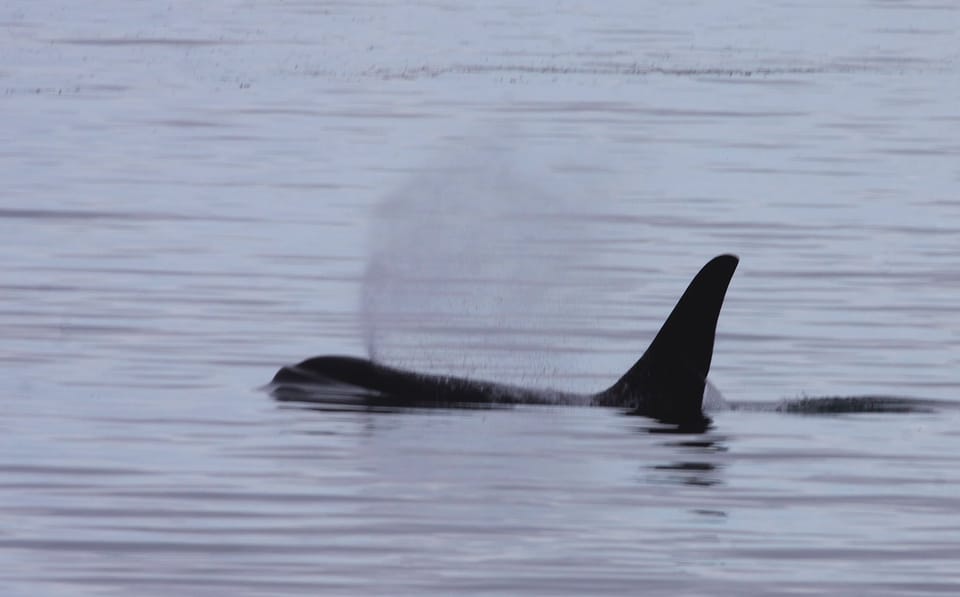
For decades, naturalists tracking killer whales have assumed that male lifespans are strictly bounded by nature. While female orcas can survive into their eighties or beyond, male orcas are thought to have a maximum lifespan of around 50 to 60 years, with many dying far earlier once their mothers perish.12 That biological ceiling shaped how marine biologists model pod dynamics, social cohesion, and the evolutionary purpose of post-reproductive lifespans in toothed whales.
Understanding how long these apex marine predators live in the wild dictates how conservationists measure population health and assess the pressures facing vanishing communities. If male orcas can survive substantially longer than long-term observational studies suggest, existing ecological models may misunderstand the demographic resilience, lifetime reproductive contribution, and behavioral independence of male cetaceans across different ocean basins.
Determining the real age of an ocean-dwelling predator requires a biological timeline preserved in its own tissues. Toothed whales, including killer whales (Orcinus orca) and sperm whales (Physeter macrocephalus), lay down successive layers of dentine within their teeth as they mature.31 Every year, a new incremental band, known as a growth layer group, forms inward from the outer tooth enamel toward the central pulp cavity, resembling the annual rings inside a tree trunk.13 At the same time, food consumed by the animal delivers chemical elements from the surrounding ocean into the newly forming tooth tissue. During the mid-twentieth century, atmospheric detonations of nuclear weapons released massive surges of an unstable radioactive isotope, radiocarbon (carbon-14), into the atmosphere and global surface waters.12 Plankton and pelagic fish absorbed this spike, passing it upward through marine food webs into the teeth of apex predators. Because this environmental bomb pulse peaked and decayed over known calendar decades, measuring the radiocarbon concentration preserved within successive dentine rings allows researchers to anchor individual tooth layers to specific historical years.1
A newly published examination of stranded cetaceans in Scotland has upended conventional assumptions about male longevity. In a study published October 1, 2026, in the journal Frontiers in Marine Science, a research team led by Kieran M. Tierney found that a stranded male killer whale lived past 65 years of age.31 If corroborated, the finding makes the individual the oldest recorded male killer whale known to science.12
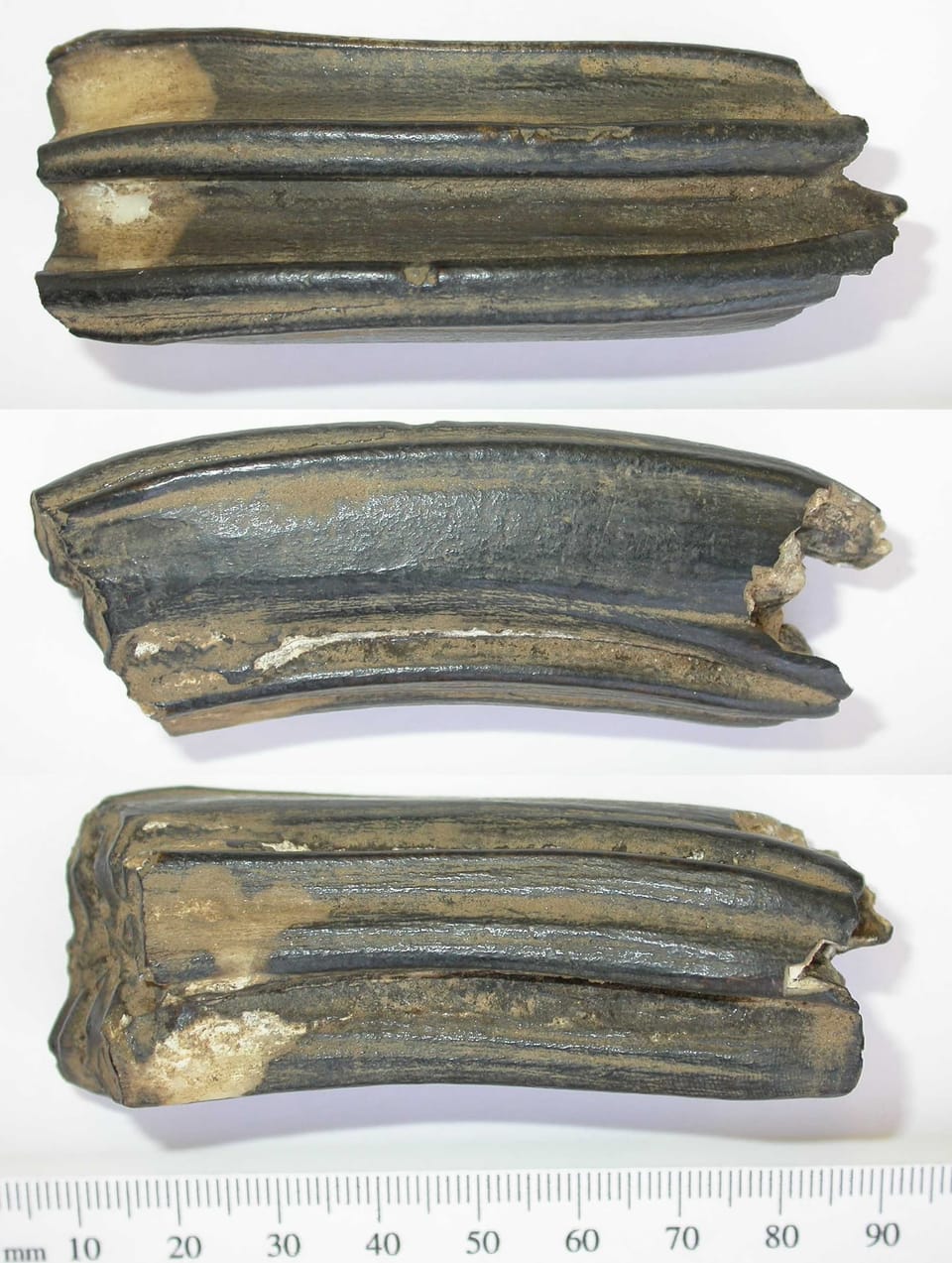
How do marine mammal teeth record the atomic age?
Marine mammal teeth preserve chronological records of atmospheric history because dentine undergoes almost no physical remodeling after it hardens. Kieran M. Tierney, a research scientist at the Scottish Universities Environmental Research Centre, and colleagues examined five stranded cetaceans collected between 1994 and 2016 by the Scottish Marine Animal Stranding Scheme, with specimens archived by National Museums Scotland.3 The cohort comprised two sperm whales and three killer whales.31 The sperm whales included an animal stranded in Orkney in 1994 and an iconic male known as Moby who stranded in the Firth of Forth in 1997.31 The killer whales included a male stranded on Shetland in 1995, a male designated KW2 who stranded on the Isle of Uist in the Outer Hebrides in 2015, and an adult female named Lulu from the endangered West Coast Community who stranded on Tiree in 2016.31
To extract the chemical history, the researchers cut each tooth longitudinally with a diamond saw, polished the cut surface with 600-grit wet sandpaper, and counted the alternating light and dark growth bands under reflected light.3 The researchers then partially demineralized quartered tooth sections in one-molar hydrochloric acid for 48 hours to soften the dentine.3 Using a sterile scalpel, they isolated individual growth layers, completely demineralized the samples, and extracted structural collagen to measure both stable isotopes and radiocarbon fractions.3
In the two sperm whales, the counted growth layers aligned closely with established North Atlantic marine bomb curves.31 Dentine rings in the sperm whales indicated the animals died in their 20s and 40s, respectively, confirming that dentine layers form annually through early and mid-life.12 For the young male killer whale from Shetland, designated KW1, counted growth bands also agreed with the radiocarbon timeline, placing the animal in its early 20s.1 “It gives us what we call a kind of bomb pulse,” Tierney said.
Why did the growth rings fail to match the chemical clock?
Physical tooth rings do not accumulate indefinitely because the living pulp chamber inside an aging cetacean tooth eventually closes off. When Tierney and his co-authors counted the growth layers in KW2, the male stranded on Uist, visual inspection of the partially demineralized section yielded 52 visible growth layers.3 However, when the team analyzed the radiocarbon isotope ratios across those same dentine layers, the chemical measurements departed sharply from that visual count, indicating that KW2 had actually lived to at least 65 years old.12
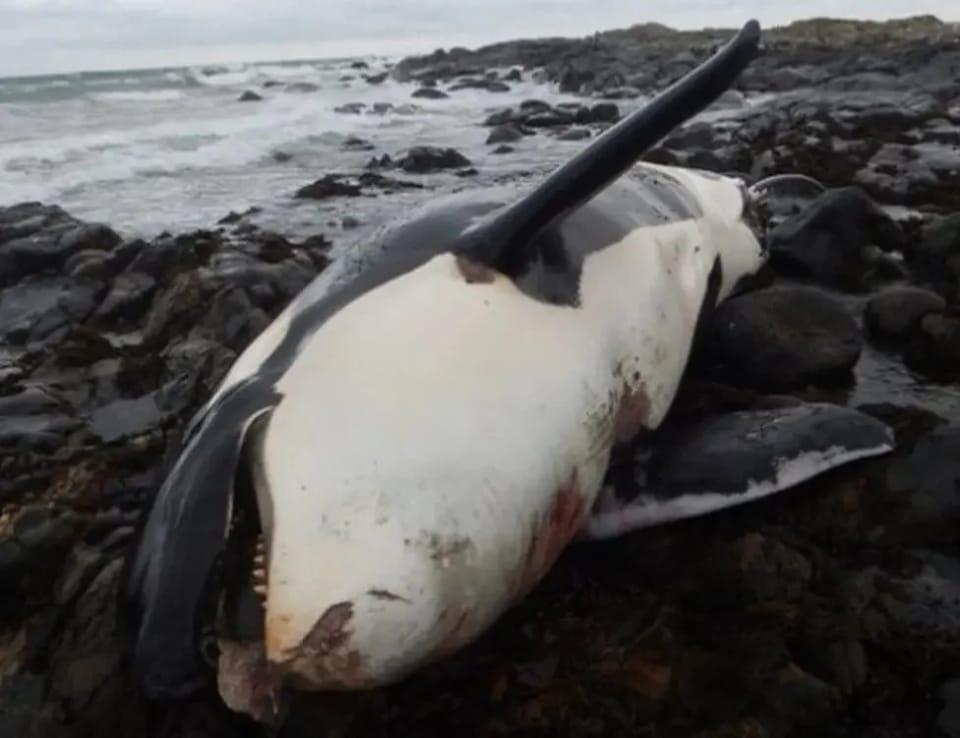
The discrepancy points to a physical bottleneck in dental biology. As a killer whale matures, the pulp cavity progressively constricts as new dentine is deposited along the interior boundary. Over decades, the internal space diminishes until the tooth cannot accommodate distinct new annual bands. Tierney suggested that in the animal's later decades, multiple annual deposits may have formed as a single condensed layer, or new deposition may have stopped entirely.1 “We think that the tooth effectively ran out of space to put down any more layers,” Tierney said.1
The study's only female killer whale, Lulu, presented an entirely different chronological puzzle. Lulu's tooth showed between 33 and 37 visible growth layers, but her dentine lacked a standard bomb pulse profile.31 Instead, her tooth displayed elevated radiocarbon fractions, with values between approximately 1.11 and 1.13.3 The researchers linked this persistent elevation to industrial discharges from the Sellafield nuclear reprocessing facility in the eastern Irish Sea, which circulated along the western coast of Scotland during the latter half of the twentieth century.3 Analyzing stable isotopes of nitrogen and carbon revealed that Lulu fed at a higher trophic level than the males, consuming a diet richer in marine mammals rather than primarily fish.13 This diet reflected her membership in the genetically distinct West Coast Community, whose members regularly hunt seals and other cetaceans.1
What does unexpected longevity reveal about male orca lives?
Documenting a male killer whale living past 65 challenges the universal applicability of behavioral models derived from North American killer whale pods. For decades, scientific understanding of orca longevity has rested predominantly on resident populations in the Pacific Northwest. In those Pacific communities, adult males remain tethered to their maternal pods throughout life. Research in those waters showed that male survival rates decline sharply following the death of their mothers, whose foraging guidance and food sharing keep grown sons alive.
The finding that KW2 survived past 65, combined with observations from the surviving West Coast Community, suggests North Atlantic males may follow different life histories. Scotland's West Coast Community has produced no calves across decades of monitoring and has dwindled to just two surviving adult males, both believed to be more than 50 years old. These surviving bulls have persisted without living matriarchs to guide them. “It looks like the killer whales around our shores maybe do something a little bit different,” Tierney said.1
These age estimates are reconstructions based on chemical curves rather than direct birth-to-death observational tracking. Radiocarbon measurements cannot provide an exact age down to a single calendar year, and regional isotopic deviations caused by industrial effluents, such as Sellafield discharges, can obscure weapons testing chronologies. Furthermore, the findings derive from five stranded individuals examined across two decades, rather than a wide demographic census. Nevertheless, the results demonstrate that visual growth layer counts systematically undercount the true age of elderly odontocetes, proving that combining radiocarbon validation with stable isotope analysis is critical to uncovering the genuine lifespan and ecology of the ocean's oldest hunters.
The record
27 sentences trace to 3 sources.
-
1
PP
 Patrick Pester
Document
· livescience.com · 26 Nov 2026
Oldest male orca on record may have been identified thanks to historical atomic bomb testing
See the source
-
2
U
 UA.NEWS
Third-party reporting
· ua.news · 26 Nov 2026
Scotland may have identified the oldest male orca — Live Science
See the source
-
3
F
 Frontiers
Third-party reporting
· frontiersin.org · 1 Oct 2026
Frontiers | Integrating radiocarbon and stable isotopes in odontocete teeth to reveal life histories
See the source