Gum disease risk assessments improve when models track typical measurements
A deep learning framework targets the most common pocket depths instead of distorted clinical averages, offering more reliable periodontal risk benchmarks across diverse patient populations.
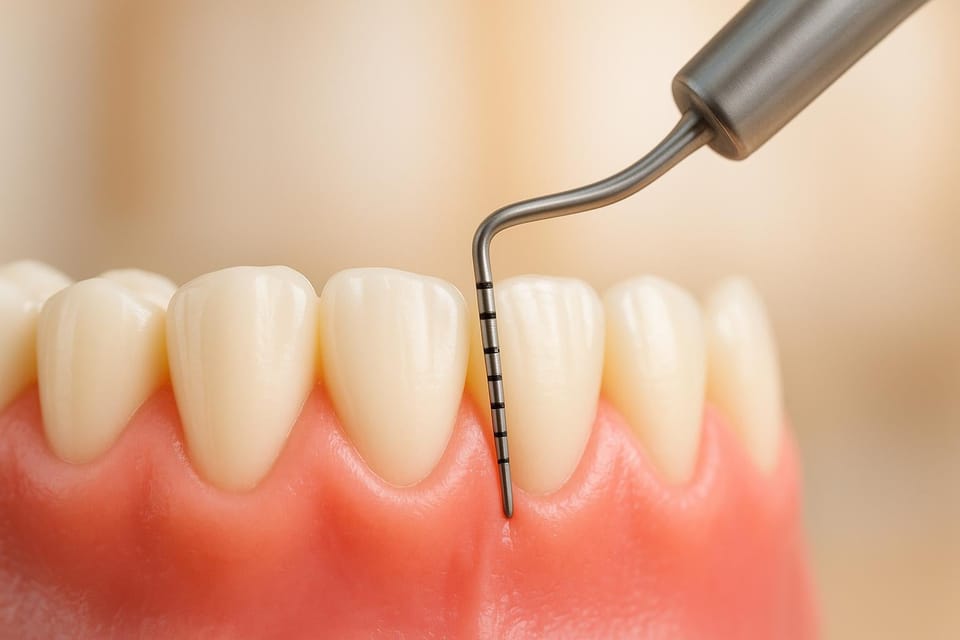
A healthy tooth rests inside a snug collar of gum tissue, where the shallow space between the enamel and the surrounding gum line measures only one or two millimetres deep. In a mouth unaffected by serious infection, this crevice remains stable for decades. When harmful oral bacteria accumulate along the gum margin, chronic inflammation gradually dissolves the connective ligaments and the underlying alveolar bone that anchor the tooth in the jaw. As that supporting bone recedes, the crevice deepens into a periodontal pocket, creating a sheltered space where destructive microbes multiply beyond the reach of toothbrush bristles. Left unchecked, the deepening crevice leads to progressive bone destruction, loose teeth, and eventual tooth loss.
Because tissue loss creates these deepening gaps, dentists evaluate the progression of periodontal disease by inserting a slender, graduated probe beside each tooth to measure pocket depth in millimetres.12 In any large population of dental patients, the vast majority of measured sites are healthy and shallow, clustering tightly around two millimetres.1 A tiny fraction of vulnerable individuals or neglected teeth, however, develop severe pockets measuring five millimetres or more. When clinicians attempt to use statistical models to assess disease risk across patient populations, these few extreme measurements distort standard calculations, pulling conventional averages away from the typical clinical picture and misrepresenting the true patterns linking patient risk factors to gum health.
To overcome this persistent distortion, statisticians Dr. Qingyang Liu of Wake Forest University, Dr. Shijie Wang of Gauss Labs, Dr. Ray Bai of George Mason University, and Dr. Dipankar Bandyopadhyay of Virginia Commonwealth University developed a statistical framework designed specifically for skewed, heavy-tailed oral health records.12 In a preprint posted to the arXiv server in September 2026, the researchers introduced a monotone single-index modal regression architecture that relies on deep neural networks to evaluate periodontal pocket depths without forcing the data into symmetric distributions.12
Why do standard dental measurements distort ordinary statistical tools?
Standard linear regression models assume that measurement errors are distributed symmetrically around a central average, resembling a classic bell-shaped Gaussian curve.1 Periodontal pocket depth violates that symmetry in routine practice. In a clinical population, pocket measurements do not vary equally above and below a central baseline. Instead, healthy depths form a steep, crowded peak near two millimetres, while severe disease generates an elongated tail of high measurements extending toward five millimetres and beyond. This asymmetry creates what statisticians call a skewed and heavy-tailed distribution, where unusual outliers exert an outsized pull on mathematical averages.
When biostatisticians fit ordinary mean-based models to this kind of data, the few severe outliers pull the estimated trend upward, producing predictions that do not represent what happens in typical patients. Clinicians have sometimes attempted mathematical transformations, such as calculating logarithms of pocket depths, to make the numbers look more like a symmetric bell curve.1 Such adjustments create new problems, because transformed numbers no longer correspond directly to the physical millimetre readings clinicians record with dental probes, making the resulting models awkward to interpret during routine examinations.
A related barrier stems from the complex ways human biology interacts with dental health. The risk factors that influence gum disease, including age, gender, race, and tobacco exposure, do not change pocket depths in simple, straight-line proportions. A decade of aging between 20 and 30 years old does not produce the same physical change in gum tissue as a decade between 60 and 70 years old. When mathematical models assume that risk accumulates in rigid, straight lines, they miss the subtle plateaus and accelerations that characterize real chronic illnesses.
How does modal regression identify the most probable outcome?
Modal regression solves the problem of asymmetric measurements by estimating the conditional mode, which represents the most probable value among patients with a given set of traits, instead of calculating the conditional mean.1 If 10 patients with identical health backgrounds share a clinic visit, and nine of them have pocket depths of two millimetres while one develops an acute infection with an eight-millimetre pocket, the mean leaps upward to 2.6 millimetres, a depth none of the individuals actually experienced. The mode remains at two millimetres, capturing the true central tendency of the group while preventing the single extreme outlier from corrupting the baseline estimate.
Dr. Dipankar Bandyopadhyay, a professor of biostatistics at Virginia Commonwealth University and a co-author of the study, explained in response to questions from Primary that tracking the mode grounds risk analysis directly in physical observation. He noted that pocket depth data is inherently right-skewed, with most individuals presenting shallow pockets near two millimetres alongside rare instances of severe breakdown. Dr. Dipankar Bandyopadhyay pointed out that while the conditional mean is easily distorted by extreme outliers, which artificially inflate risk estimates, the conditional mode targets the peak of probability density to reflect the depth a clinician is most likely to observe. As a result, modal regression resists tail-driven pollution and maintains dependable risk benchmarks across diverse patient cohorts on the original millimetre scale.
Dr. Ray Bai, an assistant professor of statistics at George Mason University and co-author of the paper, noted that targeting the mode specifically serves the majority of patients. In response to questions from Primary, Dr. Ray Bai observed that if a clinician is focused primarily on the deepest pockets, modal regression has limited sensitivity to those extreme points. He recommended that dental researchers combine mode-based models, which define the typical risk profile for most individuals, with specialized tail tools such as quantile regression or extreme value theory.
Targeting the central peak addresses one statistical challenge, but clinical periodontists note that evaluating gum disease requires balancing typical disease trajectories with the detection of isolated destruction. Dr. Luciana Shaddox, a professor of periodontics who reviewed the findings, observed in response to questions from Primary that statistical tools must account for both population averages and vulnerable outliers. She noted that on one side, deeper pockets dilute population metrics when clinicians apply an average, yet on the other side, an aggregated metric can obscure susceptible individuals or specific anatomical sites. Dr. Luciana Shaddox emphasized that in clinical trials and diagnostics, clinicians frequently debate whether small mathematical shifts such as 0.5 millimetres are clinically meaningful, pointing out that because an average dilutes localized gains, specific severely diseased sites may benefit substantially even when a whole-mouth average barely moves. In her assessment, robust statistical modeling must be interpreted alongside tangible clinical thresholds, such as the proportion of severely diseased pockets that successfully shrink below four millimetres after treatment.
To represent this behaviour mathematically, Dr. Qingyang Liu and colleagues built their error structure around the two-piece scale Student-t distribution, an asymmetric formulation originally studied by Francisco Javier Rubio and Mark F. J. Steel in 2015.16 This probability distribution combines two separate halves of a Student-t distribution joined smoothly at a single peak, allowing the left and right sides of the curve to have different spreads. By adjusting a dedicated skewness parameter, the distribution can capture sharp peaks, steep drop-offs on the healthy side, and elongated tails on the diseased side.1 Because the normal distribution and the two-piece scale normal distribution exist as limiting cases within this family, the formulation adapts whether the underlying health measurements turn out to be skewed, heavy-tailed, or completely symmetric.12
The researchers paired this error distribution with a single-index model, a statistical technique that reduces multiple patient risk factors into a single composite summary score. In this design, eight clinical covariates, including age, sex, and race, are multiplied by fixed numerical weights and added together into one index value. That composite number is then passed through an unknown mathematical function to predict the patient's most probable pocket depth. This structure retains the direct interpretability of linear models, because doctors can inspect the individual weights assigned to each risk factor, while granting the model complete freedom to learn the nonlinear curves that connect overall risk scores to physical tissue loss.
How do neural networks preserve clinical logic without losing flexibility?
Deep neural networks provide the mathematical capacity to capture complex curves without requiring researchers to guess the exact algebraic equation in advance. In standard regression settings, statisticians often rely on spline smoothing or kernel functions, but these traditional techniques demand painstaking manual tuning of smoothing bandwidths and often struggle when data points become sparse.1 Dr. Qingyang Liu and colleagues showed that a neural network containing a single hidden layer of 256 computational nodes can approximate continuous curves with high precision straight out of the box, eliminating the need for tedious manual parameter selection.1
Unconstrained neural networks carry an operational hazard for medical risk tools: their internal connections can bend and oscillate unpredictably. In clinical practice, an effective risk score must follow a strict monotonic logic. If a patient's composite risk index rises due to advanced age or heavier tobacco use, their projected pocket depth must either increase or remain steady; it should never dip downward simply because of a local ripple in the mathematical fitting. An erratic model that predicted shallower gum pockets for patients with worse risk profiles would be clinically nonsensical and unusable for triage.
To enforce logical consistency, the authors constructed a constrained neural network architecture that guarantees mathematical monotonicity. By restricting all internal network weights to positive numbers and employing hyperbolic tangent activation functions, the algorithm ensures that the overall function slopes consistently upward.1 Dr. Dipankar Bandyopadhyay told Primary that this configuration was deliberate, observing that alternative shape-restricted approaches, such as Bernstein polynomial bases, were outperformed by the neural network approach in both their real-data analysis and simulation studies. He explained that pairing non-negative weights with Rectified Linear Unit activations introduces a severe limitation by forcing the single-index function to be strictly convex, rendering it incapable of capturing general non-convex relationships. Using hyperbolic tangent activations guarantees smooth gradients everywhere with strictly positive derivatives, enabling the network to flexibly approximate continuous, non-convex, and even step-like monotonic single-index functions.
Dr. Ray Bai affirmed that enforcing strict convexity would severely limit biological realism. In comments to Primary, Dr. Ray Bai noted that a monotonic disease curve often exhibits plateaus where tissue loss stabilizes before accelerating again, patterns that a convex curve cannot accommodate because any straight line connecting two points on a convex curve must lie strictly above the graph. By using hyperbolic tangent functions instead, the network accommodates flat intervals and sudden rises without violating upward progression.
The research team established formal theoretical foundations for this design, proving that their model satisfies mathematical identifiability.1 This proof guarantees that the single-index function and the individual covariate weights can be uniquely separated and estimated from data, providing the foundation for Fisher consistency. Furthermore, adapting foundational neural network theorems, the authors proved a universal approximation property showing that their constrained, positive-weight architecture can approximate any continuous monotonic single-index relationship to arbitrary accuracy.1
Regarding practical training stability, Dr. Dipankar Bandyopadhyay noted that the research team did not find a real dataset that caused the fixed 256-node architecture to fail or underfit. While optimization instability occasionally appeared in small-sample simulations, he characterized this as standard training behaviour rather than a capacity failure, pointing out that randomly re-initializing parameters reliably resolved those rare convergence issues. Options to customize network depth, width, and learning rates for practitioners requiring hyperparameter tuning were officially implemented and released on October 15, 2026 on CRAN in the R package DNNSIM. Commenting on the practical stability of biomedical algorithms in routine clinical environments, Dr. Luciana Shaddox cautioned that the primary threat to algorithm reliability in real dental clinics stems from inconsistent electronic records, pointing out that erroneous data entry and uncalibrated probing techniques between different clinicians represent the most significant practical disruptions to automated modeling.
Dr. Ray Bai also cautioned that the stability of the architecture relies on the underlying data having a single dominant mode. If an electronic health records system contains distinct, hidden patient subgroups that form multiple separate peaks of pocket depth, Dr. Ray Bai noted that the single-mode framework would struggle to capture the full distribution, suggesting that future extensions should explore multimodal formulations.
What did the model reveal across clinical patient records?
To demonstrate the practical value of their method, Dr. Qingyang Liu and colleagues examined electronic health records collected between 2007 and 2014 by the HealthPartners Institute of Minnesota.12 The dataset recorded comprehensive baseline periodontal examinations for 24,871 adult subjects.1 For each patient, clinicians had measured pocket depth in millimetres at six distinct probing sites on every available tooth. The authors calculated the subject-level average pocket depth across all measured sites at baseline and examined how that depth related to eight key clinical risk factors.1
An exploratory analysis of the Minnesota cohort confirmed the severe distributional hurdles facing dental biostatistics. A histogram of average pocket depths across all 24,871 subjects revealed a pronounced left-skewed shape, with the vast majority of patients clustered near two millimetres and a long right tail of extreme values stretching past five millimetres. When the authors fitted an ordinary linear regression model under traditional Gaussian assumptions, a quantile-quantile plot of standardized residuals showed significant departures from normality, with data points diverging sharply in both tail regions.1 In addition, a locally estimated scatterplot smoothing curve linking pocket depth to patient age revealed pronounced nonlinear fluctuations, showing that gum tissue loss does not advance in a simple linear march over a lifetime.1
When fitted to the clinical cohort, the monotone single-index modal regression, implemented in the open-source R package DNNSIM, successfully estimated the nonlinear response while remaining robust against the extreme outliers that distorted ordinary mean regressions.1 Dr. Dipankar Bandyopadhyay reported that across the 24,871 patient records, no specific subgroup or outlier pattern behaved unexpectedly, and the identified associations with higher age, male gender, tobacco use, diabetes, and lack of dental insurance fully aligned with established periodontal research. By focusing on the conditional mode, the model gives dental teams a clear, outlier-resistant benchmark for tracking patient vulnerability.
The projections generated by the framework are not deterministic clinical forecasts. The model describes how typical baseline pocket depths change across demographic profiles, operating on subject-level averages rather than pinpointing individual diseased sites. Like any observational modeling framework, the resulting index scores depend on baseline health measurements and self-reported risk histories. The preprint was posted to arXiv in September 2026, and Dr. Ray Bai told Primary that the study was accepted for publication by the peer-reviewed methodology journal Biostatistics that same month. Citation: Liu, Q., Wang, S., Bai, R., & Bandyopadhyay, D. (2026). Monotone single-index modal regression using deep neural networks. Biostatistics, 27(1).1
The mathematical proofs presented in the paper establish model identifiability and universal approximation capability, but they do not provide finite-sample consistency or formal asymptotic distributional properties for the neural network parameter estimators.1 Dr. Dipankar Bandyopadhyay emphasized to Primary that universal approximation guarantees that the model has the capacity to represent complex clinical patterns, but it does not specify how accurately it generalizes when training data is limited. For clinicians evaluating smaller cohorts, he cautioned that risk estimates carry higher sample variance, requiring wider confidence intervals and careful empirical validation before findings are treated as definitive. Weighing this small-cohort limitation, Dr. Luciana Shaddox emphasized that because human clinical data is highly variable, testing and validating such models effectively demands large cohorts representing diverse demographic backgrounds, ages, systemic risk factors such as smoking and diabetes, and varied stages of disease severity.
Dr. Ray Bai explained that the researchers addressed the absence of formal asymptotic formulas by implementing a parametric bootstrapping technique, which repeatedly resamples the model to generate reliable 95% confidence intervals for risk factors. For smaller studies, Dr. Ray Bai estimated that cohorts should ideally include several hundred patients to constrain sampling variability, until future mathematical work establishes precise sample size guidelines.
A practical limitation concerns anatomical granularity. The current mathematical framework models the patient's overall average pocket depth across all teeth at a single baseline visit, meaning it does not track how specific probing sites around individual teeth deteriorate over time. Dr. Dipankar Bandyopadhyay explained that common clinical realities, such as missing teeth and incomplete site measurements, were not incorporated into this version, preventing the model from capturing localized, tooth-specific progression. To address this gap, Dr. Dipankar Bandyopadhyay said the researchers are actively developing a next-generation model specifically designed to evaluate risk at the individual tooth level. Dr. Luciana Shaddox affirmed the clinical consequence of this aggregation, explaining that patient-level averaging inevitably dilutes isolated problem areas, especially in localized severe periodontitis where an individual has only a few teeth exhibiting deep, destructive pockets. Dr. Ray Bai added that extending the model to individual teeth will require mixed effects frameworks that explicitly account for correlations among teeth inside the same patient's mouth.
Periodontal disease represents an immense public health challenge, affecting an estimated 62% of dentate adults worldwide according to a 2024 global assessment cited in the study.1 When left untreated, the chronic destruction of supporting bone causes teeth to loosen and fall out, generating substantial economic hardship. Citing an economic analysis by Botelho and colleagues, the paper noted that direct and indirect costs of periodontal disease reached an estimated 3.49 billion dollars in the United States and 2.52 billion euros in Europe in 2018.1 Preventive screening tools that catch deteriorating gum tissue before irreversible bone loss occurs could save billions in restorative dental surgery.
Beyond manual probing measurements, modern dental clinics are increasingly exploring automated imaging tools to monitor alveolar bone loss. In a related 2021 study on deep learning diagnostics posted to arXiv, Chun-Teh Lee and colleagues demonstrated that deep convolutional neural networks can segment periapical radiographs to measure radiographic bone loss percentages with an accuracy of 0.85, achieving an average Dice similarity coefficient above 0.91 across segmented bone and tooth areas. Combining image-based bone loss measurements with robust modal regression on clinical risk factors could eventually give dentists a comprehensive, multi-layered risk profile for every patient in their chairs.
The record
55 sentences trace to 3 sources and 3 contributors.
-
1
QL
 Qingyang Liu, Shijie Wang, Ray Bai, Dipankar Bandyopadhyay
Paper
· arxiv.org · 9 Sep 2026
A Monotone Single-Index Modal Regression Powered by Deep Neural Networks for Non-Gaussian Periodontal Data
Preprint · may not have been peer reviewed
See the source
-
2
A
arxiv.org
Paper
· arxiv.org
A Monotone Single-Index Modal Regression Powered by Deep Neural Networks for Non-Gaussian Periodontal Data
Preprint · may not have been peer reviewed
See the source
- 3 Contribution — Dipankar Bandyopadhyay 20 statements added to this article
- 4 Contribution — Dr. Ray Bai 14 statements added to this article
- 5 Contribution — Dr. Luciana Shaddox 8 statements added to this article
- 6 Publications See the source
Other consulted pages4 pages
arxiv.org2 pages
Article history
-
Published 27 Nov 2026, 16:21Assembled by the Primary desk from 3 sources · 3 contributors · 55 cited sentences
-
Dr. Luciana Shaddox, a professor of periodontics who reviewed the findings
- Go to the sentence: As a result, modal regression resists tail-driven pollution and maintains dependable risk benchmarks across diverse patient cohorts on the original millimetre scale.
- Go to the sentence: Dr. Luciana Shaddox, a professor of periodontics who reviewed the findings, observed in response to questions from Primary that statistical tools must account for both population averages and vulnerable outliers.
- Go to the sentence: She noted that on one side, deeper pockets dilute population metrics when clinicians apply an average, yet on the other side, an aggregated metric can obscure susceptible individuals or specific anatomical sites.
- Go to the sentence: Dr. Luciana Shaddox emphasized that in clinical trials and diagnostics, clinicians frequently debate whether small mathematical shifts such as 0.5 millimetres are clinically meaningful, pointing out that because an average dilutes localized gains, specific severely diseased sites may benefit substantially even when a whole-mouth average barely moves.
- Go to the sentence: In her assessment, robust statistical modeling must be interpreted alongside tangible clinical thresholds, such as the proportion of severely diseased pockets that successfully shrink below four millimetres after treatment.
- Go to the sentence: Commenting on the practical stability of biomedical algorithms in routine clinical environments, Dr. Luciana Shaddox cautioned that the primary threat to algorithm reliability in real dental clinics stems from inconsistent electronic records, pointing out that erroneous data entry and uncalibrated probing techniques between different clinicians represent the most significant practical disruptions to automated modeling.
- Go to the sentence: Weighing this small-cohort limitation, Dr. Luciana Shaddox emphasized that because human clinical data is highly variable, testing and validating such models effectively demands large cohorts representing diverse demographic backgrounds, ages, systemic risk factors such as smoking and diabetes, and varied stages of disease severity.
- Go to the sentence: Dr. Luciana Shaddox affirmed the clinical consequence of this aggregation, explaining that patient-level averaging inevitably dilutes isolated problem areas, especially in localized severe periodontitis where an individual has only a few teeth exhibiting deep, destructive pockets.
-
Dr. Ray Bai, an assistant professor of statistics at George Mason University and co-author of the paper
- Go to the sentence: He noted that pocket depth data is inherently right-skewed, with most individuals presenting shallow pockets near two millimetres alongside rare instances of severe breakdown.
- Go to the sentence: Dr. Dipankar Bandyopadhyay pointed out that while the conditional mean is easily distorted by extreme outliers, which artificially inflate risk estimates, the conditional mode targets the peak of probability density to reflect the depth a clinician is most likely to observe.
- Go to the sentence: In response to questions from Primary, Dr. Ray Bai observed that if a clinician is focused primarily on the deepest pockets, modal regression has limited sensitivity to those extreme points.
- Go to the sentence: He recommended that dental researchers combine mode-based models, which define the typical risk profile for most individuals, with specialized tail tools such as quantile regression or extreme value theory.
- Go to the sentence: He explained that pairing non-negative weights with Rectified Linear Unit activations introduces a severe limitation by forcing the single-index function to be strictly convex, rendering it incapable of capturing general non-convex relationships.
- Go to the sentence: In comments to Primary, Dr. Ray Bai noted that a monotonic disease curve often exhibits plateaus where tissue loss stabilizes before accelerating again, patterns that a convex curve cannot accommodate because any straight line connecting two points on a convex curve must lie strictly above the graph.
- Go to the sentence: Regarding practical training stability, Dr. Dipankar Bandyopadhyay noted that the research team did not find a real dataset that caused the fixed 256-node architecture to fail or underfit.
- Go to the sentence: If an electronic health records system contains distinct, hidden patient subgroups that form multiple separate peaks of pocket depth, Dr. Ray Bai noted that the single-mode framework would struggle to capture the full distribution, suggesting that future extensions should explore multimodal formulations.
- Go to the sentence: The preprint was posted to arXiv in September 2026, and Dr. Ray Bai told Primary that the study was accepted for publication by the peer-reviewed methodology journal Biostatistics that same month. Citation: Liu, Q., Wang, S., Bai, R., & Bandyopadhyay, D. (2026). Monotone single-index modal regression using deep neural networks. Biostatistics, 27(1).
- Go to the sentence: For clinicians evaluating smaller cohorts, he cautioned that risk estimates carry higher sample variance, requiring wider confidence intervals and careful empirical validation before findings are treated as definitive.
- Go to the sentence: Dr. Ray Bai explained that the researchers addressed the absence of formal asymptotic formulas by implementing a parametric bootstrapping technique, which repeatedly resamples the model to generate reliable 95% confidence intervals for risk factors.
- Go to the sentence: For smaller studies, Dr. Ray Bai estimated that cohorts should ideally include several hundred patients to constrain sampling variability, until future mathematical work establishes precise sample size guidelines.
- Go to the sentence: Dr. Dipankar Bandyopadhyay explained that common clinical realities, such as missing teeth and incomplete site measurements, were not incorporated into this version, preventing the model from capturing localized, tooth-specific progression.
- Go to the sentence: Dr. Ray Bai added that extending the model to individual teeth will require mixed effects frameworks that explicitly account for correlations among teeth inside the same patient's mouth.
-
Dipankar Bandyopadhyay, a professor of biostatistics at Virginia Commonwealth University and a co-author of the study
- Go to the sentence: In any large population of dental patients, the vast majority of measured sites are healthy and shallow, clustering tightly around two millimetres.
- Go to the sentence: Modal regression solves the problem of asymmetric measurements by estimating the conditional mode, which represents the most probable value among patients with a given set of traits, instead of calculating the conditional mean.
- Go to the sentence: He noted that pocket depth data is inherently right-skewed, with most individuals presenting shallow pockets near two millimetres alongside rare instances of severe breakdown.
- Go to the sentence: Dr. Dipankar Bandyopadhyay pointed out that while the conditional mean is easily distorted by extreme outliers, which artificially inflate risk estimates, the conditional mode targets the peak of probability density to reflect the depth a clinician is most likely to observe.
- Go to the sentence: As a result, modal regression resists tail-driven pollution and maintains dependable risk benchmarks across diverse patient cohorts on the original millimetre scale.
- Go to the sentence: Dr. Qingyang Liu and colleagues showed that a neural network containing a single hidden layer of 256 computational nodes can approximate continuous curves with high precision straight out of the box, eliminating the need for tedious manual parameter selection.
- Go to the sentence: By restricting all internal network weights to positive numbers and employing hyperbolic tangent activation functions, the algorithm ensures that the overall function slopes consistently upward.
- Go to the sentence: Dr. Dipankar Bandyopadhyay told Primary that this configuration was deliberate, observing that alternative shape-restricted approaches, such as Bernstein polynomial bases, were outperformed by the neural network approach in both their real-data analysis and simulation studies.
- Go to the sentence: He explained that pairing non-negative weights with Rectified Linear Unit activations introduces a severe limitation by forcing the single-index function to be strictly convex, rendering it incapable of capturing general non-convex relationships.
- Go to the sentence: Using hyperbolic tangent activations guarantees smooth gradients everywhere with strictly positive derivatives, enabling the network to flexibly approximate continuous, non-convex, and even step-like monotonic single-index functions.
- Go to the sentence: Regarding practical training stability, Dr. Dipankar Bandyopadhyay noted that the research team did not find a real dataset that caused the fixed 256-node architecture to fail or underfit.
- Go to the sentence: The dataset recorded comprehensive baseline periodontal examinations for 24,871 adult subjects.
- Go to the sentence: The authors calculated the subject-level average pocket depth across all measured sites at baseline and examined how that depth related to eight key clinical risk factors.
- Go to the sentence: Dr. Dipankar Bandyopadhyay reported that across the 24,871 patient records, no specific subgroup or outlier pattern behaved unexpectedly, and the identified associations with higher age, male gender, tobacco use, diabetes, and lack of dental insurance fully aligned with established periodontal research.
- Go to the sentence: By focusing on the conditional mode, the model gives dental teams a clear, outlier-resistant benchmark for tracking patient vulnerability.
- Go to the sentence: The mathematical proofs presented in the paper establish model identifiability and universal approximation capability, but they do not provide finite-sample consistency or formal asymptotic distributional properties for the neural network parameter estimators.
- Go to the sentence: Dr. Dipankar Bandyopadhyay emphasized to Primary that universal approximation guarantees that the model has the capacity to represent complex clinical patterns, but it does not specify how accurately it generalizes when training data is limited.
- Go to the sentence: For clinicians evaluating smaller cohorts, he cautioned that risk estimates carry higher sample variance, requiring wider confidence intervals and careful empirical validation before findings are treated as definitive.
- Go to the sentence: Dr. Dipankar Bandyopadhyay explained that common clinical realities, such as missing teeth and incomplete site measurements, were not incorporated into this version, preventing the model from capturing localized, tooth-specific progression.
- Go to the sentence: To address this gap, Dr. Dipankar Bandyopadhyay said the researchers are actively developing a next-generation model specifically designed to evaluate risk at the individual tooth level.