Spacetime ripples alter standard models of post-inflation cosmic preheating
Cosmic simulations that treat space as a smooth background miss leading gravitational terms that actively steer how primordial fields condense into oscillons.
In the earliest fractions of a second following the rapid expansion of the early universe, space transformed from an icy, empty expanse into a hot and turbulent bath of particles.1 Theoretical physicists understand this transition, known as preheating, as the moment when the energy stored in the primary cosmic field driving expansion broke apart into localized fluctuations.21 Under specific conditions, these oscillating patches of energy can form dense, long-lived condensates called oscillons.2 These pseudo-stable field structures hold enormous amounts of localized energy and may persist long enough to shape the subsequent history of cosmic expansion.2 For decades, researchers assumed that while these energy pockets condensed and fragmented, the underlying fabric of space around them remained completely smooth on small scales.
In general relativity, energy density and gravitational curvature are tied together directly by the Einstein field equations, meaning that violent surges in field fluctuations must generate corresponding ripples in the metric of spacetime itself.1 When an oscillating scalar field clumps together, those dense clumps alter the surrounding gravitational field. That local warping alters the rate at which time flows and modifies the local expansion, which in turn feeds back into the scalar field, changing the tempo of its oscillations and dictating which wavelengths amplify. A preprint posted to the arXiv repository on September 21, 2026, by Daniel del-Corral of Jagiellonian University, Paolo Gondolo of the University of Utah and the Institute of Science Tokyo, K. Sravan Kumar of the University of Portsmouth, and João Marto of the Universidade da Beira Interior, shows that standard numerical simulations of this era break down because they omit these metric ripples. In typical preheating scenarios, the fluctuations in the gravitational metric grow to become parametrically as large as the fluctuations in the oscillating scalar field itself.2
Why did standard lattice codes treat the early universe as uniformly smooth?
Standard cosmological simulation codes assumed that local gravitational potentials are heavily suppressed by the cosmic expansion rate on sub-horizon scales.2 For more than two decades, beginning with early computer programs like LATTICEEASY developed in the year 2000, researchers modelled preheating by placing an inhomogeneous scalar field on a fixed, flat Friedmann-Lemaître-Robertson-Walker background. In this framework, the field is allowed to vary across space, but the expansion rate of space itself is computed using a single spatial average of the entire simulation box.2
Daniel del-Corral and colleagues show that during slow-roll inflation, the first slow-roll parameter remains very small compared to one, which heavily suppresses the Bardeen gravitational potential relative to the scalar field. In that slow-roll regime, the linearized momentum constraint of general relativity ensures that local metric perturbations stay tiny and can be ignored without introducing noticeable errors.
The preprint notes that the physical reasoning behind this approximation initially appears sound because oscillons form on spatial scales far smaller than the Hubble horizon.2 For physical wavelengths much shorter than the Hubble radius, the linearized Poisson relation dictates that the metric potential is suppressed by the square of the ratio between the horizon size and the wavelength.2 Consequently, a sizeable local energy density contrast can sit inside a relatively weak absolute gravitational potential.2 Lattice simulations relied entirely on this suppression factor to justify evolving the scalar field nonlinearly while keeping the background geometry spatially uniform.2 By setting the metric perturbations to zero by hand, existing lattice codes omitted the gravitational terms that enter at the very same order as the matter fluctuations driving the resonance.
How do gravitational ripples alter the growth of oscillons?
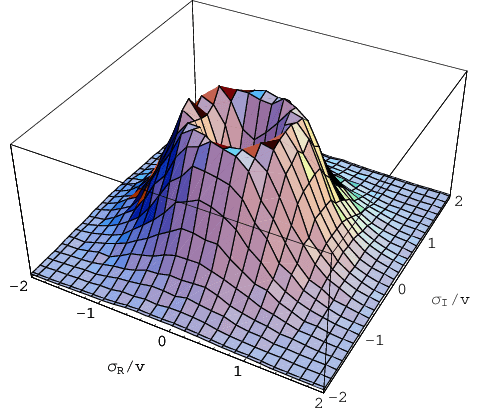
Gravitational ripples alter the growth of oscillons by introducing leading-order driving terms directly into the equations governing the scalar field.2 Daniel del-Corral and colleagues report that the suppression justifying smooth spacetime disappears as soon as inflation ends.2 When the scalar field begins oscillating around the bottom of its potential, the first slow-roll parameter is no longer tiny; instead, it oscillates between 0 and 3, maintaining an average value of order unity across each oscillation cycle.2 Through the linearized momentum constraint, this shift causes the Bardeen potential and the scalar field perturbation to enter at the exact same parametric size, scaled by the reduced Planck mass.
Marto told Primary that the behavior of the background parameter emerges strictly from the unperturbed cosmic equations, before local variations are even introduced. As Marto said in response to questions from Primary, "The evolution of the slow-roll parameter is determined entirely by the homogeneous background Einstein–scalar equations, so no assumption about perturbations or inhomogeneities in either the matter or gravitational sector enters there."
When spatial differences do arise, Marto noted that the underlying physical relationship between matter and geometry changes completely: "During preheating, however, the first slow-roll parameter oscillates through values of order unity, and that suppression disappears. Matter and metric perturbations then become strongly coupled at the same perturbative order. Neglecting the metric response, or setting it approximately to zero while retaining scalar inhomogeneities, therefore gives an inconsistent description of the coupled Einstein–matter system. In this sense, preheating is precisely a regime in which matter and geometry communicate strongly."
In standard lattice simulations, these terms are removed by hand.2 Asked how local spacetime warping feeds back into the scalar field to shift which wavelengths amplify fastest, Marto said in response to questions from Primary that the scalar field and the metric do not evolve independently. Marto told Primary, "A growing scalar fluctuation perturbs the local energy density, warping the surrounding spacetime, and that metric response feeds back on the scalar field by changing its effective oscillation frequency. Resonance is highly sensitive to this frequency modulation: only particular physical wavelengths fall inside the Floquet instability bands, whose location depends on the ratio of the physical wavenumber to the inflaton mass. The gravitational response therefore shifts the resonance condition itself, changing which wavelengths amplify most efficiently, as well as the width and growth rate of the instability bands. In this sense, gravity actively participates in selecting the resonant modes rather than merely responding to them."
Earlier research by Bruce A. Bassett of Oxford University, Fabrizio Tamburini of the University of Padova, David I. Kaiser of Harvard University, and Roy Maartens of Portsmouth University showed that resonant amplification of field fluctuations during preheating must be accompanied by resonant amplification of scalar metric fluctuations.2 In their earlier investigation of multi-field preheating models, Bruce A. Bassett and colleagues found that broad parametric resonances drive metric fluctuations into a strongly nonlinear regime, often before the matter field itself becomes nonlinear. The new analysis by Daniel del-Corral and colleagues indicates that even in single-field models forming oscillons, the metric contribution directly shapes the resonance bands that dictate which wavelengths grow and how rapidly they amplify.2
The preprint also examines the volume-averaging procedure used by lattice simulations to compute the cosmic expansion rate.2 Daniel del-Corral and colleagues derive the exact proper-volume average of the Arnowitt-Deser-Misner Hamiltonian constraint and show that it does not reduce to the standard Friedmann equation.2 The exact spatial average includes extra physical contributions arising from spatial curvature, the local shear of space, the spatial variance in the local expansion rate, and metric corrections to the local energy density.2 João Marto highlighted to Primary that spatial curvature drives the most significant discrepancy in that calculation, noting that "Spatial curvature is expected to give the largest departure from the lattice Friedmann equation for strongly inhomogeneous, sub-Hubble configurations, because it is directly sensitive to spatial gradients of the metric."2
Where does the smooth-space approximation still hold?
The smooth-space approximation remains mathematically sound during the earlier slow-roll inflation phase and in late-time scenarios where gravity acts passively, such as oscillon collisions or decay.2 These mathematical demonstrations represent theoretical consistency checks and linearized analyses of gravitational equations, not direct observational detections.2 The omission of metric fluctuations specifically undermines the amplification stage during preheating, where parametric resonance actively builds the field structures from small initial seeds.2 Furthermore, the authors note that the fixed-background approximation remains valid in scenarios where gravity plays an entirely passive role, such as the late-time collisions or decay of oscillons long after their formation.2
Co-author K. Sravan Kumar told Primary that during the preheating instability, matter overdensities grow alongside cosmic expansion while scalar and metric perturbations remain dynamically coupled, making gravitational backreaction unavoidable. Kumar explained that there is no universal sharp boundary where gravity suddenly becomes passive again, stating that the relevant criterion is whether metric-induced terms become subleading relative to matter terms for the modes controlling the evolution. Once resonance shuts off and the universe expands toward a lower-curvature regime, gravitational corrections are expected to weaken, but Kumar noted that locating that boundary for fully formed oscillons is inherently nonlinear and requires future numerical relativity investigations.
The exact degree of deviation from standard lattice predictions will depend heavily on the specific shape of the inflationary potential, as illustrated by the authors for Starobinsky and alpha-attractor models, where metric terms become comparable to field terms during resonance.2 The preprint has been posted to the arXiv preprint server and has not yet undergone formal peer review.2 Asked what would happen if full numerical relativity simulations find oscillon yields matching standard lattice codes after backreaction, Marto told Primary, "It would be a surprise: the approximation would still break down, but the oscillon yield would somehow be remarkably insensitive to the missing gravitational physics."
What must cosmological simulations do next?
Cosmological simulations must evolve local metric fields concurrently with scalar fields through numerical relativity rather than relying on a spatially uniform cosmic expansion rate.2 As Daniel del-Corral and colleagues emphasize, lattice codes that ignore metric fluctuations cannot properly evaluate the gravitational radiation generated by interacting scalar fields.2 Earlier work by Bruce A. Bassett and colleagues established that the growth of metric perturbations can break scale invariance and produce distinct features on cosmological scales.5
Asked whether previously published preheating gravitational-wave spectra would be quantitatively shifted or fundamentally altered in spectral shape, Marto told Primary that the impact can be more than a simple amplitude adjustment. Marto said in response to questions from Primary that previous lattice studies found the inflaton backreaction could suppress gravitational-wave production when metric fluctuations were neglected. Marto explained that in earlier published research, including metric fluctuations changed this conclusion by showing they can enhance gravitational radiation through self-resonant instabilities. Marto said, "This enhancement can therefore modify not only the overall amplitude but also the resulting spectral features. In particular, we used this effect and the bounds from Big Bang Nucleosynthesis to obtain, for the first time, a lower bound on the intensity of the primordial gravitational-wave signal in the context of inflationary alpha-attractor models of single-field inflation. Thus, we expect that calculations neglecting metric fluctuations may not simply require rescaling the predicted gravitational-wave amplitude. In regimes where metric fluctuations become dynamically important, the spectral shape itself can be affected." Related results appear in arXiv:2504.17602 and Phys. Rev. D 113, 023526 (2026) (https://journals.aps.org/prd/abstract/10.1103/q69z-gw6l).
The record
53 sentences trace to 3 sources and 2 contributors.
-
1
A
 arxiv.org
Paper
· arxiv.org
Metric preheating and limitations of linearized gravity
Preprint · may not have been peer reviewed
See the source
-
2
DD
Daniel del-Corral, Paolo Gondolo, K. Sravan Kumar, João Marto
Paper
· arxiv.org · 21 Sep 2026
A note on oscillons: non-negligible metric fluctuations during preheating
Preprint · may not have been peer reviewed
See the source
- 3 Contribution — João Marto 15 statements added to this article
- 4 Contribution — K. Sravan Kumar 3 statements added to this article
-
5
A
arxiv.org
Paper
· arxiv.org
Metric preheating and limitations of linearized gravity
Preprint · may not have been peer reviewed
See the source
Other consulted pages2 pages
elsevier.digitalcommonsdata.com1 page
ar5iv.labs.arxiv.org1 page
Article history
-
Published 27 Nov 2026, 16:32Assembled by the Primary desk from 3 sources · 2 contributors · 53 cited sentences
-
João Marto
- Go to the sentence: When the scalar field begins oscillating around the bottom of its potential, the first slow-roll parameter is no longer tiny; instead, it oscillates between 0 and 3, maintaining an average value of order unity across each oscillation cycle.
- Go to the sentence: Marto told Primary that the behavior of the background parameter emerges strictly from the unperturbed cosmic equations, before local variations are even introduced.
- Go to the sentence: As Marto said in response to questions from Primary, "The evolution of the slow-roll parameter is determined entirely by the homogeneous background Einstein–scalar equations, so no assumption about perturbations or inhomogeneities in either the matter or gravitational sector enters there."
- Go to the sentence: When spatial differences do arise, Marto noted that the underlying physical relationship between matter and geometry changes completely: "During preheating, however, the first slow-roll parameter oscillates through values of order unity, and that suppression disappears. Matter and metric perturbations then become strongly coupled at the same perturbative order. Neglecting the metric response, or setting it approximately to zero while retaining scalar inhomogeneities, therefore gives an inconsistent description of the coupled Einstein–matter system. In this sense, preheating is precisely a regime in which matter and geometry communicate strongly."
- Go to the sentence: Asked how local spacetime warping feeds back into the scalar field to shift which wavelengths amplify fastest, Marto said in response to questions from Primary that the scalar field and the metric do not evolve independently.
- Go to the sentence: Marto told Primary, "A growing scalar fluctuation perturbs the local energy density, warping the surrounding spacetime, and that metric response feeds back on the scalar field by changing its effective oscillation frequency. Resonance is highly sensitive to this frequency modulation: only particular physical wavelengths fall inside the Floquet instability bands, whose location depends on the ratio of the physical wavenumber to the inflaton mass. The gravitational response therefore shifts the resonance condition itself, changing which wavelengths amplify most efficiently, as well as the width and growth rate of the instability bands. In this sense, gravity actively participates in selecting the resonant modes rather than merely responding to them."
- Go to the sentence: The new analysis by Daniel del-Corral and colleagues indicates that even in single-field models forming oscillons, the metric contribution directly shapes the resonance bands that dictate which wavelengths grow and how rapidly they amplify.
- Go to the sentence: João Marto highlighted to Primary that spatial curvature drives the most significant discrepancy in that calculation, noting that "Spatial curvature is expected to give the largest departure from the lattice Friedmann equation for strongly inhomogeneous, sub-Hubble configurations, because it is directly sensitive to spatial gradients of the metric."
- Go to the sentence: The exact degree of deviation from standard lattice predictions will depend heavily on the specific shape of the inflationary potential, as illustrated by the authors for Starobinsky and alpha-attractor models, where metric terms become comparable to field terms during resonance.
- Go to the sentence: Asked what would happen if full numerical relativity simulations find oscillon yields matching standard lattice codes after backreaction, Marto told Primary, "It would be a surprise: the approximation would still break down, but the oscillon yield would somehow be remarkably insensitive to the missing gravitational physics."
- Go to the sentence: As Daniel del-Corral and colleagues emphasize, lattice codes that ignore metric fluctuations cannot properly evaluate the gravitational radiation generated by interacting scalar fields.
- Go to the sentence: Asked whether previously published preheating gravitational-wave spectra would be quantitatively shifted or fundamentally altered in spectral shape, Marto told Primary that the impact can be more than a simple amplitude adjustment.
- Go to the sentence: Marto said in response to questions from Primary that previous lattice studies found the inflaton backreaction could suppress gravitational-wave production when metric fluctuations were neglected.
- Go to the sentence: Marto explained that in earlier published research, including metric fluctuations changed this conclusion by showing they can enhance gravitational radiation through self-resonant instabilities.
- Go to the sentence: Marto said, "This enhancement can therefore modify not only the overall amplitude but also the resulting spectral features. In particular, we used this effect and the bounds from Big Bang Nucleosynthesis to obtain, for the first time, a lower bound on the intensity of the primordial gravitational-wave signal in the context of inflationary alpha-attractor models of single-field inflation. Thus, we expect that calculations neglecting metric fluctuations may not simply require rescaling the predicted gravitational-wave amplitude. In regimes where metric fluctuations become dynamically important, the spectral shape itself can be affected."
-
K. Sravan Kumar, co-author
- Go to the sentence: Co-author K. Sravan Kumar told Primary that during the preheating instability, matter overdensities grow alongside cosmic expansion while scalar and metric perturbations remain dynamically coupled, making gravitational backreaction unavoidable.
- Go to the sentence: Kumar explained that there is no universal sharp boundary where gravity suddenly becomes passive again, stating that the relevant criterion is whether metric-induced terms become subleading relative to matter terms for the modes controlling the evolution.
- Go to the sentence: Once resonance shuts off and the universe expands toward a lower-curvature regime, gravitational corrections are expected to weaken, but Kumar noted that locating that boundary for fully formed oscillons is inherently nonlinear and requires future numerical relativity investigations.