Silencing an enzyme shields human brain cells from amyloid destruction
Blocking the tubulin-modifying protein TTLL1 prevents destructive structural changes and preserves synaptic connections in human neurons challenged by Alzheimer's disease proteins.
A healthy brain cell relies on an internal network of microscopic tracks to transport vital cargo across long cellular distances.12 In Alzheimer's disease, this delicate transit system disintegrates. The structural tracks, called microtubules, dissolve after a regulatory protein known as tau detaches from them and wanders into the cell body and receiving branches.12 Deprived of stable internal scaffolding, the junction points where neurons exchange signals wither and collapse, severing the communication pathways necessary for memory and thought.
Halting this structural collapse has proven difficult because the molecular cascades linking toxic amyloid-beta proteins outside the cell to internal cytoskeletal breakdown involve multiple enzymes. Cellular scaffolding filaments require precise chemical modifications to maintain stability and guide molecular motors.1 When toxic protein aggregates alter those chemical markers, destructive enzymes chew away at the microtubules. Understanding how to block the enzymes that drive these harmful chemical modifications could offer a way to protect neuronal architecture before cognitive damage becomes permanent.
For structural breakdown to occur, toxic amyloid-beta oligomers outside the neuron must first trigger a relocation of tau proteins away from axons and into the cell body and dendrites.21 Once in these receiving compartments, tau helps prompt an abnormal accumulation of chemical tags on the tubulin protein building blocks of microtubules.2 This process, known as polyglutamylation, adds extra glutamate amino acids onto tubulin tails.1 The overloaded tags recruit severing enzymes that cut the tracks into pieces, causing synaptic contact points to disintegrate.2 Intervening at the specific enzyme that applies these tags can break the destructive sequence.
What happens when TTLL1 is removed from damaged neurons?
Knocking down the enzyme TTLL1 significantly reduces the misplacement of tau and prevents the loss of synaptic clusters in human neurons exposed to amyloid-beta.1 In a study published in the journal Pharmaceutics, Mohamed Aghyad Al Kabbani, Laura Köhler, Tamara Wied, Daniel Adam, Jennifer Klimek, and Hans Zempel investigated how modifying tubulin tyrosine ligase-like enzymes affects human cortical neurons derived from induced pluripotent stem cells.1 When the authors exposed these cultured human brain cells to oligomeric amyloid-beta to mimic conditions observed in Alzheimer's disease, the cells exhibited abnormal tau accumulation in dendritic compartments, an overabundance of tubulin polyglutamylation, decreased tubulin acetylation, and marked synaptic declustering.1
Selectively reducing the expression of TTLL1 counteracted these pathological shifts.1 The authors reported that knocking down TTLL1 lowered the excess polyglutamylation of tubulin and preserved synaptic structures.1 By contrast, reducing a related enzyme called TTLL4 produced only moderate protective effects, while silencing another family member, TTLL6, restored the acetylation tags that help stabilize microtubule bundles without replicating the broader preservation seen with TTLL1 knockdown.1
Laura Köhler, co-author of the study, told Primary that the team views this structural preservation as an indirect protective shield rather than a direct synaptic intervention. Under amyloid-beta exposure, increased TTLL1 activity promotes excessive tubulin polyglutamylation and triggers abnormal tau redistribution, destabilizing the cytoskeleton that supports cargo transport to synapses.1 Laura Köhler explained that when TTLL1 is silenced, this pathological shift is reduced, meaning "tau remains more appropriately localized and the microtubule network is less disrupted, which may help preserve the trafficking and structural organization needed to maintain synaptic clusters." Rather than TTLL1 acting directly on synaptic junctions, "we think its depletion protects synapses indirectly by stabilizing the microtubule-tau environment that supports them," Laura Köhler said, while noting that the experiments "do not yet resolve every intermediate step of this pathway."
Hans Zempel told Primary that colleagues should exercise caution when evaluating the role of acetylation. "Colleagues should not conclude that restoring tubulin acetylation alone is sufficient to rescue vulnerable synapses," Zempel said, adding that "acetylation may indicate to protection, but it should not be considered a standalone or sufficient therapeutic mechanism based on these results."
How did researchers uncover the connection between tau and TTLL1?
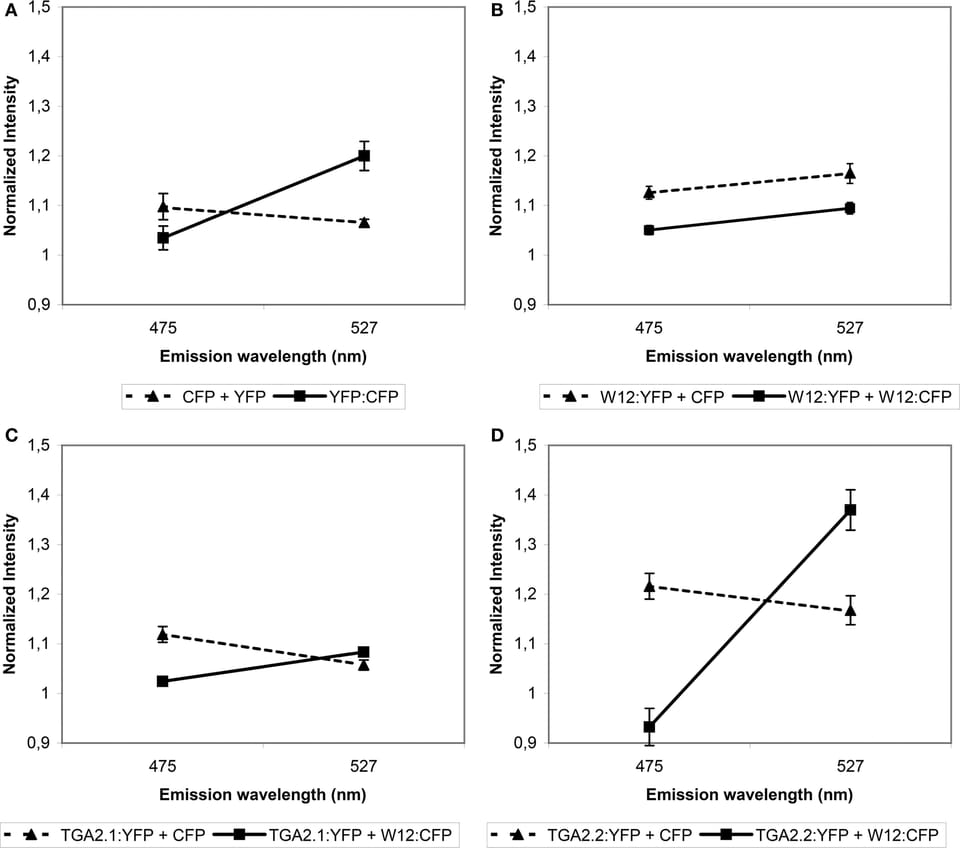
The investigators used human stem-cell-derived cortical neurons alongside optical measurement techniques to evaluate physical interactions between the enzymes and the tau protein.1 Using fluorescence resonance energy transfer microscopy in HEK293T cells, a method that detects when two molecules sit within nanometer-scale proximity of one another, the authors observed close physical proximity between tau and TTLL1.1 The authors noted that this optical signal is consistent with a direct molecular binding or a shared protein complex, whereas tests with other tubulin tyrosine ligase-like enzymes showed no such tight association.1
Zempel told Primary that while optical proximity in engineered kidney cells does not capture every feature of a mature human neuron, physical binding appears across both models. While the optical experiments demonstrate close proximity, "we also observed a tau–TTLL1 interaction by co-immunoprecipitation in human neurons," Zempel said, noting that further tests under natural protein levels are needed to establish the binding dynamics inside mature cells.
The research builds on earlier laboratory findings regarding how tubulin modifying enzymes cooperate to destroy neuronal tracks. In a 2013 paper published in The EMBO Journal, Zempel and colleagues showed that amyloid-beta exposure caused TTLL6 to migrate into dendrites, where it added polyglutamylation marks that recruited the microtubule-severing enzyme spastin to dismantle the cytoskeleton in rodent neurons. The new study in human cortical cells demonstrates that TTLL1 directly participates in tau-mediated toxicity, linking tau mislocalization to destructive modifications in human cellular systems.1
Laura Köhler explained that earlier rodent findings regarding TTLL6 prompted the investigators to question whether identical pathways operated in human biology.2 Rather than assuming TTLL6 would dominate in human tissue, the researchers systematically analyzed several polyglutamylating enzymes in human stem-cell-derived cortical neurons.1 Laura Köhler noted that TTLL1 stood out because it is "abundantly expressed in the brain and, importantly, produced pronounced effects on microtubule modifications and neuronal morphology in our human neuronal model." The investigation was guided by the realization that individual enzyme contributions can differ between species, and Laura Köhler told Primary that "our starting point was not that TTLL1 would necessarily replace TTLL6 as the relevant enzyme, but rather the hypothesis that the contribution of individual TTLLs may differ between neuronal systems and species."
What are the limits of targeting TTLL1 in living systems?
The experimental findings come from cultured human stem-cell-derived neurons and engineered kidney cell lines, meaning they cannot reveal whether suppressing TTLL1 will remain safe or effective inside an intact, living human brain. The tests represent controlled cellular simulations of amyloid-beta toxicity rather than long-term clinical trials. While the authors documented that knocking down tubulin tyrosine ligase-like enzymes did not impair the branching complexity of dendrites, the density of neurite networks, or baseline neuronal activity in culture dishes, delivering gene-silencing tools or small-molecule inhibitors across the blood-brain barrier presents substantial biological hurdles.1
Laura Köhler cautioned that benign outcomes in culture dishes cannot rule out subtle disruptions in living brain tissue. In an intact brain, neurons interact with astrocytes, microglia, and vascular networks under sustained circuit demands. Laura Köhler said that while the absence of baseline toxicity provides encouraging evidence that the enzyme can be lowered without immediate damage, "establishing the long-term safety and physiological consequences of TTLL1 inhibition will require validation in more complex models, including in vivo systems." TTLL1 modifies tubulin throughout the cell, leaving open the possibility that it influences long-range axonal transport or synaptic plasticity in ways unmeasured by short-term cell assays.
A critical biochemical question also centers on whether tau activates TTLL1 directly or simply acts as a physical scaffold. Asked how researchers could resolve this question, Zempel said the next step requires an in-vitro assay comparing how purified TTLL1 behaves toward tubulin on its own compared with tubulin mixed with tau. If tau directly activates TTLL1, adding purified tau should increase the enzyme's catalytic activity.
Future work will need to test whether pharmacologically inhibiting TTLL1 can prevent cytoskeletal decay in animal models displaying full Alzheimer's disease pathology.1 Developing small molecules capable of selectively targeting TTLL1 without disrupting essential microtubule modifications in non-neuronal tissues remains a key objective.1 If such targeted compounds prove safe, they could provide a disease-modifying strategy to protect the internal architecture of vulnerable human brain circuits.1
The record
38 sentences trace to 2 sources and 2 contributors.
-
1
MA
 Mohamed Aghyad Al Kabbani, Laura Köhler, Tamara Wied, Daniel Adam, Jennifer Klimek, Hans Zempel
Official record
· pubmed.ncbi.nlm.nih.gov · 27 Aug 2026
Targeting TTLL1 Alleviates Aβ-Induced Microtubule Disruption and TAU Pathology in Human iPSC-Derived Cortical Neurons
See the source
- 2 Amyloid-β oligomers induce synaptic damage via Tau-dependent microtubule severing by TTLL6 and spastin. - DZNEPUB See the source
- 3 Contribution — Laura Köhler 15 statements added to this article
- 4 Contribution — Hans Zempel 7 statements added to this article
Other consulted pages1 page
pmc.ncbi.nlm.nih.gov1 page
Article history
-
Published 27 Nov 2026, 16:32Assembled by the Primary desk from 2 sources · 2 contributors · 38 cited sentences
-
Hans Zempel
- Go to the sentence: By contrast, reducing a related enzyme called TTLL4 produced only moderate protective effects, while silencing another family member, TTLL6, restored the acetylation tags that help stabilize microtubule bundles without replicating the broader preservation seen with TTLL1 knockdown.
- Go to the sentence: Hans Zempel told Primary that colleagues should exercise caution when evaluating the role of acetylation.
- Go to the sentence: Using fluorescence resonance energy transfer microscopy in HEK293T cells, a method that detects when two molecules sit within nanometer-scale proximity of one another, the authors observed close physical proximity between tau and TTLL1.
- Go to the sentence: Zempel told Primary that while optical proximity in engineered kidney cells does not capture every feature of a mature human neuron, physical binding appears across both models.
- Go to the sentence: While the optical experiments demonstrate close proximity, "we also observed a tau–TTLL1 interaction by co-immunoprecipitation in human neurons," Zempel said, noting that further tests under natural protein levels are needed to establish the binding dynamics inside mature cells.
- Go to the sentence: Asked how researchers could resolve this question, Zempel said the next step requires an in-vitro assay comparing how purified TTLL1 behaves toward tubulin on its own compared with tubulin mixed with tau.
- Go to the sentence: If tau directly activates TTLL1, adding purified tau should increase the enzyme's catalytic activity.
-
Laura Köhler, co-author
- Go to the sentence: Knocking down the enzyme TTLL1 significantly reduces the misplacement of tau and prevents the loss of synaptic clusters in human neurons exposed to amyloid-beta.
- Go to the sentence: Laura Köhler, co-author of the study, told Primary that the team views this structural preservation as an indirect protective shield rather than a direct synaptic intervention.
- Go to the sentence: Under amyloid-beta exposure, increased TTLL1 activity promotes excessive tubulin polyglutamylation and triggers abnormal tau redistribution, destabilizing the cytoskeleton that supports cargo transport to synapses.
- Go to the sentence: Laura Köhler explained that when TTLL1 is silenced, this pathological shift is reduced, meaning "tau remains more appropriately localized and the microtubule network is less disrupted, which may help preserve the trafficking and structural organization needed to maintain synaptic clusters."
- Go to the sentence: Rather than TTLL1 acting directly on synaptic junctions, "we think its depletion protects synapses indirectly by stabilizing the microtubule-tau environment that supports them," Laura Köhler said, while noting that the experiments "do not yet resolve every intermediate step of this pathway."
- Go to the sentence: The new study in human cortical cells demonstrates that TTLL1 directly participates in tau-mediated toxicity, linking tau mislocalization to destructive modifications in human cellular systems.
- Go to the sentence: Laura Köhler explained that earlier rodent findings regarding TTLL6 prompted the investigators to question whether identical pathways operated in human biology.
- Go to the sentence: Rather than assuming TTLL6 would dominate in human tissue, the researchers systematically analyzed several polyglutamylating enzymes in human stem-cell-derived cortical neurons.
- Go to the sentence: Laura Köhler noted that TTLL1 stood out because it is "abundantly expressed in the brain and, importantly, produced pronounced effects on microtubule modifications and neuronal morphology in our human neuronal model."
- Go to the sentence: The investigation was guided by the realization that individual enzyme contributions can differ between species, and Laura Köhler told Primary that "our starting point was not that TTLL1 would necessarily replace TTLL6 as the relevant enzyme, but rather the hypothesis that the contribution of individual TTLLs may differ between neuronal systems and species."
- Go to the sentence: While the authors documented that knocking down tubulin tyrosine ligase-like enzymes did not impair the branching complexity of dendrites, the density of neurite networks, or baseline neuronal activity in culture dishes, delivering gene-silencing tools or small-molecule inhibitors across the blood-brain barrier presents substantial biological hurdles.
- Go to the sentence: Laura Köhler cautioned that benign outcomes in culture dishes cannot rule out subtle disruptions in living brain tissue.
- Go to the sentence: In an intact brain, neurons interact with astrocytes, microglia, and vascular networks under sustained circuit demands.
- Go to the sentence: Laura Köhler said that while the absence of baseline toxicity provides encouraging evidence that the enzyme can be lowered without immediate damage, "establishing the long-term safety and physiological consequences of TTLL1 inhibition will require validation in more complex models, including in vivo systems."
- Go to the sentence: TTLL1 modifies tubulin throughout the cell, leaving open the possibility that it influences long-range axonal transport or synaptic plasticity in ways unmeasured by short-term cell assays.