Antarctic ozone hole expands past continent as polar winds delay recovery
A wide seasonal gap in the southern stratosphere reached near-record area in September 2026, though atmospheric data show chemical thinning remained moderate.
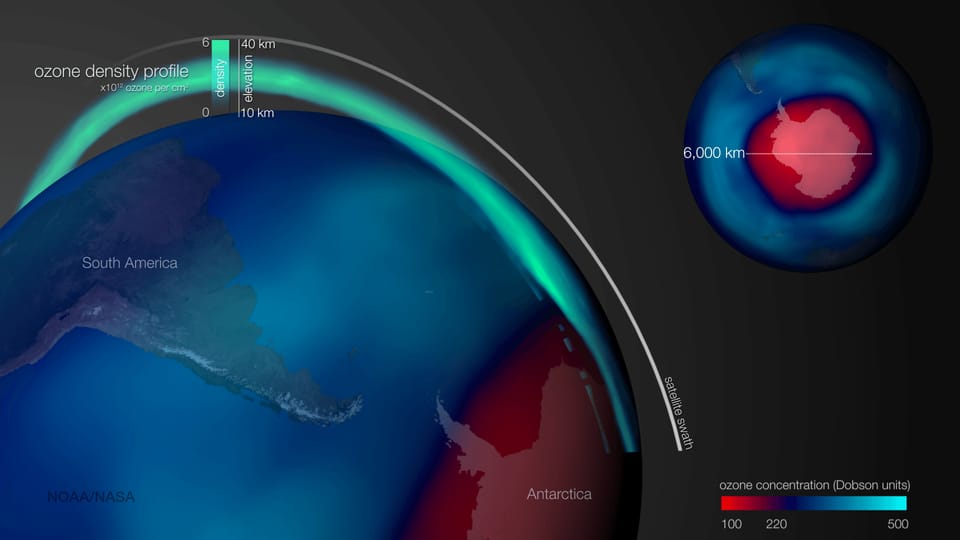
High above the frozen expanse of the southern pole, Earth maintains a delicate atmospheric shield that filters out harmful solar radiation. Every year, as the polar region emerges from the total darkness of winter into spring, chemical reactions erode that protective blanket, creating a seasonal thinning known as the ozone hole. In some years the opening remains comparatively minor, while in others it swells across millions of square kilometers before closing as summer arrives. The sheer geographical footprint of this gap fluctuates dramatically from one season to the next, driven by shifting weather patterns in the upper atmosphere rather than immediate changes in human pollution.
The scale of this seasonal thinning matters directly to life beneath it and to global environmental policy. Stratospheric ozone shields the planet by absorbing most of the sun's high-energy ultraviolet radiation, which can damage living tissue, suppress plant growth, and increase the risk of skin cancers. For decades, international treaties have restricted industrial chemicals to allow this protective band to heal. When a seasonal thinning expands dramatically, it raises immediate questions about whether those global efforts are failing or whether natural meteorological variations are temporarily masking genuine long-term healing.
Understanding why the ozone layer opens and closes requires following a clear sequence of atmospheric events. During the polar winter, a massive belt of high-speed winds circles Antarctica, trapping freezing air over the continent and preventing warmer air from lower latitudes from mixing in. As temperatures inside this isolated swirl plummet, specialized clouds form in the stratosphere. These icy surfaces enable inert chlorine and bromine compounds, derived from human-made chemicals released decades ago, to transform into chemically reactive molecules. When spring brings the first rays of sunlight back to the polar cap, ultraviolet light splits those reactive compounds apart, freeing chlorine and bromine atoms that rapidly consume ozone molecules. Only when warming spring temperatures break the swirling wind barrier can fresh, ozone-rich air flow in and repair the seasonal breach.
Why did the Antarctic ozone hole grow so large in 2026?
An unusually strong and persistent polar vortex kept cold air locked over the southern polar cap for longer than usual during 2026, allowing ozone depletion to spread across a wider geographical area.12 On September 20, 2026, measurements showed that the Antarctic ozone hole expanded to 27.3 million square kilometers, an area nearly twice the surface area of the Antarctic continent itself.12 That extent made the 2026 event one of the largest seasonal gaps observed since satellite monitoring began 48 years ago in 1979.12
The expansion in 2026 marked a stark change from the preceding season. According to records from the European Space Agency, the seasonal thinning in 2025 had been the fifth smallest recorded since 1992, while the 2024 season had tracked close to historical norms.12 The 2026 maximum represented an increase of approximately 6.5 million square kilometers, or 31 percent, compared with the 20-year average recorded for that period of the year.12 The additional area beyond that historical baseline was roughly comparable to the entire landmass of Australia.2
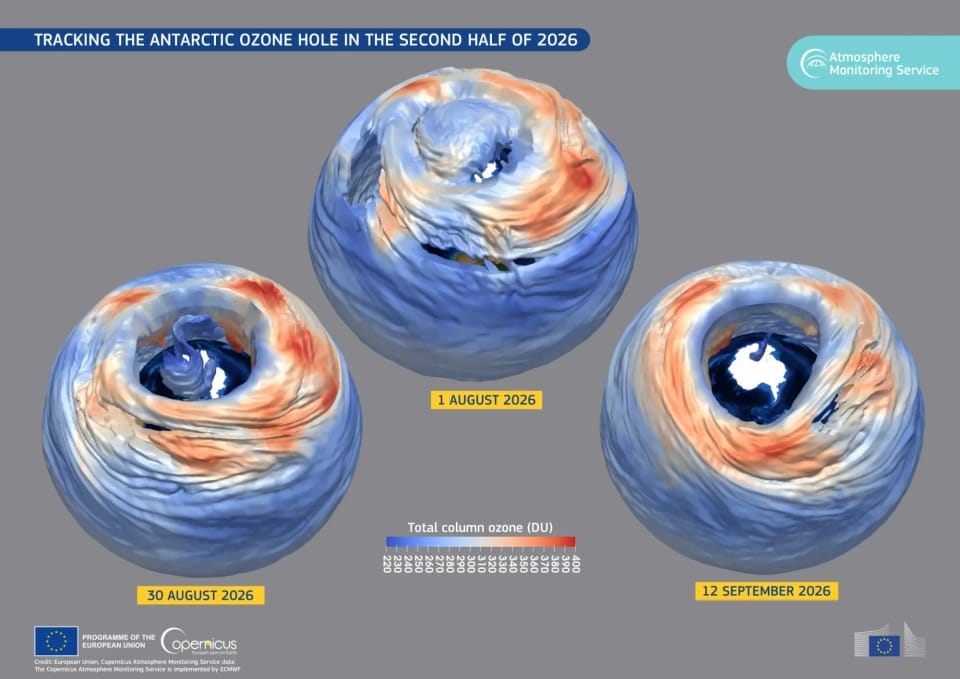
Scientists classify the boundary of an ozone hole using total column ozone, which measures the total amount of ozone in a vertical column of air above Earth's surface. By convention, researchers define the boundary as any region where total atmospheric ozone drops below 220 Dobson units, a standard unit of physical measurement for atmospheric trace gases.2 While vast swathes of the polar atmosphere fell below that threshold during September 2026, the underlying physical mechanisms reveal that spatial extent alone does not capture the full health of the atmospheric layer.
How do satellites measure the difference between area and depth?
Satellites distinguish between an ozone hole's spatial extent across the map and its vertical depth, which measures how thoroughly ozone molecules are destroyed within the column. The European Space Agency reported that data from the Copernicus Sentinel-5P satellite indicated that although the 2026 hole covered an exceptionally large area, the overall depth of ozone depletion remained close to the average levels seen in typical years.12 A wider expanse below the 220 Dobson unit threshold did not mean that ozone had dropped to catastrophic, record-setting lows within the column.12
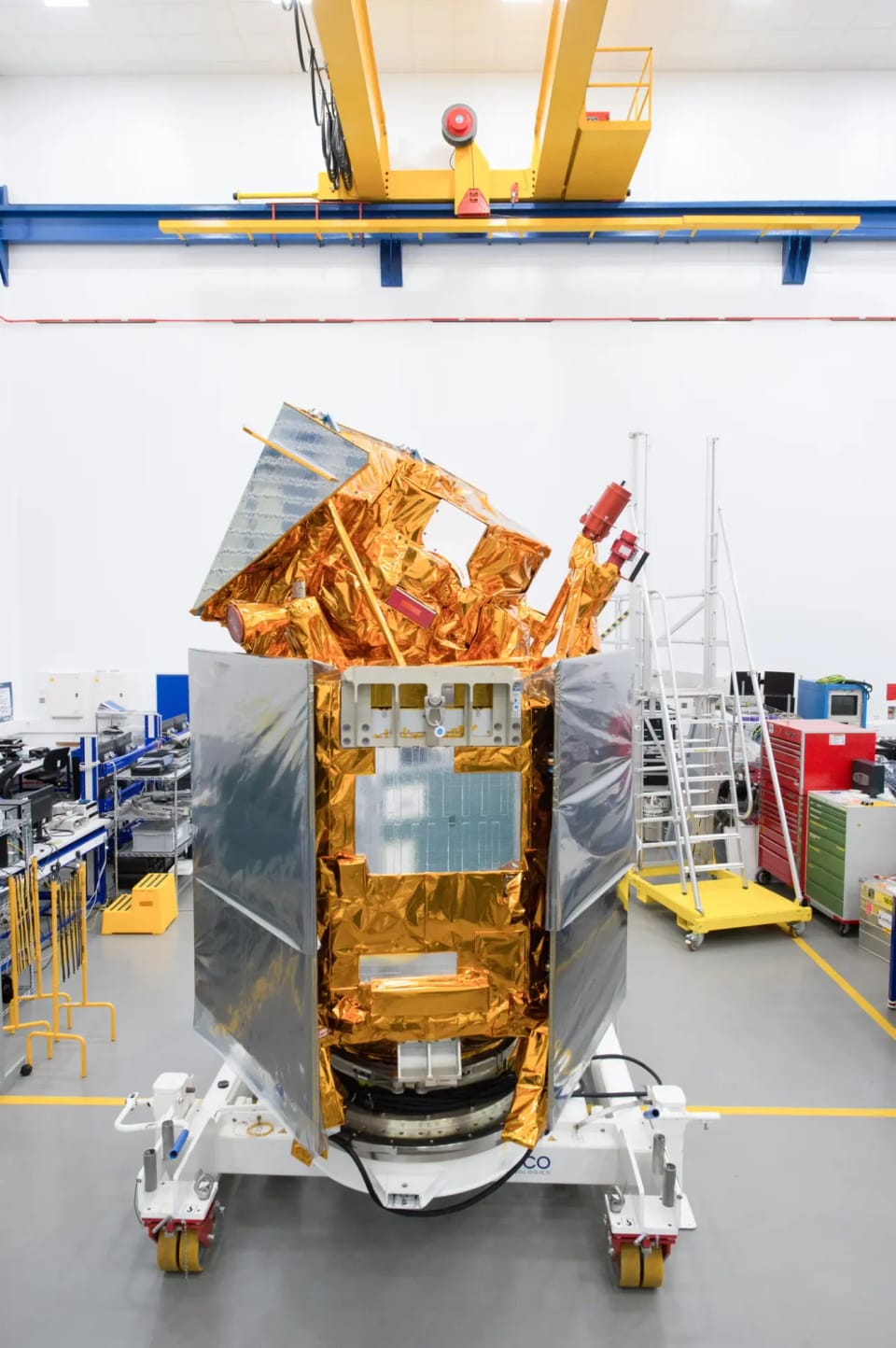
Researchers track these atmospheric dynamics using the Copernicus Sentinel-5P satellite, which the European Space Agency launched in October 2017 as the first mission in the Copernicus fleet dedicated specifically to atmospheric observation.13 The spacecraft carries an advanced multispectral imaging spectrometer known as the Tropospheric Monitoring Instrument, or Tropomi.13 The instrument detects the distinct absorption fingerprints of trace gases across multiple wavelengths of the electromagnetic spectrum, mapping stratospheric ozone and surface pollutants at high spatial resolution.13 By taking daily global measurements, the instrument allows scientists to survey inaccessible regions across Antarctica where ground-based monitoring stations are few and far between.14
The satellite data allow researchers to separate temporary weather-driven swings from genuine changes in atmospheric chemistry. Observations show that under normal annual conditions, the Antarctic hole begins developing in August, expands through September, and reaches its maximum geographical extent between mid-September and mid-October.12 As spring progresses, the Antarctic stratosphere warms, slowing down the chemical reactions, while the polar vortex weakens and disintegrates.12 By the end of December, the hole typically closes entirely as ozone-dense air returns from middle latitudes.12 In 2026, the unusually resilient vortex merely prolonged the window for cold-air reactions, broadening the geographical reach of the depletion zone without intensifying the vertical loss.12
What do these observations mean for the long-term recovery of the atmosphere?
Seasonal fluctuations in the size of the ozone hole do not signal a reversal of the long-term recovery trajectory established under international treaties.12 Decades of atmospheric data show that while individual meteorological years can produce unusually large or unusually small openings, the atmospheric concentrations of ozone-depleting substances continue to decline following global restrictions established by the Montreal Protocol in 1987.21 That landmark treaty phased out the production and consumption of chlorofluorocarbons, halons, and related halogenated chemicals once widely used in industrial refrigeration, air conditioning systems, and aerosol propellants.2
Because chlorofluorocarbons are chemically inert in the lower atmosphere, they survive for decades before slowly migrating into the stratosphere, meaning their environmental impact persists long after production has ceased.2 A scientific assessment backed by the World Meteorological Organization and the United Nations Environment Programme in 2022 projected that Antarctic ozone concentrations are on track to return to 1980 levels around 2066, assuming existing international policy restrictions remain in place.2 Temporary spikes in area driven by vortex stability fit within this expected multi-decade trajectory.
These satellite observations carry inherent limitations that must be understood in context. Satellite measurements of total column ozone provide a snapshot of atmospheric conditions at a specific time and place, but they cannot predict exact future meteorological conditions from one year to the next. The findings represent observational measurements of a dynamic seasonal system rather than a permanent new equilibrium, and they rely on the assumption that global adherence to chemical bans remains steady. Furthermore, seasonal area measurements reflect the interplay of polar stratospheric temperatures and vortex stability rather than an immediate increase in atmospheric halogen emissions.
Looking ahead, space agencies are preparing new orbital instruments to monitor the atmosphere with greater vertical precision. The European Space Agency plans to deploy Copernicus Sentinel-5 instruments aboard the MetOp Second Generation A-type polar-orbiting satellites to maintain unbroken global records of atmospheric gases.14 In addition, the planned Altius mission will provide detailed vertical profiles of stratospheric ozone, giving scientists an even clearer view of how the atmosphere heals in the decades to come.14
The record
24 sentences trace to 4 sources.
- 1 Ozone hole one of the largest in decades See the source
- 2 Antarctica’s Ozone Hole Has Grown Larger Than the Continent Itself, and Scientists Know Why See the source
- 3 Antarctic ozone hole reaches largest size in decades See the source
- 4 Antarctic ozone hole is one of the largest in 48 years, ESA reports See the source